General Surgery
Chest Tubes
Pedi Surgery
Nursing Interventions
Miscellaneous
Trauma
100
What facts are important to know about a new g-button?
The brand (Mic-key vs Mini), French size of the g-tube, length in cm of the g-tube and how much saline is in the balloon.
100
Where should your chest tube chamber be secured at the bedside?
On the floor, with the kickstand out.
100
NG output should be measured at least _______.
Q4h if higher outputs/POD #1 or at least qshift if output is lower
100
It is appropriate to wean MIVF when a patient is....
tolerating a diet
100
What can the bedside nurse do to encourage ambulation?
Make it fun! Have them earn stickers or prizes, have them to a scavenger hunt. Walk with them and show them it's not so scary and point out our colorful walls!
100
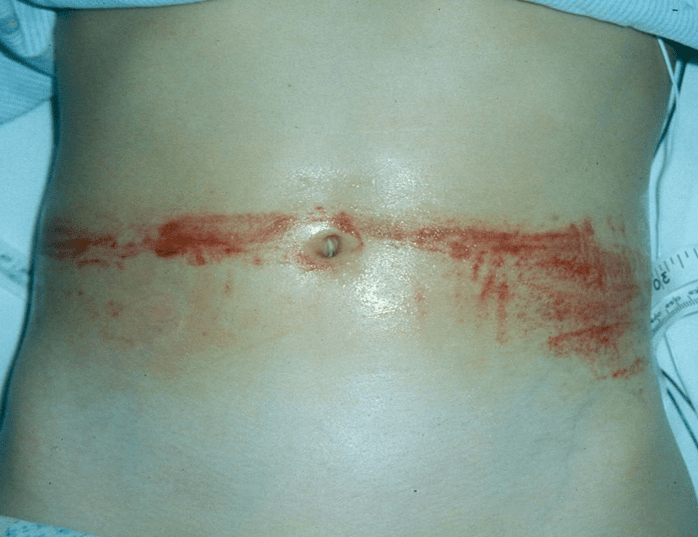
A child presents after trauma with this injury. What is this called and what should we worry about?
Seatbelt sign. 55% of intra-abdominal injuries including solid organ and bowel injuries.
200
What are the two pain medications we use in our post-operative patients?
In most patients, we alternate scheduled IV Ofirmev and Toradol (if no bleeding risks) and will often add prn morphine for breakthrough or high pain. We will switch to PO meds when they are tolerating a diet and pain has improved well enough.
200
Upon assessment, you notice that there is occasional bubbles in the water seal chamber of your patient's chest tube. Is this abnormal?
No
200
Common general pedi surgery procedures include appendectomies, gastrostomy tube placements, pyloromyotomies, cholecystectomies, chest tube placement, abscess I&Ds, and small bowel resections. Name 2 signs of post-op infections.
fever greater that 100.4, increased pain, redness/swelling of the surgical sites, pus like drainage from the surgical sites.
200
Studies show that this intervention for post-operative patients can decrease length of stay and is associated with fewer complications
early ambulation
200
When do we recheck labs on an post op appendectomy patient?
Typically, only at discharge when we check a CBC for perforated appendix. Most appy patients do not need routine labs. Of course, there can always be exceptions (ie: AKI or h/o bleeding disorder)
200
When do we clear a c-spine collar?
We use NEXUS criteria. Patient must also be free of sedating medications and able to answer questions. No distracting injuries. No neuro deficits; GCS 15 and absence of midline tenderness.
300
What is the most effective way for a patient to eliminate post operative gas pain?
Ambulation is the only effective way to clear gas post surgery. Ambulation also helps with return of bowel function.
300
Your patient's chest tube is ordered to be set to suction at -20mmHg. What should your wall suction be set to?
Your chest tube should be set to -20mmHg. Your wall suction should be high enough to overcome the pressure and make the bellows come out to arrow, indicating appropriate suction.
300
A 4kg infant has concerns for a small bowel obstruction and needs to start decompression. What is the appropriate sized tube and type for this baby?
10Fr Salem Sump.
300
Name 2 interventions to avoid post-op complications in bariatric surgery patients
elevate HOB 30 degrees, monitor with CAM & Cont. Pulse Ox, have regular IV assessments, ambulate Q2 hours from 0600-2200
300
This medication for pain management will NOT be ordered for patients with concern for post-op bleeding
toradol/ketorlac
300
What grade solid organ lacerations will be admitted here in Prosper? What do you expect to monitor on the floor?
We will admit Grades 1-2. Monitor for signs of bleeding: changes in perfusion, increased HR, delayed cap refill. H&H per surgeon preference
400
How often do you need to do dressing changes on post-operative patients?
Rarely, most of our patients only have dermabond and steristrips. IN the rare case there is a dressing we will take off the dressing the first time then give directions after that. If incision sites are draining, you should let the surgery APP know.
400
Your patient's chest tube was accidentally dislodged. What emergency supplies should be available?
vaseline gauze or xeroform, 4x4 gauze, occlusive dressing, 2 blue chest tube clamps, suture removal kit
400
This is the number of weeks after initial balloon G-button placement during which only the surgeon should replace a button that has come out
6 weeks
400
Your patient has the following orders:
"Clear liquid diet" and "Advance diet as tolerated, target diet: regular diet"
How would you proceed?
After the patient tolerates clear liquids without nausea and/or vomiting, you may change the order to a regular diet and progress the patient as appropriate.
400
If a patient with a chest tube has TPA ordered to be instilled in the chest tube who can administer the medication?
Only the surgery APP or surgeon can administer this medication. RNs are not allowed to administer this based on Cook Policy PS 014. The nurse may assist and unclamp the chest tube when the instillation period is completed.
400
NAT: at what age is a subconjunctival hemorrhage never normal?
Any birth related trauma should resolve within 2 weeks of birth. Any within the first 12 months of life should raise
500
What is important to know about a new g-button and the care of one?
Less is more with tube site care in the beginning.
New stomas often ooze and it is important to keep them dry with gauze or other dressings. Keep open to air if possible.
New tube sites should not be submerged in water for 6 weeks.
500
You receive in report that your patient's chest tube is ordered to have suction to -20mmHg. Upon assessment, this is what you find. What is wrong with this picture?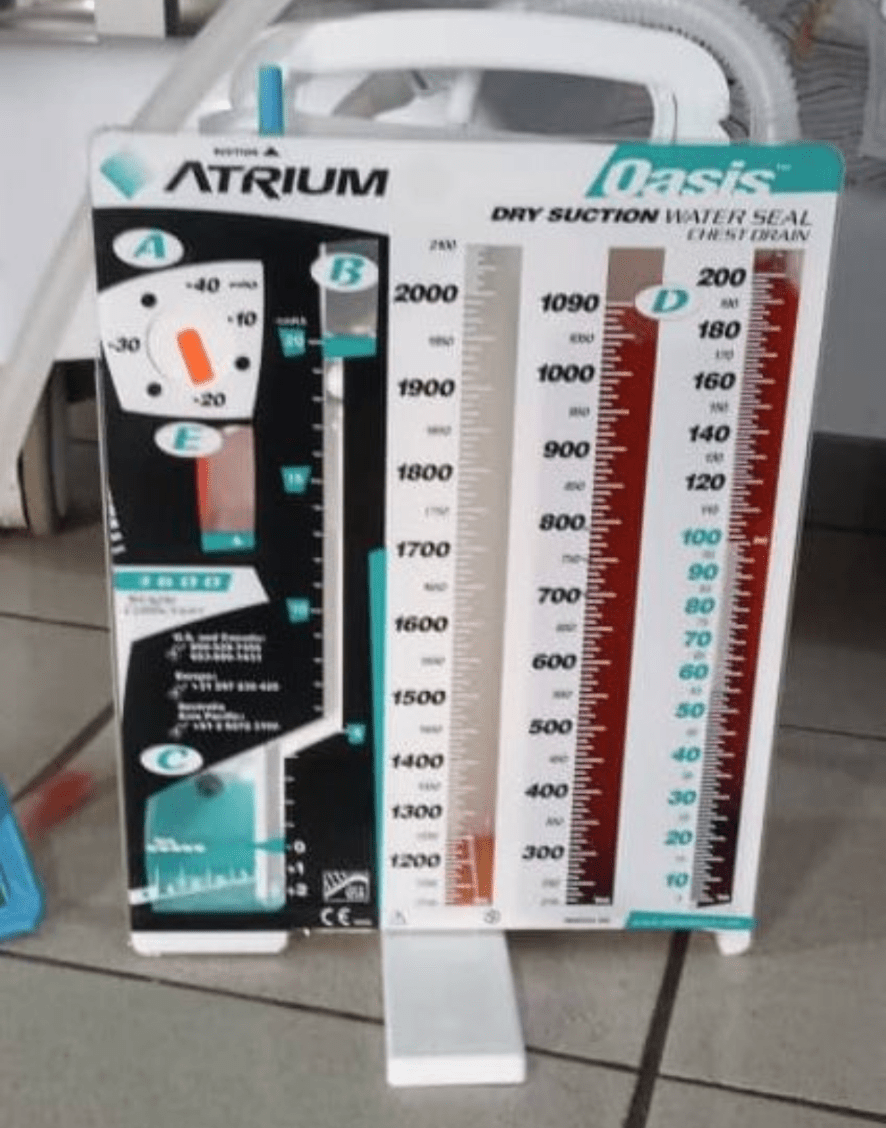
The bellows is not out to the arrow, so the chest tube is not actually on suction
500
What are two procedures where you should avoid placing a NG tube post-op?
Sleeve Gastrectomy & Pyloromyotomy
500
This simple intervention post-op can provide valuable data for guiding clinical decisions based on hydration status and effectiveness of treatments
Strict I & O
500
What vital signs are important in post op care?
All of them - elevated blood pressure and HR can be indicative of pain. Temp can be indication of infection. O2 sats can be indication of poor respiratory status. Many of our patients will be on CAM and continuous pulse ox particularly if they are receiving narcotics which are respiratory depressants.
500
IF a patient is admitted after a trauma with an Apsen collar what is important to monitor on the floor?
It is important to check that it is placed appropriately to prevent extension/flexion of the neck. Check for skin breakdown. See policy on placement and management of C-spine collars.