BuzzWords
Growth Charts & Immunizations
Neonatology
Respiratory
Developmental Milestones
100
“Steeple sign” on X-ray 
A: Croup
Comment: The steeple sign reflects subglottic narrowing seen in parainfluenza infection. Treated with steroids and racemic epinephrine if moderate to severe
100
First vaccine given at birth
A: Hepatitis B
Comment: The first dose is given within 24 hours unless the infant is <2 kg. Important for early protection.
100
elayed passage of meconium (>48h)
A: Hirschsprung disease
Comment: Caused by absence of ganglion cells in distal colon. Diagnosed with rectal suction biopsy.
100
Infant with wheezing, cough, and tachypnea in winter
A: Bronchiolitis (RSV)
Comment: Supportive care is mainstay of treatment. Nirsevimab (Beyfortus) is used prophylactically for all infants less than 8 months.
100
At which age: Speaks in 2 word sentences
2 years
200
“Currant jelly stool”
A: Intussusception
Comment: Caused by telescoping of bowel segments, often ileocolic. May follow a viral illness or Meckel’s diverticulum.
200
Minimum age for influenza vaccine
A: 6 months
Comment: Children under 9 getting it for the first time need 2 doses.
200
Q: Neonate with delayed umbilical separation
A: Leukocyte adhesion deficiency
Comment: Presents with high WBCs but no pus formation. Umbilical cord falls off after >3 weeks
200
Most common cause of bacterial pneumonia in school-aged children
A: Mycoplasma pneumoniae
Comment: Presents with low-grade fever, malaise, and dry cough. Treated with macrolides.
200
At which age: Draws a square
A: 4 years
Comment: Follows triangle (5 years) and precedes circle (3 years). Important fine motor skill.
300
“Sail sign” on chest X-ray of neonate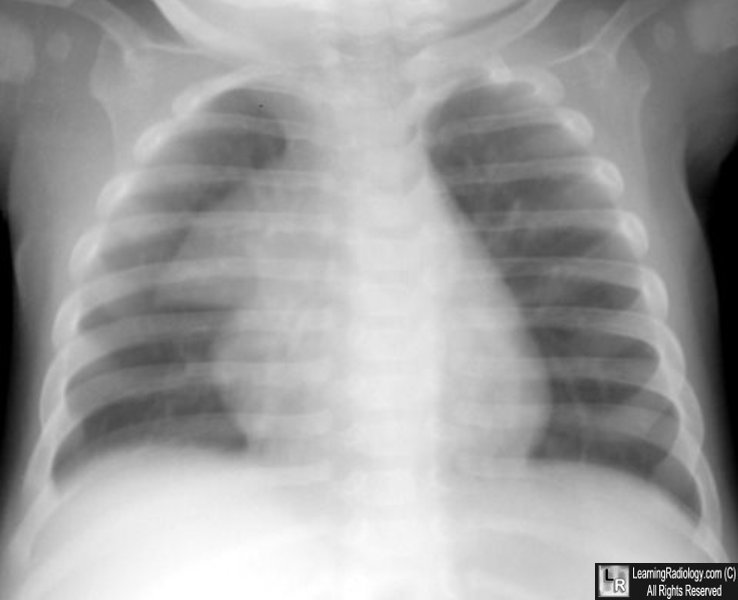
A: Thymus
Comment: A normal finding in infants. The thymus appears prominent due to immune activity early in life.
300
When do anterior fontanelles close?
A: 9–18 months
Comment: Delayed closure may suggest hypothyroidism or increased intracranial pressure. Early closure can be seen in craniosynostosis.
300
Q: Most common cause of early sepsis in neonates
A: Group B Streptococcus
Comment: Prevented with intrapartum penicillin prophylaxis. Early-onset disease occurs within 7 days.
300
Stridor that improves when prone
A: Laryngomalacia
Comment: Most common cause of congenital stridor. Often self-limiting and improves by 18–24 months.
Pierre Robin sequence can cause similar positional airway obstruction, including stridor that worsens when supine. (Micrognathia + glossoptosis ± cleft palate)
300
Stranger anxiety develops around what age?
A: 6–9 months
Comment: Normal part of social development.
400
Boot-shaped heart” on X-ray
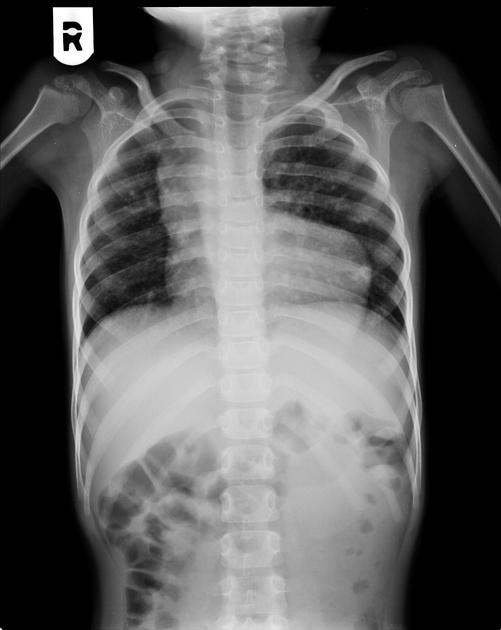
A: Tetralogy of Fallot
Comment: Due to RV hypertrophy. Associated with cyanosis and relieved by squatting.
Tetralogy of Fallot consists of VSD, pulmonary stenosis, overriding aorta, and right ventricular hypertrophy
400
At what age do you start BMI screening?
A: 2 years
Comment: Early detection of obesity is key for prevention. BMI ≥95th percentile is considered obese.
400
Neonate with scalp swelling crossing suture lines
A: Caput succedaneum
Comment: Benign soft tissue edema after delivery. Resolves spontaneously within days.
400
Recurrent sinopulmonary infections + situs inversus
A: Primary ciliary dyskinesia (Kartagener syndrome)
Comment: Due to immotile cilia. Associated with infertility in males.
400
Q: Social smile appears at what age?
A: 6 weeks
Comment: One of the earliest social milestones. Absence by 3 months warrants evaluation.
500
"Strawberry tongue"+rash in 2 diseases
A: Scarlet fever and Kawasaki disease
Comment: Both present with strawberry tongue and a diffuse rash. Scarlet fever is caused by Group A Strep and shows sandpaper-like rash, while Kawasaki disease is a vasculitis that also includes conjunctivitis, mucositis, extremity changes, and risk of coronary aneurysms.
500
Mention correctly 2 of the followings:
- When should a baby regain birth weight?
- When should a child double his birth weight?
- When should a child triple his birth weight?
A baby regain birth weight By 2 weeks
Birth weight typically doubles by 4–5 months and triples by 1 year. A growth delay should prompt evaluation.
500
Mention the organisms for neonatal conjunctivitis:
- within 48 hours of life
- at 5 days of life
1-3 days: Neisseria gonorrhoeae
Comment: Prevented with erythromycin eye ointment at birth. Requires prompt treatment to prevent blindness.
5-7 days: Chlamydia trachomatis
Comment: Presents later than gonorrheal conjunctivitis. Treat with oral macrolide (e.g., erythromycin).
500
A 3-week-old infant presents with apnea, post-tussive emesis, and paroxysms of coughing. Physical exam is notable for a petechial rash and leukocytosis with lymphocytic predominance. What is the diagnosis and treatment?
A:
Pertussis — treat with macrolide (e.g., azithromycin)
Explanation:
Pertussis in young infants presents with coughing fits, apnea, and post-tussive vomiting. The classic lab finding is marked lymphocytosis, and early macrolide treatment is essential to reduce transmission, although it may not alter the course of late disease
500
At which age the child Uses spoon and/or fork?
A: 18 months
Comment: Self-feeding is an important fine motor skill. Also helps with independence.
1000
"Wire loop" in renal biopsy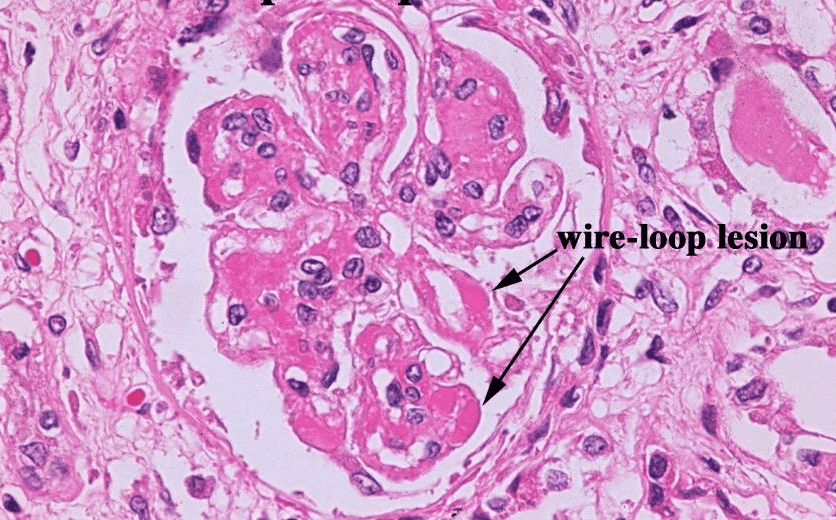
A: Lupus nephritis
Comment: Seen in pediatric SLE with renal involvement. Treated with corticosteroids and immunosuppressants.
1000
Mention in a correct way the schedule of DTaP vaccine (4 doses + booster dose) and when should we start Tdap?
primary series at 2, 4, 6, and 15–18 months. Booster at 4-6 years. Then Tdap at age 11–12.
1000
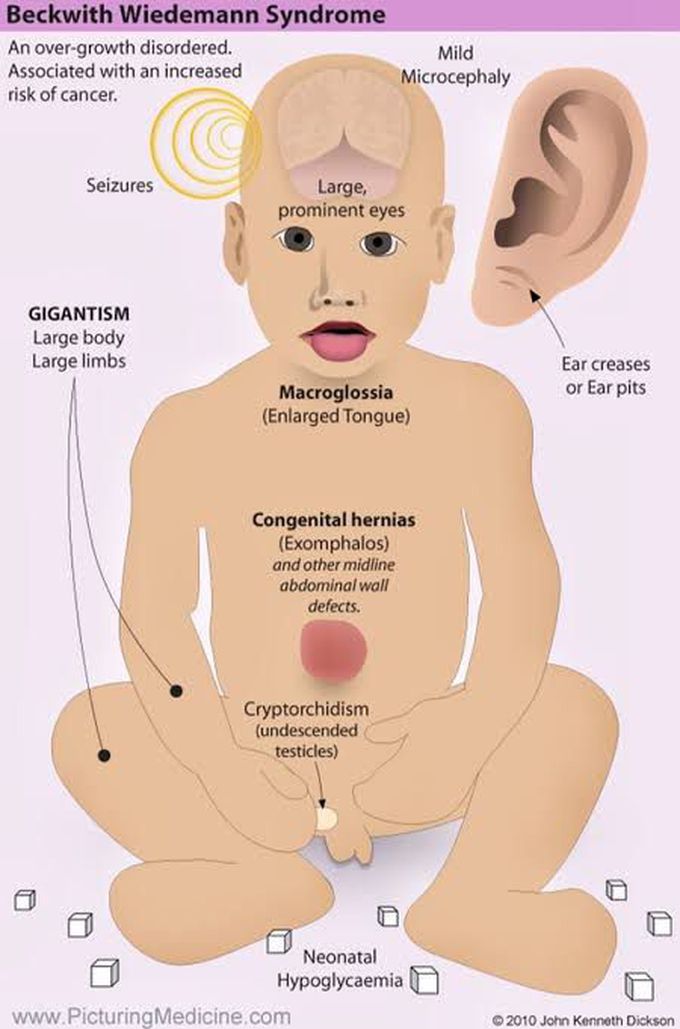
Which syndrome:
Macroglossia + omphalocele + hypoglycemia
A: Beckwith-Wiedemann syndrome
Comment: Overgrowth syndrome with increased cancer risk. Monitor for Wilms tumor and hepatoblastoma.

1000
Q: High-pitched cry + hoarseness after extubation
A: Subglottic stenosis
Comment: Can be congenital or acquired. Consider in chronic stridor post-extubation.
1000
At which age the child Ties shoelaces?
A: 5 years
Comment: Also can draw a triangle and count to 10. School readiness milestones should be met by this age.