Perinatal and Neonatal
Sensory Processing Disorders
Epilepsy
Autism Spectrum Disorder
Spinal Muscular Atrophy
Motor Planning and Dyspraxia
OT in the NICU
Tantrum vs. Meltdown
Sensory Modulation
Developmental Grasps
Power and Precision Grasps
In-Hand Manipulation
Handwriting
Vision
Sensory Systems
100
Prenatal conditions occur from conception to birth, while neonatal conditions occur during ____ days of life.
28 days
100
This neurological condition involves the brain having trouble receiving, organizing, and responding appropriately to sensory input.
Sensory Processing Disorder (SPD)
100
This neurological disorder is characterized by recurrent, unprovoked seizures due to abnormal electrical activity in the brain.
Epilepsy
100
This neurodevelopmental disorder is characterized by persistent social interaction impairments, restrictive behaviors, and uneven intellectual development.
Autism Spectrum Disorder
100
This rare genetic neuromuscular disorder causes loss of motor neurons and motor function over time.
Spinal Muscular Atrophy (SMA)
100
This neurodevelopmental motor condition negatively impacts a child's ability to perform motor coordination activities.
Developmental Coordination Disorder (DCD)
100
Full-term babies are born at this gestational age range.
37-40 weeks gestation
100
This is an angry or frustrated outburst where the child typically has some control over their behavior.
Tantrum
100
This term refers to maintaining the appropriate arousal level.
Sensory modulation
100
This is the intentional letting go of a handheld object at a specific time and place.
Voluntary release
100
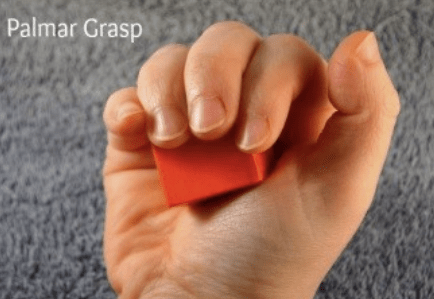
This is also called a fisted grasp, appearing as if the child is holding the crayon in the middle of their fist.
Palmar grasp
100
This is the ability to hold and move an object within one hand.
In-Hand Manipulation
100
These are the four key components involved in handwriting.
1. Vision
2. Kinesthesia
3. Cognition
4. Alignment
100
This is the coordination of visual information with motor output.
Visual-motor integration
100
These are the three sensory systems emphasized in Ayers sensory integration for child development.
Vestibular, tactile, and proprioceptive
200
These two common neonatal conditions relate to the baby's weight and timing of birth.
Prematurity and low birth weight
200
This subtype of SPD involves the brain struggling to regulate responses to sensory input, leading to over-responsivity, under-responsivity, or sensory seeking.
Sensory Modulation Disorder
200
During this phase of a tonic-clonic seizure, muscles suddenly stiffen and the child may lose consciousness and fall.
Tonic phase
200
These are the two main diagnostic features required for ASD diagnosis.
Persistent differences in social communication/interaction
AND
restricted, repetitive behaviors/interests/sensory patterns
200
Infants with SMA show these two difficulties related to head control and developmental milestones.
Difficulty holding head up and delayed milestones
200
Praxis involves these three components of producing an action.
Ideation, Motor planning, and Execution
200
OTs in the NICU focus on these types of care practices including graded sensory experiences and environmental modifications.
Sensory-based care principles
200
Tantrums are triggered by these three things: a desire to get/avoid something, ________ , and communication difficulties.
Frustration
200
Someone with a low sensory threshold has this type of tolerance for sensory input and is easily ______.
Low tolerance and easily overstimulated
200
These are the three developmental progressions for grasp development.
Ulnar to radial
Proximal to distal
Mass to specific
200
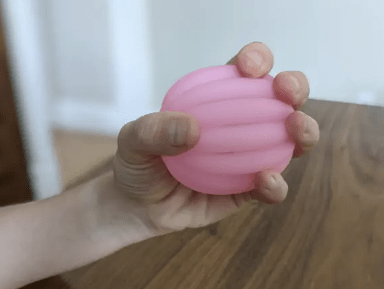
In this grasp, the fingers spread open wide to grasp a circular object such as a ball or an apple.
Spherical grasp
200
This in-hand manipulation skill allows students to move the pencil from the palm to the fingers during handwriting.
Translation
200
The formula to calculate legibility is:
Total # of readable words / Total # of written words
200
This is the brain's ability to interpret visual information.
Visual perception
200
This is an atypical response to environmental stimuli that can include tactile defensiveness and gravitational insecurity.
Sensory reactivity
300
The categories of common prenatal conditions include:
1. Genetic disorders
2. Congenital anomalies
3. Prenatal infections
4. Maternal factors
5. Intrauterine growth restriction
300
Children with this SPD subtype experience challenges with differentiating and interpreting sensory information.
Sensory Discrimination Disorder
300
This type of seizure begins on one side of the brain with no confusion or loss of awareness.
Focal onset seizure
300
Children with ASD often have deficits in this cognitive ability that involves understanding others' thoughts, beliefs, and perspectives.
Theory of mind
300
Children with SMA experience this type of weakness, particularly in these extremities.
Lower extremity weakness
300
These are the two main types of DCD.
Sensory motor and oral motor coordination disorder
300
Babies born at or before 25 weeks gestation are classified as this.
Extremely preterm
300
This is a reaction to feeling overwhelmed that is out of a child's control.
Meltdown
300
This sensory profile character is passive, distractable, and sensors most sensory information which overwhelms the brain.
Sensor

300
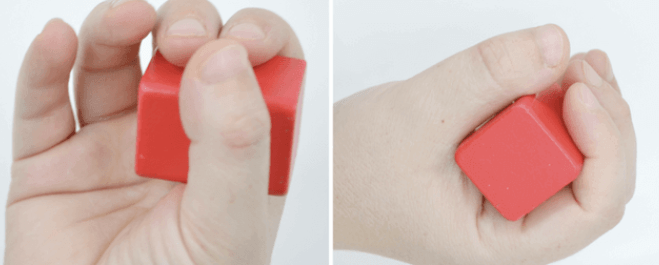
This grasp at 6-7 months involves holding an object against the palm, supported by fingers around the top and thumb on the side, using the precision side of the hand.
Radial palmar grasp
300
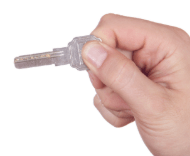
This precision grasp positions the fingers and thumb as they would be to hold a key between the pad of the thumb and lateral side of the pointer finger.
Lateral pinch (key pinch)
300
This in-hand manipulation skill involves moving an object in a linear manner with the fingertips, such as repositioning a pencil.
Shift
300
These are three aspects of letter formation that affect legibility.
Improper letter formation
Poor leading in/out of letters
Inadequate letter rounding (or incomplete closures, incorrect ascenders/descenders)
300
These are slow, smooth tracking movements used to follow moving objects or read across a line.
Pursuits (smooth pursuits)
300
These are the three states of arousal related to sensory modulation.
1. Low arousal (sleepy, hypoactive, unmotivated)
2. High arousal (anxious/excited, hyperactive, distractable)
3. Appropriate arousal
400
Neonatal conditions can lead to delayed motor and language development, behavioral difficulties, and increased risk of this motor disorder.
Cerebral Palsy
400
This SPD subtype involves the ability to regulate input but has sensory-motor challenges, including dyspraxia and postural disorder.
Sensory-based Motor Disorder
400
These seizures involve sudden "behavioral arrest" where the child stops moving and looks blank, often mistaken for daydreaming.
Absence seizures
400
These three executive function areas are commonly impaired in children with ASD.
Emotional regulation, flexibility, and attention
400
Infants with SMA have difficulty with these two critical functions that can affect their nutrition and respiration.
Swallowing and Breathing
400
These are four core diagnostic features of DCD including types of movements and body awareness deficits.
1. Involuntary/overflow movements
2. Mirroring movements
3. Finger agnosia
4. Decreased spatial awareness/body scheme
400
Name four of the seven core measures in the Neonatal Integrative Developmental Care Model.
1. Healing environment
2. Partnering with families
3. Positioning and handling
4. Safeguarding sleep
5. Minimizing stress and pain
6. Protecting skin
7. Optimizing nutrition
400
Meltdowns are triggered by these four types of overload or changes:
1. Sensory overload
2. Information overload
3. Emotional overload
4. Sudden changes in routine/expectations
400
This sensory profile has a high threshold, is active and energetic, and actively seeks more sensory information to 'wake-up' the brain.
Seeker

400
This grasp at 9-12 months involves holding a small object between the thumb and first finger, emerging when babies feed themselves finger foods.
Neat pincer grasp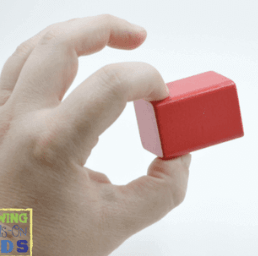
400
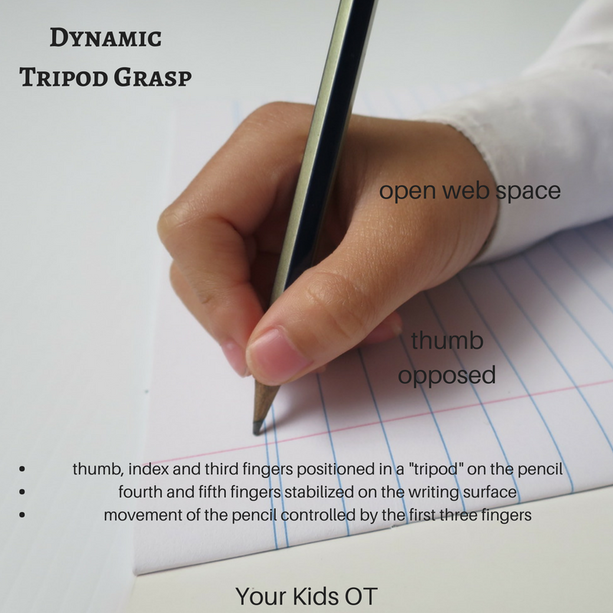
This dynamic grasp means the fingers actively move the writing utensil, with three fingers involved (index, middle, thumb) while ring and pinky are tucked into the palm.
Dynamic lateral tripod grasp
400
This in-hand manipulation skill involves turning an object around in the pads of the fingers and thumb, like flipping a pencil from writing end to eraser.
Rotation
400
These are the six key handwriting assessment areas.
1. Legibility
2. Speed/fluency
3. Pencil grasp pattern and control
4. Postural stability and positioning
5. Visual-motor integration
6. Hand strength/endurance (also bilateral coordination)
400
This visual-motor skill involves using visual information to guide hand movements for activities like catching, writing, and cutting.
Eye-hand coordination
400
This is the brain's ability to distinguish between different sensory stimuli.
Sensory Discrimination
500
This term describes any pregnancy that holds increased risk for the mother, fetus, or both.
High-risk pregnancy
500
These are three OT red flags for sensory processing disorders related to touch, movement, and attention.
1. Over-sensitivity to touch/sounds/smells
2. Constantly spinning/moving/jumping
3. Difficulty attending
500
This type of seizure involves a sudden collapse of the head or entire body, carries high risk of head injury, and often requires protective headgear.
Atonic seizures
500
Name three OT red flags for ASD related to play, routines, and sensory experiences.
1. Atypical/delayed play skills
2. Difficulty with transitions
3. Avoidance of sensory-rich environments
500
In children with spinal muscular atrophy, OT often focuses on positioning and training with this type of wheelchair to promote independent mobility despite progressive muscle weakness.
Power wheelchair (or power mobility)
500
This intervention approach for dyspraxia breaks down complex motor tasks into smaller, sequential steps that are practiced repeatedly until they become automatic.
Task analysis (motor learning)
500
These are the five main OT intervention strategies used in the NICU.
1. State organization/self-regulation
2. Parent-infant interaction
3. Postural alignment/positioning
4. Sleep protection
5. Feeding competency
500
A tantrum tends to stop when ______.
While a meltdown stops when _______.
When the child gets what they want (tantrum)
When there's a change in the amount of sensory input (meltdown)
500
Contrast the behavioral presentation of an Avoider (low threshold, active) versus a Bystander (high threshold, passive).
Avoider is fussy and actively avoids sensory inputs.
Bystander is quiet and waits for others to present sensory information.

500
These bilateral hand use skills emerge in this developmental sequence:
1. Symmetric patterns
2. Bimanual action
3. Reciprocal and alternating movements.
500
This precision grasp has the thumb opposed against the tips of the first and second fingers to secure a small object.
Three jaw chuck

500
Give an example of translation in-hand manipulation used in daily life.
Moving coins from the palm to the fingertips to place in a vending machine (or picking up pennies and moving them from fingertips to palm)
500
Name four common handwriting interventions used by OTs.
Size Matters
Multisensory letter formation practice
Pencil grips/adapted tools
Slant boards/positioning adaptations
Fine motor strengthening
Visual-motor activities
Technology/keyboarding
500
This is the clarity and sharpness of vision, with this measurement considered normal.
Visual Acuity
500
This is the brain's process of giving meaning to sensory information.
Sensory Perception