Airway/Pulmonary
Neuro Emergencies
Miscellaneous
Procedures
Tiny Humans, Big Problems
100
A previously healthy, fully immunized 6-year-old presents with 3 days of fever, cough, and right-sided chest pain. T 39.1°C, RR 32, SpO₂ 96% on room air. She is well appearing, drinking fluids, and has focal diminished aeration over the RLL. CXR shows a right lower-lobe consolidation without effusion.
a) what is the most likely pathogen?
b) what is the appropriate treatment?
c) what is the appropriate disposition?
a) Strep pneumo
b) Oral amoxicillin
c) Outpatient management
Change the scenario to push you more towards admission with IV abx
100
12 month old presents following a head injury. Mom reports that pt fell forward and hit his head on the coffee table. She denies LOC, vomiting, and has been acting at baseline since. You notice a large frontal hematoma but otherwise exam is benign.
How would you treat this child? What is the disposition?
4 hour observation from time of injury
Discharge home with strict return precautions
100
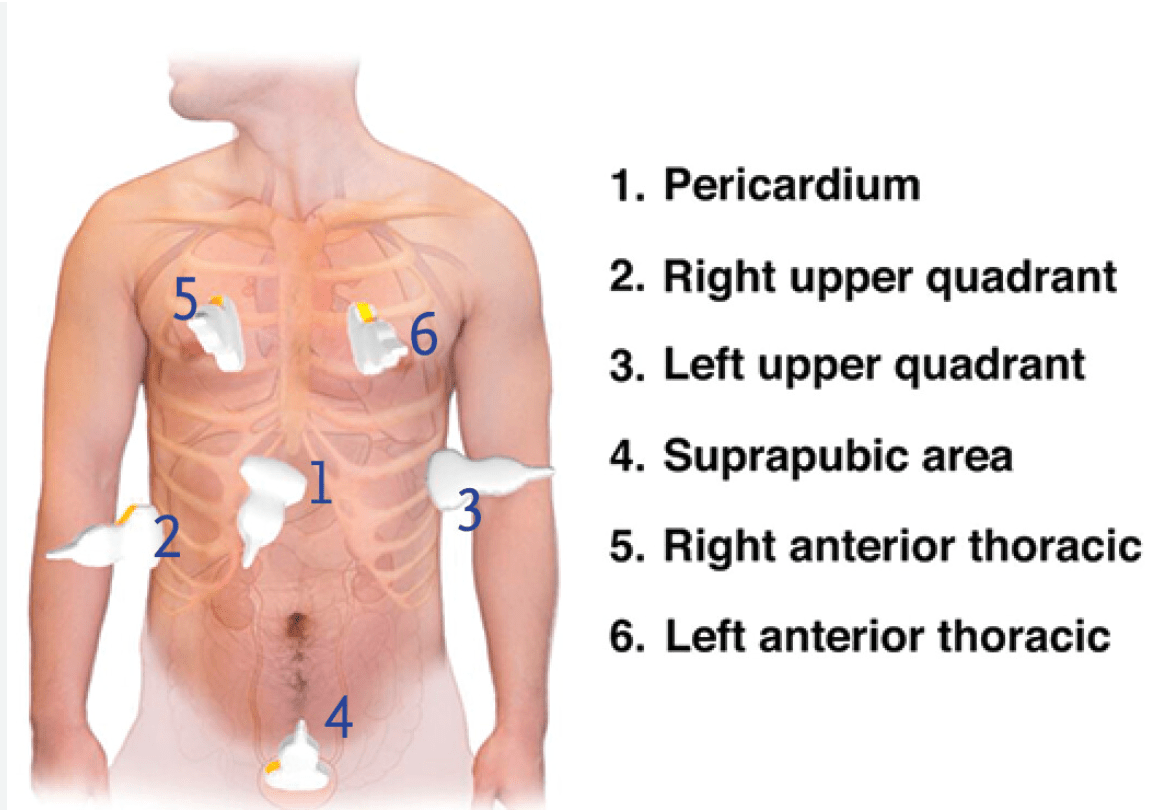
A 12-year-old presents after a high-speed MVC with abdominal tenderness and tachycardia. You perform a FAST exam to look for free intraperitoneal or pericardial fluid. What four anatomic views should you obtain?
Bonus: what about eFAST?
RUQ, LUQ, pelvis, pericardium
Bonus: adds bilateral thoracic views to look for pneumothorax or hemothorax
100
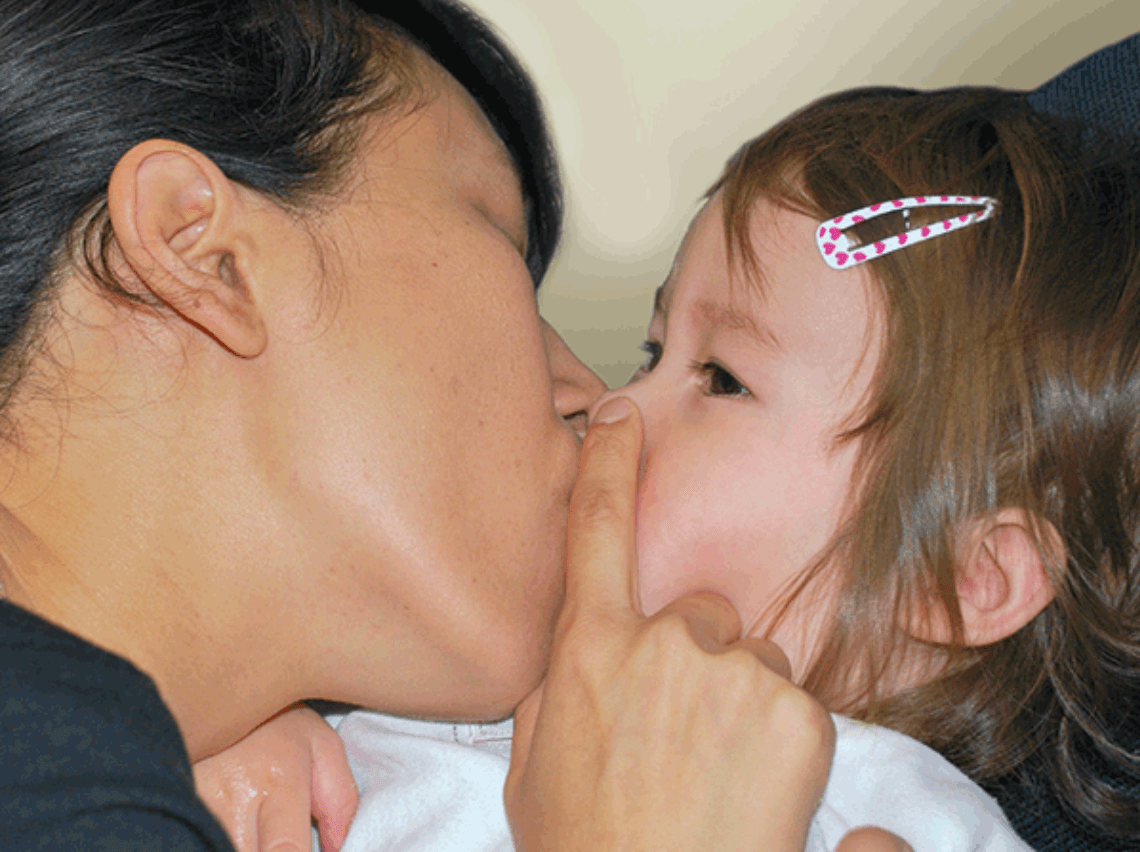
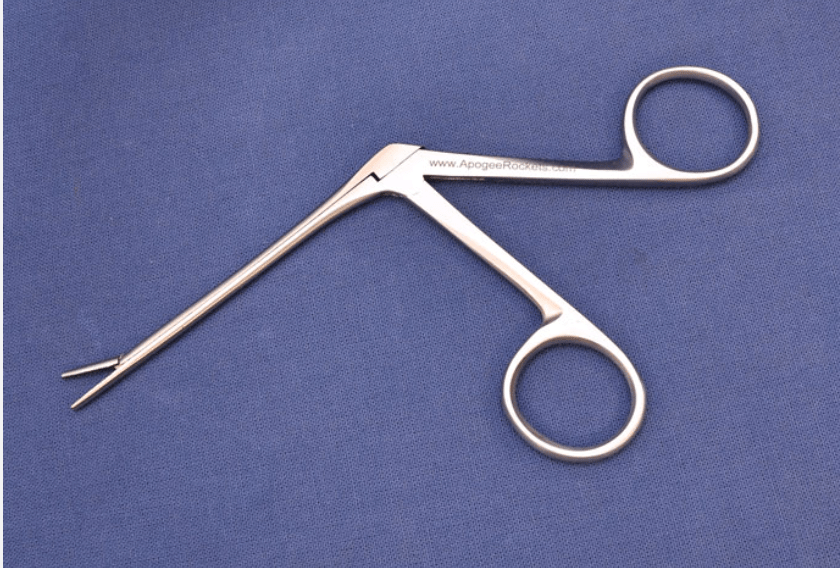
Mom brings her 2 year old child to the ED due to concern for a nasal foreign body. On exam you note a plastic bead in the right nare.
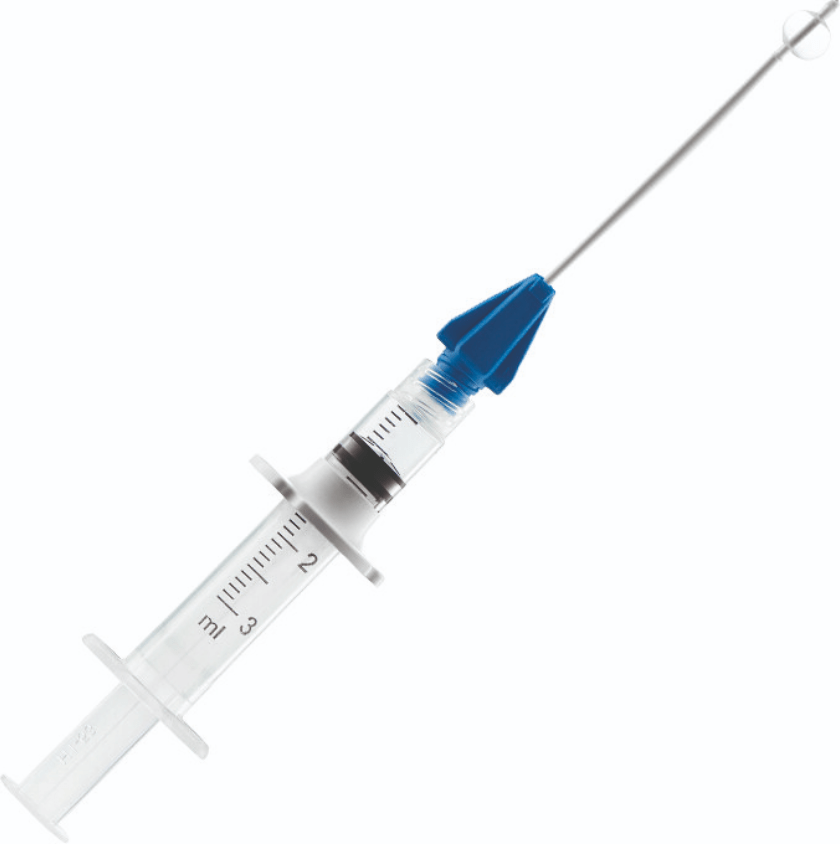
List 3 methods of removal you could utilize in the ED?
- Parents kiss
- Katz extractor
- Mechanical extraction (ie alligator forceps)
100
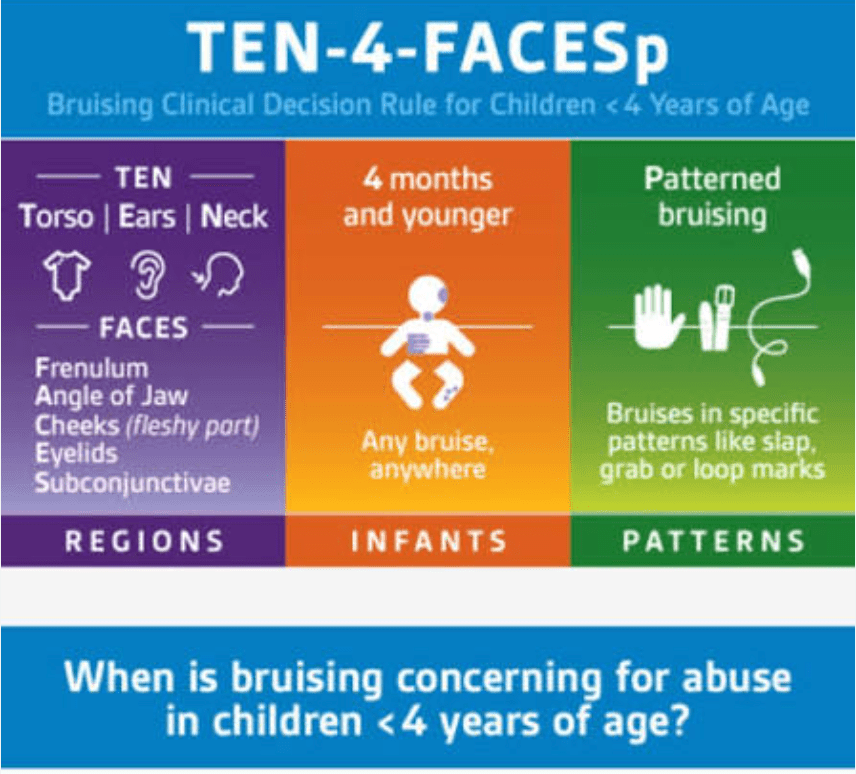
A 4-month-old is brought to the ED because a caregiver noticed a several bruises on the infant’s cheek. The infant is otherwise well appearing. The caregiver reports that she thinks the baby "must've bumped into something".
What should you be concerned about and why?
Nonaccidental trauma
- bruising in a non-mobile infant is a red flag
200
A 2 year old presents with harsh cough and mild increased work of breathing. During agitation, you note this sound.
What medication should be given and what dose?
Dexamethasone 0.6 mg/kg once
New literature actually shows that 0.3 mg/kg/dose is just as effective
200
A nurse asks you to come to triage to evaluate a patient with a droopy smile. She wants to know if a stroke code should be called.
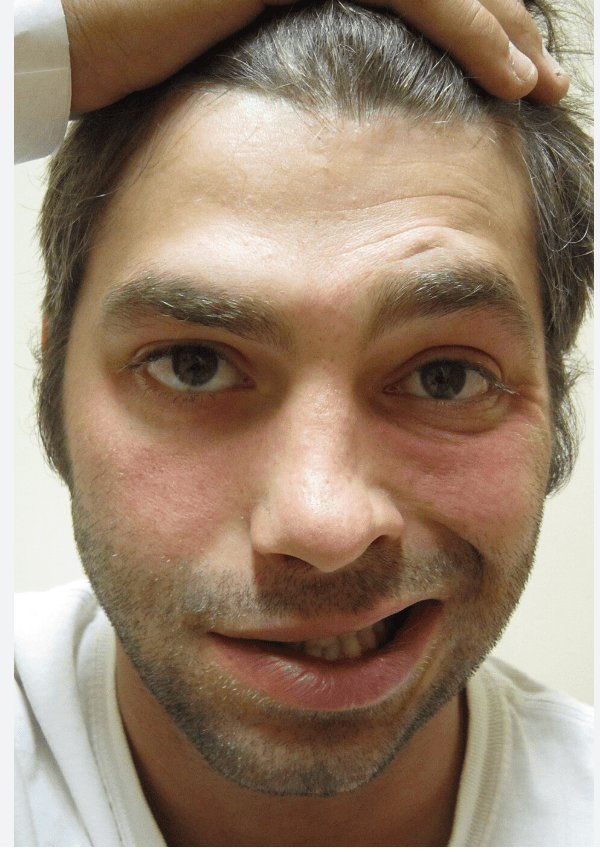
What diagnosis do you suspect?
How would you work them up? What is the treatment?
Diagnosis: Bell's palsy (facial nerve palsy)
Workup: Good exam (including thorough neuro exam and remember to check the ears) + test for lyme
Treatment: if Lyme positive, treat with doxy. If idiopathic, steroids can be used but remains controversial in pediatrics. Need to provide lubricating eye drops and eyelid closure at night.
200
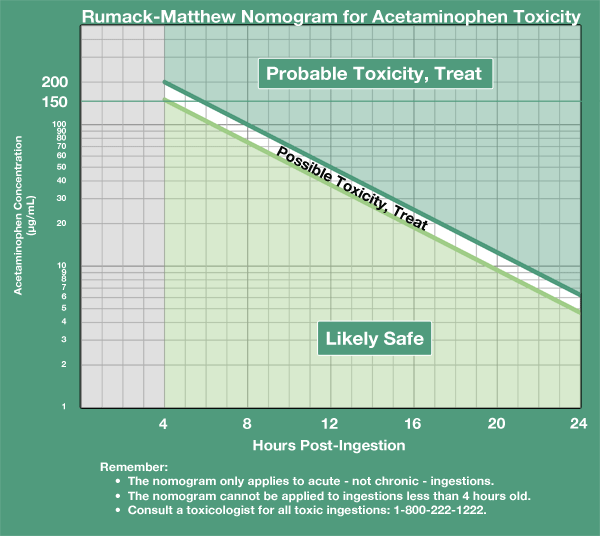
A 15-year-old presents to the ED 2 hours after intentionally ingesting an unknown number of 500-mg acetaminophen tablets. She is asymptomatic. An acetaminophen level drawn on arrival is 85 mcg/mL. What is the most appropriate next step to determine whether she requires N-acetylcysteine (NAC)?
Obtain acetaminophen level at 4 hours after ingestion and plot it on the Rumack-Matthew Nomogram
200
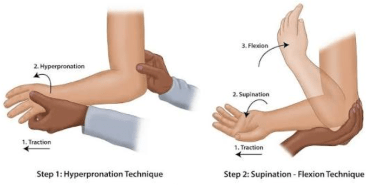
Toddler presents with refusal to use the left arm and keeps in held in a slightly flexed and pronated position close to the body.
You suspect nursemaids elbow.
What are 2 methods you could use to reduce it?
Hyperpronation
Supination and flexion
200
Provide 5 differential diagnoses that should be considered in the ED for an infant with the chief complaint of persistent fussiness.
- Infection: sepsis, meningitis
- Hair tourniquet
- GI/GU: intussusception, reflux, malrotation, testicular torsion
- Injury: corneal abrasion, NAT, occult injury
300
A child presents with wheezing, urticaria, and vomiting. You suspect anaphylaxis.
What medication should be given urgently?
What dose?
What is the disposition?
IM epinephrine 0.01 mg/kg
Observe in the ED for 2-4 hours d/t risk of biphasic reaction (recent studies favor 2 hours if no CVS involvement)
300
Pt develops seizures while in the ED. IV access is obtained and you administer the appropriate dose of Versed at the 3 minute mark but seizure activity persists.
a) what is the best next medication to give if seizures continue?
b) List 4 other AEDs that can be administered next for seizure abortion
a) Another dose of versed (or whatever benzo was used) at the same dose
b) IV keppra, fophenytoin, valproic acid, phenobarbital
300
A 12 month old presents to the ED because mom witnessed her ingest a button buttery about an hour ago. You obtain an immediate xray and note the following.
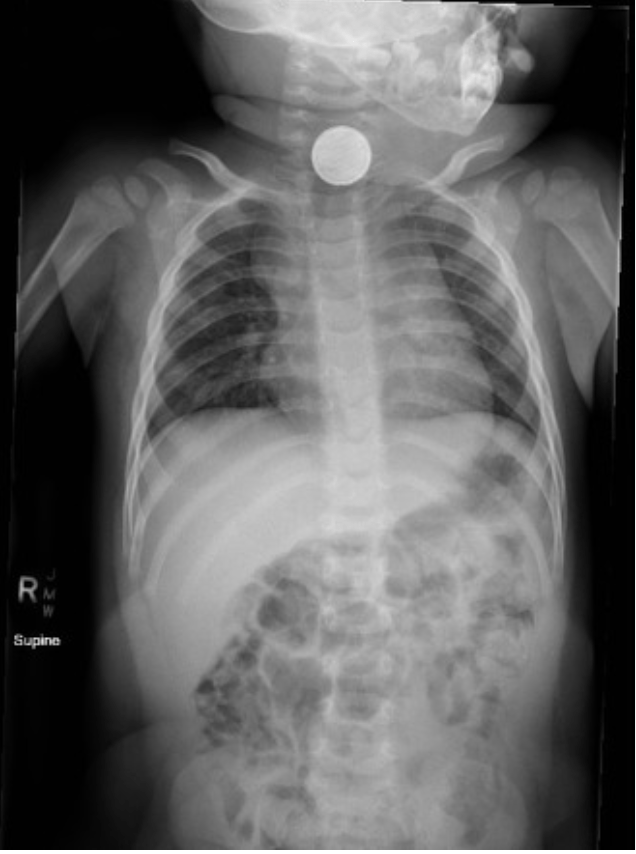
What can YOU do in the ED as a temporizing measure until GI is able to perform a scope for removal?
Administer sucrulfate suspension (10 ml q10 mins for up to 3 doses)
- if child is 12 months or older
- if ingestion within 12 hours
- if they are able to swallow
** if pt is still at home can tell parents to give 2 teaspoons of honey q10 mins for up to 6 doses
300
Over what time period should ketamine be pushed for procedural sedation in the ED?
Bonus: This is done to avoid what complication?
~1 minute
- to decrease the risk of respiratory depression/apnea
300
A 3-year-old with intermittent abdominal pain undergoes ultrasound showing a short-segment small bowel–small bowel intussusception without obstruction or a pathologic lead point. The child is well-appearing.
What is the appropriate management/disposition?
Bonus: what if it was ileocolic intussusception?
Supportive care and discharge
Bonus: urgent reduction (air or contrast enema) and surgical consultation
400
A 6-year-old requires emergent intubation. Using the standard age-based formula, what cuffed endotracheal tube size should you initially select,?
Bonus:
a) what sizes should you have with you as backup?
b) What depth would you insert the tube to?
5.0 cuffed ETT tube
(age/4 +3.5)
Bonus:
a) Size up and down -> have 4.5 and 5.5 available b) Insert to ~15 cm (3 x ETT size)
400
A 12-year-old presents with evidence of DKA. You start NS at 1.5x maintenance and an insulin drip. Several hours into treatment, she develops worsening headache and vomiting, followed by somnolence and bradycardia.
a) what complication should you suspect?
b) what is the best next step in management?
a) cerebral edema
b) administer hyperosmolar therapy (3% hypertonic saline or mannitol)
**do not delay treatment for head CT
400
A 10-year-old presents with the rash shown several days after recovering from a URI. The lesions are symmetric and fixed primarily involving the extremities. The child is well appearing and has no mucosal involvement.
What diagnosis do you suspect and what is the management?
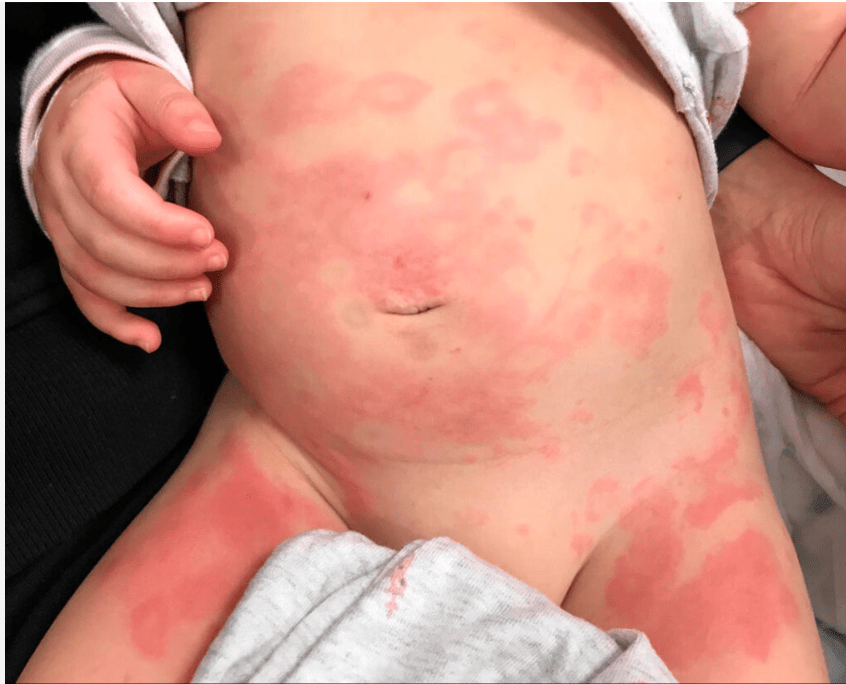
Erythema multiforme
Reassurance and supportive care
- need to be able to distinguish from SSSS vs SJS/TEN
400
We often use ketamine for procedural sedation in the ED. You are in charge of consenting the parents.
List 4 adverse effects you should warn them about during the consenting process.
- Laryngospasm/respiratory depression
- Hypertension
- Tachycardia
- Nausea/vomiting
- Nystagmus
- Recovery agitation
400
A 6-week-old infant is brought to the ED after becoming limp and cyanotic for approximately 45 seconds while sleeping. The episode resolved before arrival. The infant is now well appearing with normal vital signs and an unrevealing physical examination.
What is the likely diagnosis, and what is the appropriate disposition?
BRUE (brief resolved unexplained event)
Admit for observation
- High risk BRUE -> age <60 days
500
A 9-year-old with status asthmaticus has received continuous albuterol, ipratropium, systemic corticosteroids, IV magnesium, and is on HFNC. He is currently sleeping and his respiratory rate falls from 40 to 18/min, and a repeat blood gas shows his PaCO₂ has increased from 30 to 48 mmHg.
Despite the apparently “improved” respiratory rate, what does this change indicate and what is your next step?
Impending respiratory failure
Prepare for intubation
- In severe asthma, patients should initially be hypocapnic from tachypnea. A normalizing or rising PaCO₂, especially with decreasing respiratory effort, altered mental status, or a “silent chest,” is an ominous sign of fatigue and impending respiratory failure
500
Pt presents following an MVC in a c-collar. Based on hx and mechanism you have low suspicion for c-spine injury. You want to clear their c-spine clinically.
After determining GCS 15, normal neuro exam, and no distracting injuries. Describe the steps to clearing c-spine.
Maintain neutral position of the neck -> open the collar -> palpate midline and assess for pain/tenderness -> rotate neck left, right, chin to chest, upward
500
A 2-year-old develops the rash shown above shortly after a viral URI. The lesions are pruritic, annular/polycyclic wheals with dusky centers that change location over several hours. She has mild swelling of her hands and feet but is otherwise well appearing with no mucosal involvement.
What is the diagnosis and how do you treat it?
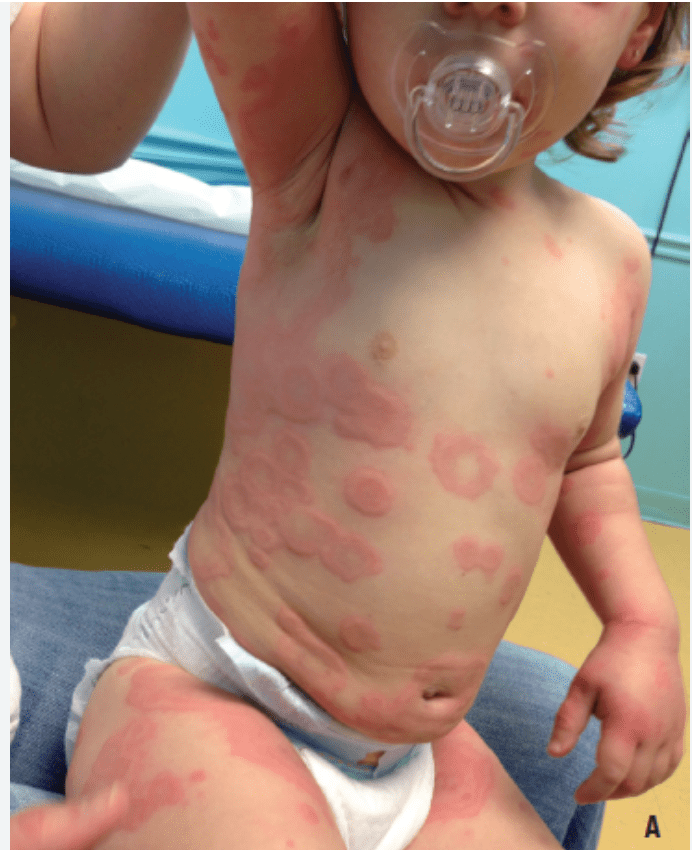
Urticaria multiforme
H1 antihistamines (often Zyrtec)
- clues: transient, pruritic, migratory, mild swelling
500
A 10-year-old with refractory status asthmaticus is tiring and requires intubation. Which induction agent can be preferred because of its bronchodilatory properties and relative preservation of respiratory drive and hemodynamics, and which paralytic is commonly paired with it for RSI?
Ketamine and Rocuronium
500
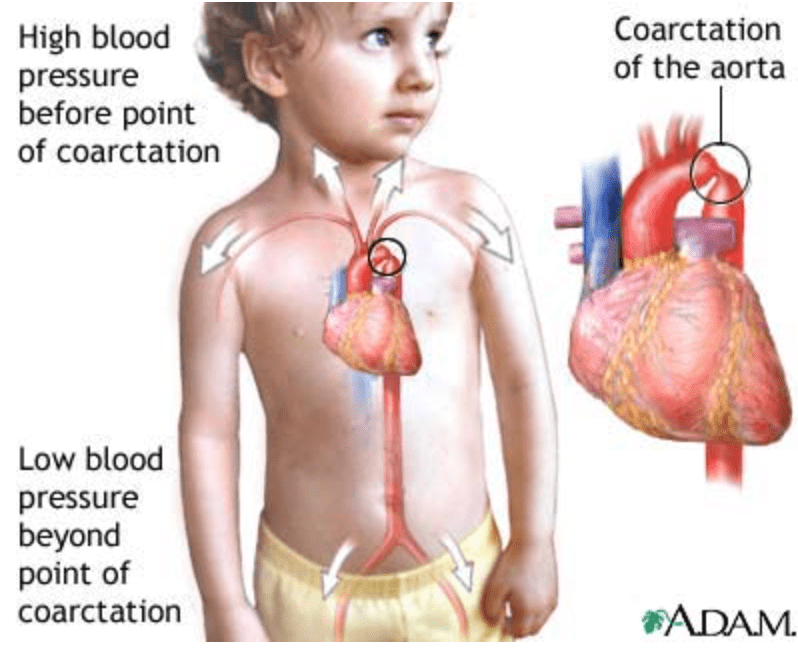
A 10-day-old infant presents with poor feeding, tachypnea, lethargy, and decreased urine output. The infant is mottled with HR 185, RR 60, and BP 62/38 in the right arm. Lungs are mildly tachypneic without significant crackles. You notice weak femoral pulses compared with the brachial pulses, cool lower extremities, and hepatomegaly.
What diagnosis should be suspected and what medication should be started urgently?
Critical Coarctation of the aorta
Start prostaglandin E1 (maintains the PDA)
- obtain 4 extremity blood pressures to look for an upper to lower extremity BP gradient
- prostaglandin can cause apnea -> be prepared with ventilatory support