Pharmacology
Risk Factors
Diagnostic Studies
ACS
Nursing Interventions (CABG/PCI)
Final Jeopardy
100
This medication is commonly administered to reduce platelet aggregation in ACS patient.
What is Asparin?
100
Excessive intake of this nutrient is linked to hypertension and heart disease.
What is sodium?
100
This cardiac biomarker is the most specific indicator of myocardial injury.
What is troponin?
100
This underlying process is responsible for most cases of acute coronary syndrome.
What is plaque rupture with thrombus formation?
100
Before PCI, the nurse confirms the patient has no allergy to this commonly used substance.
What is IV contrast dye/seafood?
200
This class of medications is used to decrease myocardial oxygen demand by lowering the heart rate?
What is a beta blocker?
200
A lifestyle risk factor strongly associated with endothelial damage and atherosclerosis.
What is smoking?
200
This diagnostic test evaluates how well the heart tolerates increased oxygen demand during activity or medication.
What is a stress test?
200
This immediate nursing action is the priority when a patient presents with suspected
What is a 12-lead EKG?
200
This pre‑procedure nursing intervention helps reduce the risk of aspiration before CABG or PCI.
What is NPO?
200
This rhythm change commonly occurs after PCI or thrombolytic therapy and is usually temporary.
What are reperfusion dysrythmias?
300
This is the most common side effect patients experience when taking nitrates.
What is a headache?
300
This chronic condition increases CAD risk due to hyperglycemia‑induced vascular damage.
What is diabetes?
300
This diagnostic procedure uses contrast dye to visualize coronary artery blockages.
What is a cardiac catheterization?
300
Chest pain that occurs at rest and does not follow a predictable pattern is called this.
What is unstable angina?
300
After a PCI with femoral access, the nurse monitors this complication at the insertion site.
What is bleeding or hematoma formation?
400
This class of drugs is used to dissolve an existing coronary clot in STEMI patients when PCI is not available.
What are thromblytics?
400
This modifiable risk factor involves elevated LDL and low HDL levels.
What is hyperlipidemia?
400
An elevated troponin level indicates damage to this part of the heart.
What is myocardium?
400
An older adult with acute coronary syndrome is more likely to present with this symptom instead of classic chest pain.
What is SOB, fatigue and confusion?
400
This nursing intervention is essential to maintain graft and stent patency after CABG or PCI.
What is administering and reinforcing antiplatelet therapy?
500
Patients taking ACE inhibitors must be monitored for this potentially life‑threatening complication.
What is angioedema?
500
This genetic condition predisposes patients to early cardiovascular disease.
What is family history of CAD?
500
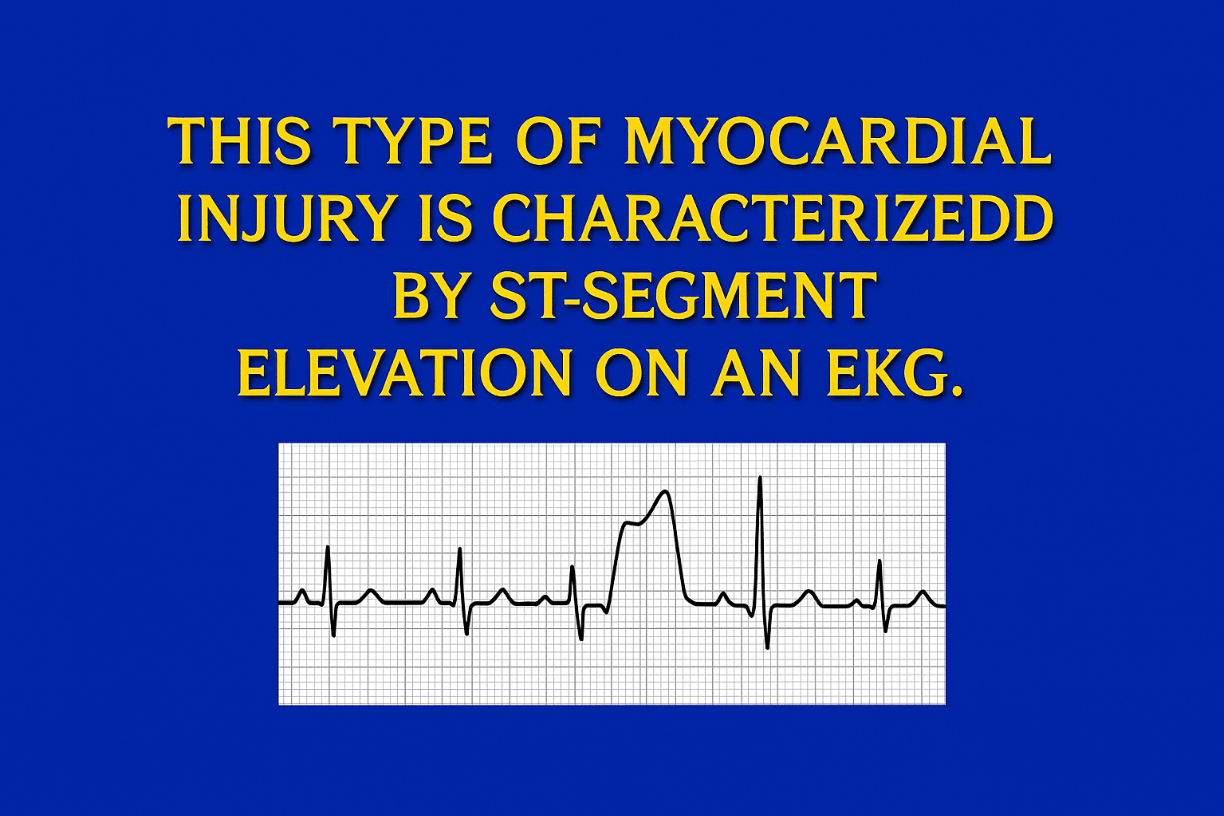
What is a ST-segment elevation (STEMI)?
500
The priority treatment for a patient with STEMI is rapid restoration of coronary blood flow using this intervention.
What is a PCI?
500
After CABG surgery, this nursing intervention helps prevent postoperative pulmonary complications.
What is encouraging incentive spirometry and deep breathing?