ABCs of Recs
Prev Meds (Rx)
D Bad Thing to Do
Feeling Lucky
Testing...1,2,3
100
The USPSTF recommends providing interventions during pregnancy and after birth to support breastfeeding.
What is Grade B.
Any breastfeeding appears to be more beneficial than no breastfeeding, and longer durations of breastfeeding confer greater benefits than shorter durations. Breastfeeding is also associated with positive maternal health outcomes, such as reduced risk of maternal breast and ovarian cancer and type 2 diabetes.
100
The USPSTF recommends that all women who are planning or capable of pregnancy take a daily supplement containing this.
What is 0.4 to 0.8 mg (400 to 800 µg) of folic acid. (Grade A)
The critical period for supplementation starts at least 1 month before conception and continues through the first 2 to 3 months of pregnancy for prevention of neural tube defects.
100
The USPSTF recommends against screening for asymptomatic bacteriuria in this specific population of adults.
What is nonpregnant adults.
There is adequate evidence that treatment of screen-detected asymptomatic bacteriuria in nonpregnant adults has no net benefit.
100
True or False: Advisory Committee on Heritable Disorders in Newborns and Children recommends that every newborn screening program include a Uniform Screening Panel that screens for 35 core disorders and 26 secondary disorders.
What is True.
At the present time there is significant variability among the State programs with regard to policies and practices employed after screening and in initial notification of health care professionals.
100
The USPSTF recommends vision screening at least once in all children aged 3 to 5 years to detect this or its risk factors.
What is amblyopia.
(Grade A)
Risk factors for amblyopia include strabismus; high, uncorrected refractive errors (eg, myopia, hyperopia, and astigmatism); anisometropia; and media opacity.
Additional risk factors associated with amblyopia, strabismus, or refractive errors include family history in a first-degree relative, prematurity, low birth weight, maternal substance abuse, maternal smoking during pregnancy, and low levels of parental education.
200
The USPSTF recommends that clinicians provide or refer pregnant and postpartum persons who are at increased risk of perinatal depression to counseling interventions.
What is Grade B.
Perinatal depression affects as many as 1 in 7 women and is one of the most common complications of pregnancy and the postpartum period.
Provide counseling interventions to women with 1 or more of the following: a history of depression, current depressive symptoms (that do not reach a diagnostic threshold), certain socioeconomic risk factors such as low income or adolescent or single parenthood, recent intimate partner violence, or mental health–related factors such as elevated anxiety symptoms or a history of significant negative life events.
200
The USPSTF recommends this prophylactic ocular topical medication for all newborns to prevent gonococcal ophthalmia neonatorum.
What is erythromycin ophthalmic ointment.
(Grade A)
Gonococcal ophthalmia neonatorum can cause corneal scarring, ocular perforation, and blindness as early as 24 hours after birth. In the absence of ocular prophylaxis, transmission rates of gonococcal infection from mother to newborn are 30% to 50%.
200
The USPSTF recommends against screening for this in asymptomatic pregnant women at low risk for preterm delivery.

What is bacterial vaginosis.
The USPSTF found good evidence of a lack of benefit from treatment in low-risk, asymptomatic pregnant women. Randomized clinical trials of good quality pooled with 2001 report data showed no treatment effects for asymptomatic women at low risk for preterm delivery at less than 37 weeks.
200
The USPSTF recommends screening for gestational diabetes mellitus (GDM) in asymptomatic pregnant women after this many weeks of gestation.
What is after 24 weeks of gestation. (Grade B)
The USPSTF determined that screening for and treatment of GDM in women after 24 weeks of gestation are associated with moderate health improvements in the mother and infant through the collective reduction in preeclampsia, macrosomia, and shoulder dystocia.
200
The USPSTF recommends screening for this using urine culture in pregnant persons.
What is asymptomatic bacteriuria. (Grade B)
Pyelonephritis is associated with perinatal complications including septicemia, respiratory distress, low birth weight, and spontaneous preterm birth.
300
The USPSTF recommends screening for hepatitis B virus (HBV) infection in pregnant women at their first prenatal visit.
What is Grade A.
The USPSTF found convincing evidence that universal prenatal screening for HBV infection substantially reduces perinatal transmission of HBV and the subsequent development of chronic HBV infection.
300
This is the treatment for bacterial vaginosis.
What is oral metronidazole and oral clindamycin, as well as vaginal metronidazole gel or clindamycin cream, are used to treat bacterial vaginosis.
300
The USPSTF recommends against the use of these combined medication for the primary prevention of chronic conditions in postmenopausal women.
What is estrogen and progestin.
Combined estrogen and progestin use is associated with a decreased risk of fractures, diabetes, and colorectal cancer; however, it is also associated with an increased risk of invasive breast cancer, coronary heart disease, thromboembolic events, stroke, dementia, gallbladder disease, and self-reported urinary incontinence.
300
Name one valid criteria in the diagnosis of preeclampsia.
1) elevated blood pressure (≥140/90 mm Hg on 2 occasions 4 hours apart, after 20 weeks of gestation) AND
either 2) proteinuria (≥300 mg/dL on a 24-hour urine protein test, protein to creatinine ratio of ≥0.3 [each measured as mg/dL],
or 3) urine protein dipstick reading >1 (if quantitative analysis is not available)
or 4) in the absence of proteinuria, thrombocytopenia, renal insufficiency, impaired liver function, pulmonary edema, or cerebral or visual symptoms.
300
This is the criteria for clinical diagnosis of bacterial vaginosis: (fulfilling 3 of 4 criteria): vaginal pH greater than 4.7, the presence of clue cells on wet mount, thin homogeneous discharge, and amine "fishy odor" when potassium hydroxide is added to the discharge.
What is the Amsel criteria.
400
The USPSTF recommends screening for preeclampsia in pregnant women with blood pressure measurements throughout pregnancy.
What is Grade B.
Evidence does not support point-of-care urine testing to screen for preeclampsia, as evidence suggests that proteinuria alone may not be a good predictor of preeclampsia health outcomes.
Proteinuria measurement is used in the diagnostic criteria for preeclampsia.
400
This is the treatment for syphilis in pregnant women.
What is parenteral benzathine penicillin G.
Women who report a penicillin allergy should be evaluated and, if found allergic, desensitized and treated with penicillin.
400
The USPSTF recommends against the use of this medication alone for the primary prevention of chronic conditions in postmenopausal women who have had a hysterectomy.
What is estrogen.
Estrogen use alone is associated with a decreased risk of fractures, invasive breast cancer, and diabetes; however, it is also associated with an increased risk of thromboembolic events, stroke, dementia, gallbladder disease, and self-reported urinary incontinence.
400
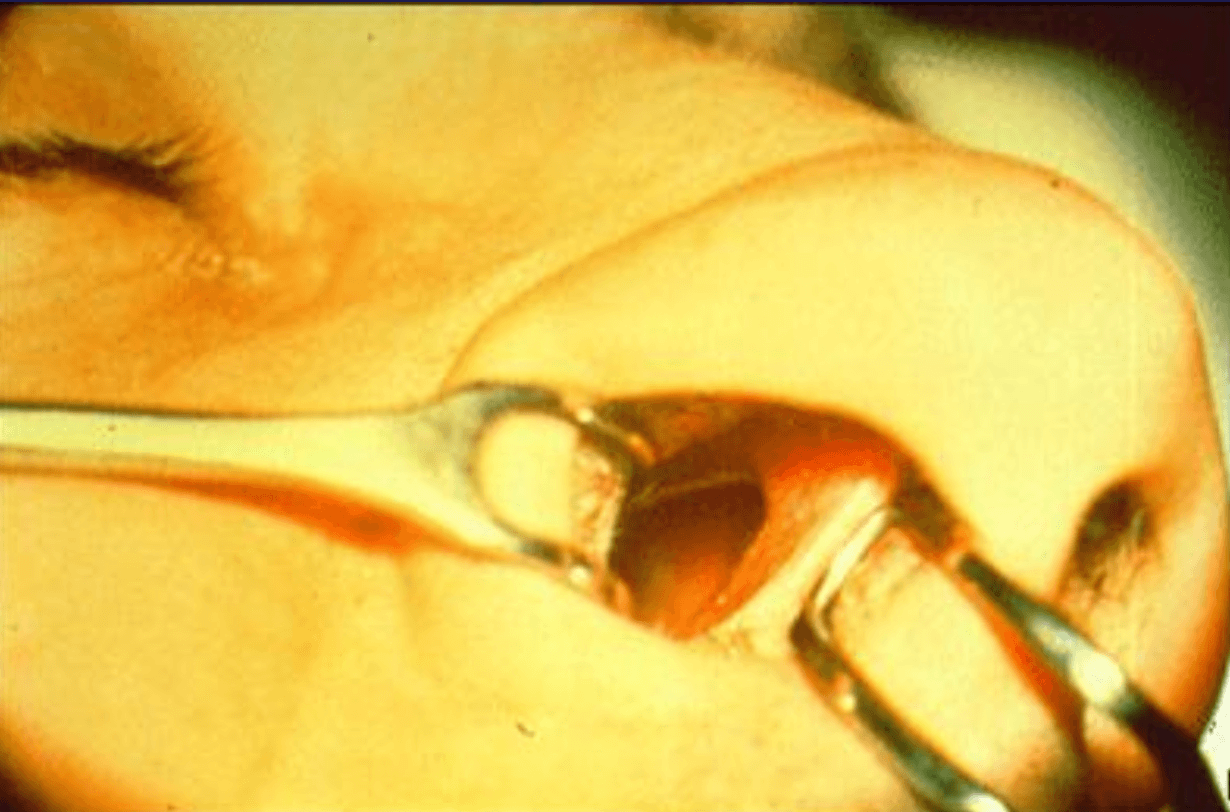
What is chrome hole caused by aerosols.
400
This type of test is less commonly used in clinical practice but is primary means used to diagnose bacterial vaginosis in research studies.
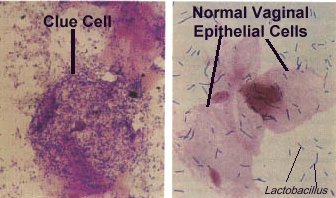
What is Gram stain.
Gram stain of vaginal discharge may be a more reliable means of diagnosing bacterial vaginosis and offers the added ability to quantify and classify bacterial load.
Less used in clinical practice because need for laboratory facilities and the delay in receiving diagnostic results.
500
The USPSTF strongly recommends Rh(D) blood typing and antibody testing for all pregnant women during their first visit for pregnancy-related care.
What is Grade A.
If an Rh(D)-positive or weakly Rh(D)-positive infant is delivered, a dose of Rh(D) immunoglobulin should be repeated postpartum, preferably within 72 hours after delivery.
Mother's immune system may react to the D antigen on the baby's blood cells. It will be treated as a foreign invader and your body will produce antibodies against it.
500
The USPSTF recommends the use of this medication as preventive medication after 12 weeks of gestation in women who are at high risk for preeclampsia.
What is low-dose aspirin (81 mg/d).
(Grade B)
High Risk Factors:
- History of preeclampsia, especially when accompanied by an adverse outcome
- Multifetal gestation
- Chronic hypertension
- Type 1 or 2 diabetes
- Renal disease
- Autoimmune disease (systemic lupus erythematous, antiphospholipid syndrome)
Recommend low-dose aspirin if the patient has ≥1 of these high-risk factors
500
The USPSTF recommends against daily supplementation with this for the primary prevention of fractures in community-dwelling, postmenopausal women.
What is 400 IU or less of vitamin D and 1000 mg or less of calcium.
Evidence from more recent studies confirms that the evidence on fracture prevention with doses of vitamin D greater than 400 IU daily is inconsistent and inadequate, because of underpowering of studies at higher doses.
500
Degreaser's flush is caused by exposure to this agent.
What is trichloroethylene (TCE) vapor.
500
The USPSTF recommends repeated Rh(D) antibody testing for all unsensitized Rh(D)-negative women at 24 to 28 weeks' gestation, unless the biological father is known to be this.
What is Rh(D)-negative.
(Grade B)
Intervention with Rh(D) immunoglobulin, as appropriate, provides additional benefit over a single test at the first prenatal visit in preventing maternal sensitization and improving outcomes for newborns. The benefits of repeated testing substantially outweigh any potential harms.