Group 1
Group 2
Group 3
Group 4
Group 5
100
These rows have the same number of energy levels or shells and chemical properties are NOT all similar.
What are periods?
100
These elements have properties of both metals and nonmetals.
What are Metalloids?
100
This is the basic unit of chemical element
Atoms
100
These vertical columns have chemical properties that are VERY similar.
What are Groups or Families?
100
These group is the most reactive especially with water
What is alkali metals; group 1?
200
These elements have no luster (dull), are brittle (breaks easily), and are a poor conductor of heat.
What are nonmentals?
200
These elements are solid at room temperature (except mercury), have a shiny luster, are ductile(bend into a wire), and malleable.
What are metals?
200
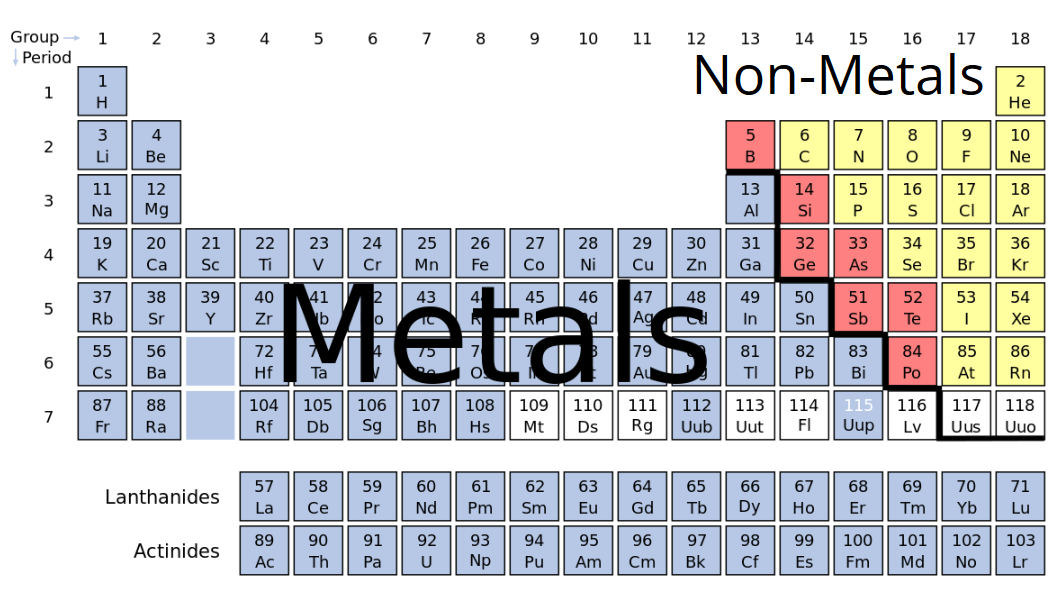
What is an example of a metalloid?

200
These elements are not ductile and not malleable,
What are nonmentals?
200
while this group is the most nonreactive (stable)?
noble gases; group 18
300
Sodium (Na) is a highly reactive element. Which family does it belong to?
Alkali Metals
300
These elements are good conductors (heat and electricity)
What are metals?
300
What is an example of a metal?
300
Who is the scientist that came up with the idea of organizing elements by their properties?
Who is Dmitri Mendeleev
300
The atomic mass is the sum of these two things.
What are protons and neutrons
400
What is number 14 called?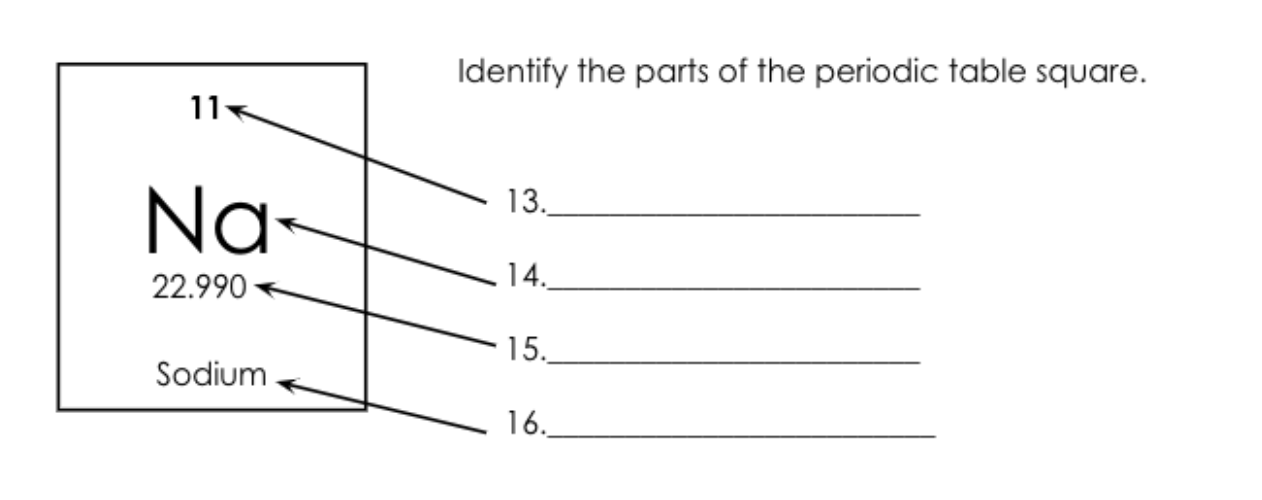
Atomic Symbol.
400
Which two are nonmetals?
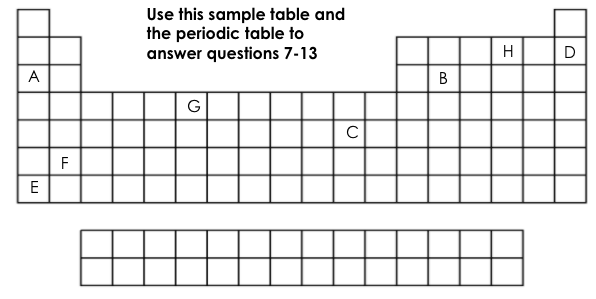
H & D
400
What is number 15 called?
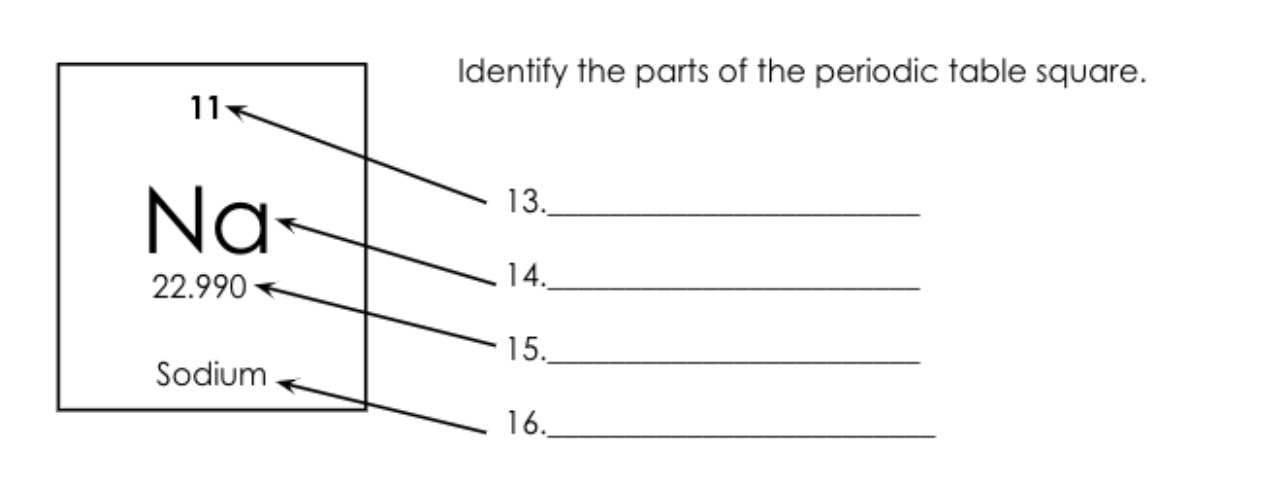
Atomic Mass = Protons + Neutrons
400
What is number 13 called?
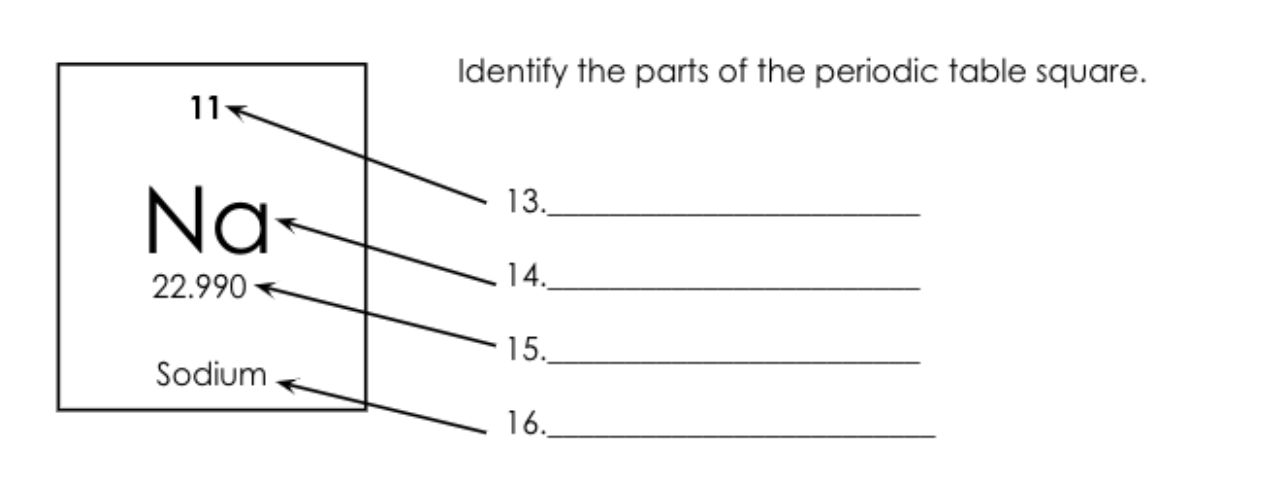
Atomic Number = Protons/electrons
400
What is number 16 called?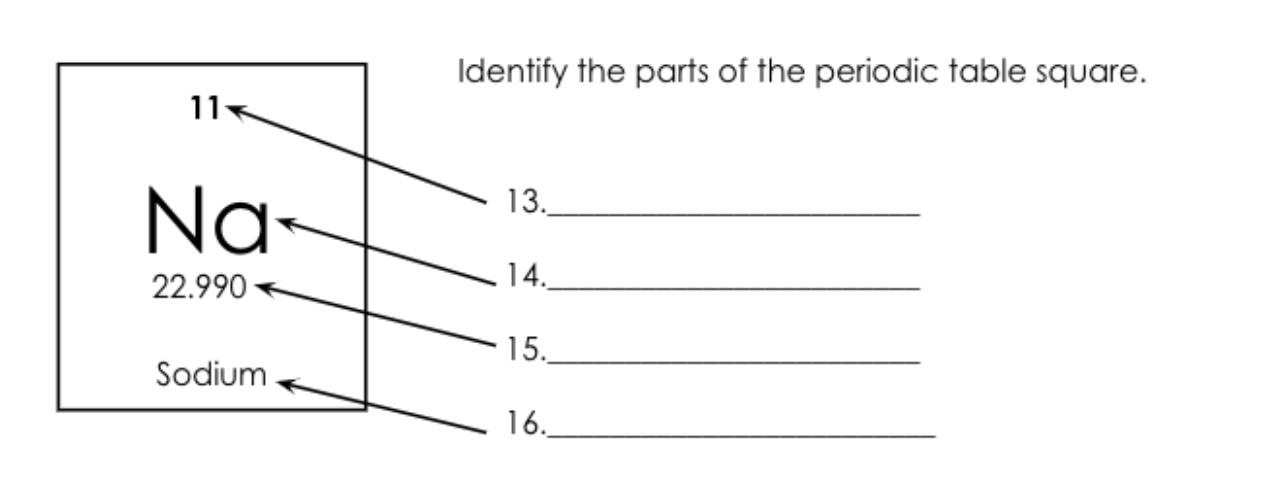
Element Name
500
Which element is nonreactive (inert)?
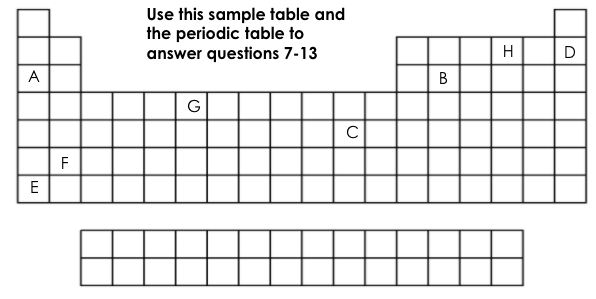
D
500
Which element is a metalloid?
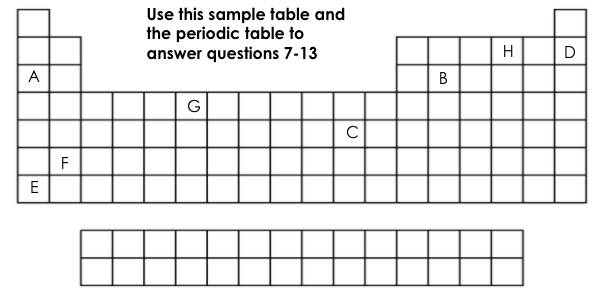
B
500
Which element has an alkaline earth metal?
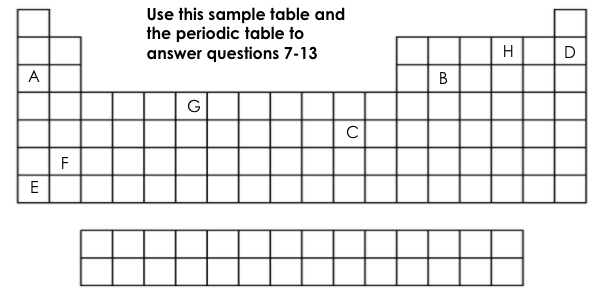
F
500
What two elements are transition metals?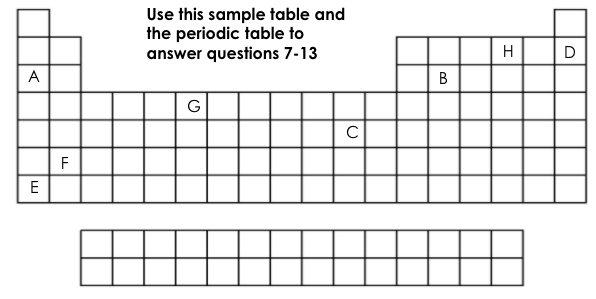
G & C
500
Which element is the most reactive on this table?
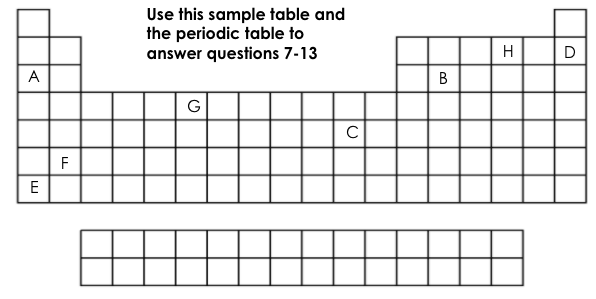
E