Place It & Frame It
Follow the Lines
Balance & Repeat
Sharp or Blurry?
Change Your View
100
A rule-of-thirds grid has two lines going up and down and two going across. How many equal boxes does that make?
Nine equal boxes.
100
Name ONE thing in a scene that a photographer could use to guide your eyes toward a subject.
A path, road, railing, fence, row of objects or another visible line.
100
What is the difference between symmetry and a pattern?
Symmetry has similar sides around a middle line. A pattern has something that repeats.
100
A subject is sharp, but much of the background is blurry. Is this shallow or deep depth of field?
Shallow depth of field.
100
The camera is near the ground, looking UP at a subject. Is this closer to a bird's-eye view or a worm's-eye view?
Worm's-eye view.
200
Look at the courtyard. What in the scene acts as a frame? What does it surround?
The large stone arch frames
200
Point to TWO edges that guide your eyes down the walkway. Where do they lead?
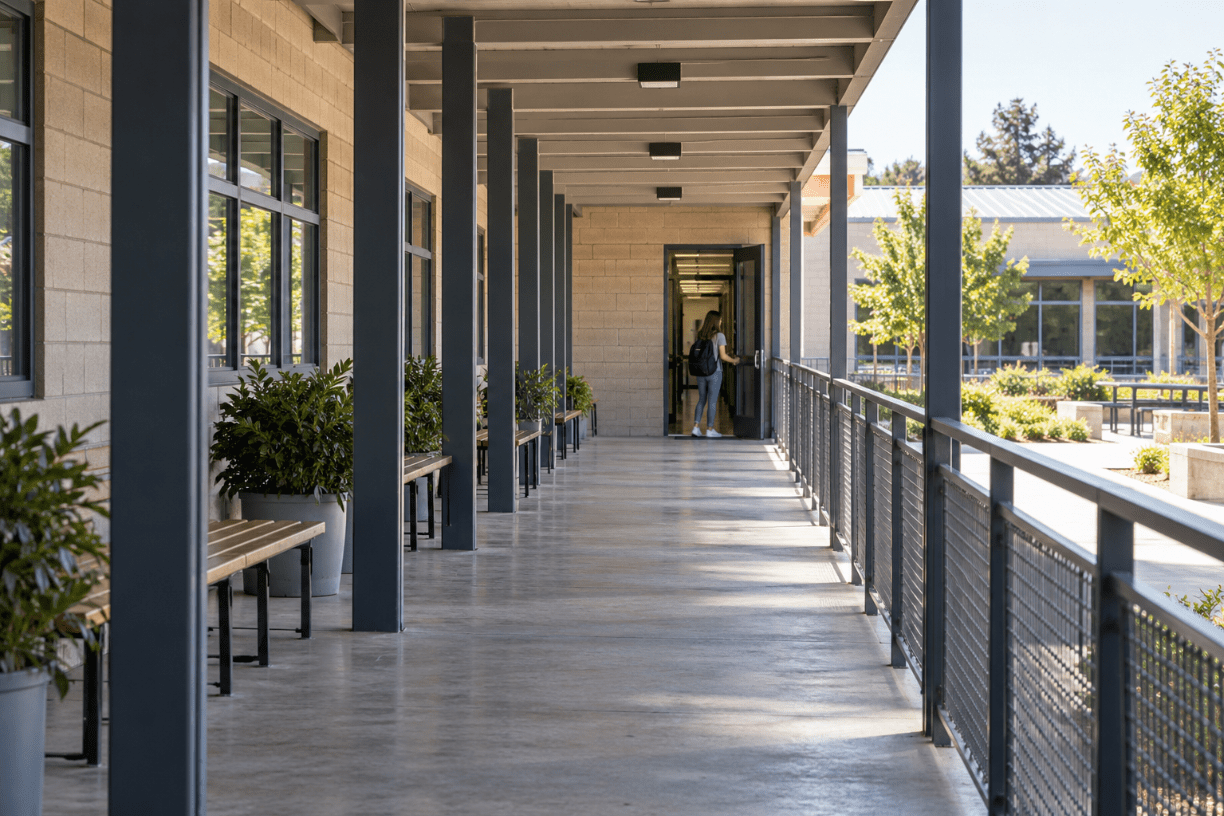
The railing edge and a roof/beam or walkway edge guide attention toward the far doorway.
200
Look at the library. Name TWO parts that look similar on opposite sides. Then name ONE thing that repeats.

The bookshelf arrangements on the left and right look similar. Shelves, book rows or window panes repeat.
200
 Look at the garden. Name ONE object that is sharp and ONE thing behind it that is blurry.
The large orange flower is sharp. The people or the school building behind it are blurry.
200
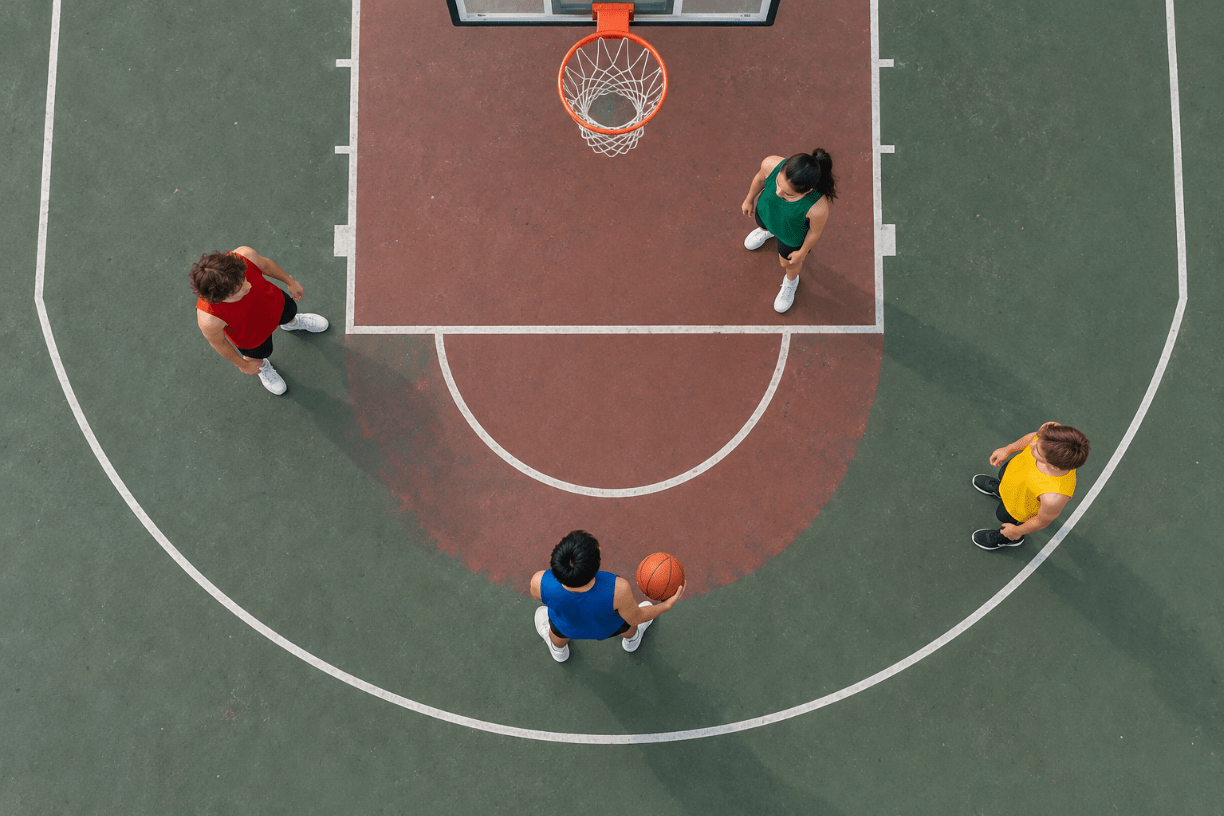 What TWO visible details show that the basketball picture was taken from above?
We see the tops of the players' heads/shoulders and the court layout spread out below the camera.
300
A student says, "The person is off to one side, so this must use rule of thirds." What should you check before agreeing?
Check whether the person is near a line or crossing on a 3-by-3 grid.
300
Two pictures both contain a line. In one, the line guides your eyes toward the subject. In the other, it does not. Which better shows useful leading lines, and why?
The first picture, because its line directs attention toward the subject.
300
A row of seats repeats across a picture, but the left and right sides do not match. Can the picture still show a pattern? Why?
Yes. Repeated seats make a pattern even if the overall sides do not match.
300
Picture A has one sharp person and a blurry crowd. Picture B has sharp people from front to back. Which has deeper depth of field? Explain.
Picture B, because more of the scene is sharp from front to back.
300
A picture was taken at eye level. Someone crops out the sky. Does that move the original camera lower? Why or why not?
No. Cropping changes what is included, not where the original camera was.
400
A person is near a thirds line. An editor trims away a large part of the left side. Is the person guaranteed to stay near a thirds line? Explain.
No. The picture boundaries changed, so the thirds grid changes
400
A student is the subject. One fence leads your eyes toward the student. Another leads toward an empty corner. Which fence would you keep most visible, and why?
Keep the fence that leads toward the student most visible so viewers can find the subject.
400
A school entrance has matching sides. You want a balanced picture that shows this. Where would you place the camera, and what would you keep visible?
Place the camera roughly in the middle, facing the entrance, and keep a similar amount of both sides visible.
400
You need a clear picture of an entire group, but only the front person is sharp. Would trimming away everyone else meet that goal? Explain.
No. It removes the group instead of showing the whole group clearly.
400
You need to show how players are spaced around a court. Would you choose an overhead view or a low view behind one player? Give a reason.
An overhead view usually shows the players' positions and spacing more clearly.
500
 You need a picture of the school entrance that clearly shows framing. What TWO things would you keep in this picture, and why?
Keep the stone arch and the school entrance visible together. The arch surrounds the view and draws attention into the scene.
500
The doorway should stand out. Name ONE part you would keep and ONE part you could trim away without losing the leading lines. Explain.
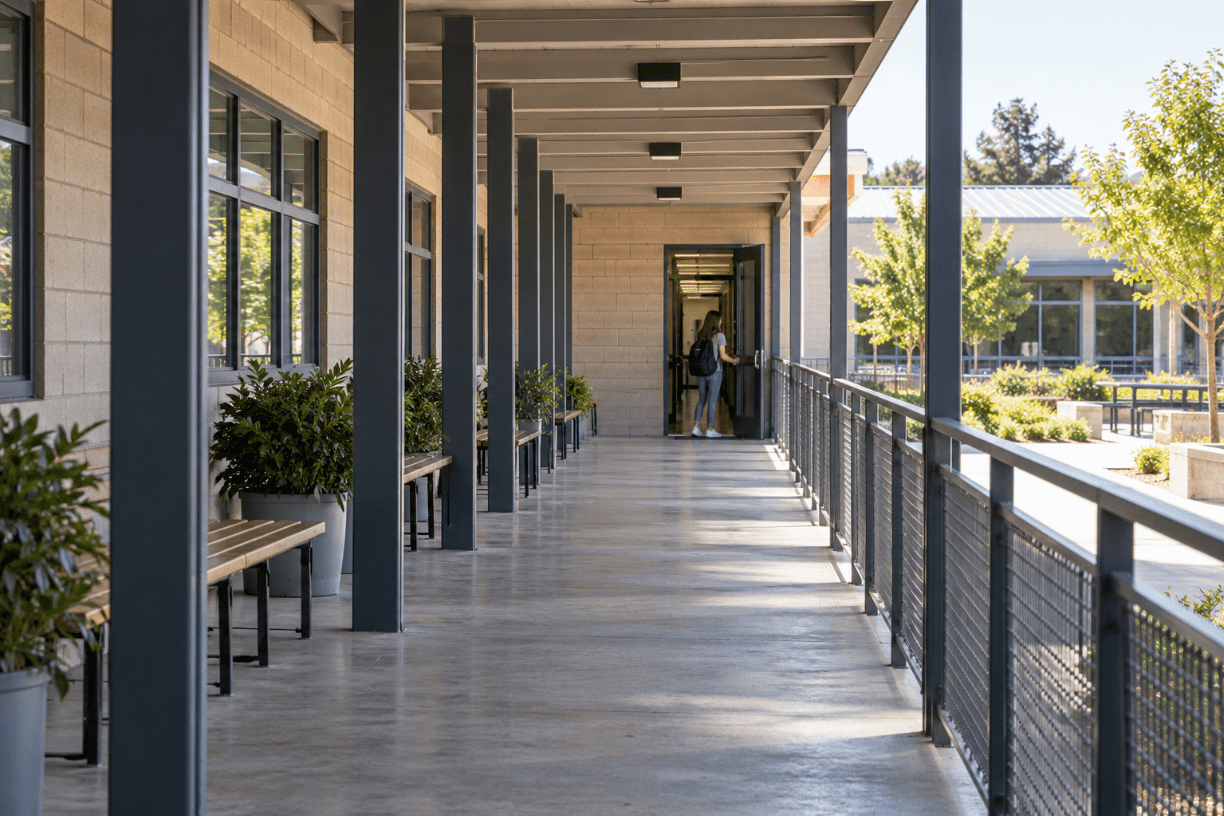
Keep a railing or walkway edge and its route toward the doorway. Trim some of the open courtyard on the right while keeping that route visible.
500
A student says, "The reader is only on the left, so this picture has no symmetry at all." Do you agree? Use TWO details from the picture.

Not completely. The shelves and central window/aisle create an approximately balanced arrangement, even though the reader and small details do not match.
500
You need to show BOTH the flower and the students clearly. Does this picture meet that goal? What would you change in a new picture?

Not fully: the flower is sharp but the students are blurry. Use deeper depth of field in a new picture so both distances can look sharp.
500
Compare the full court picture with a version showing only the player holding the ball. What changes about the story? What stays the same about the camera angle?
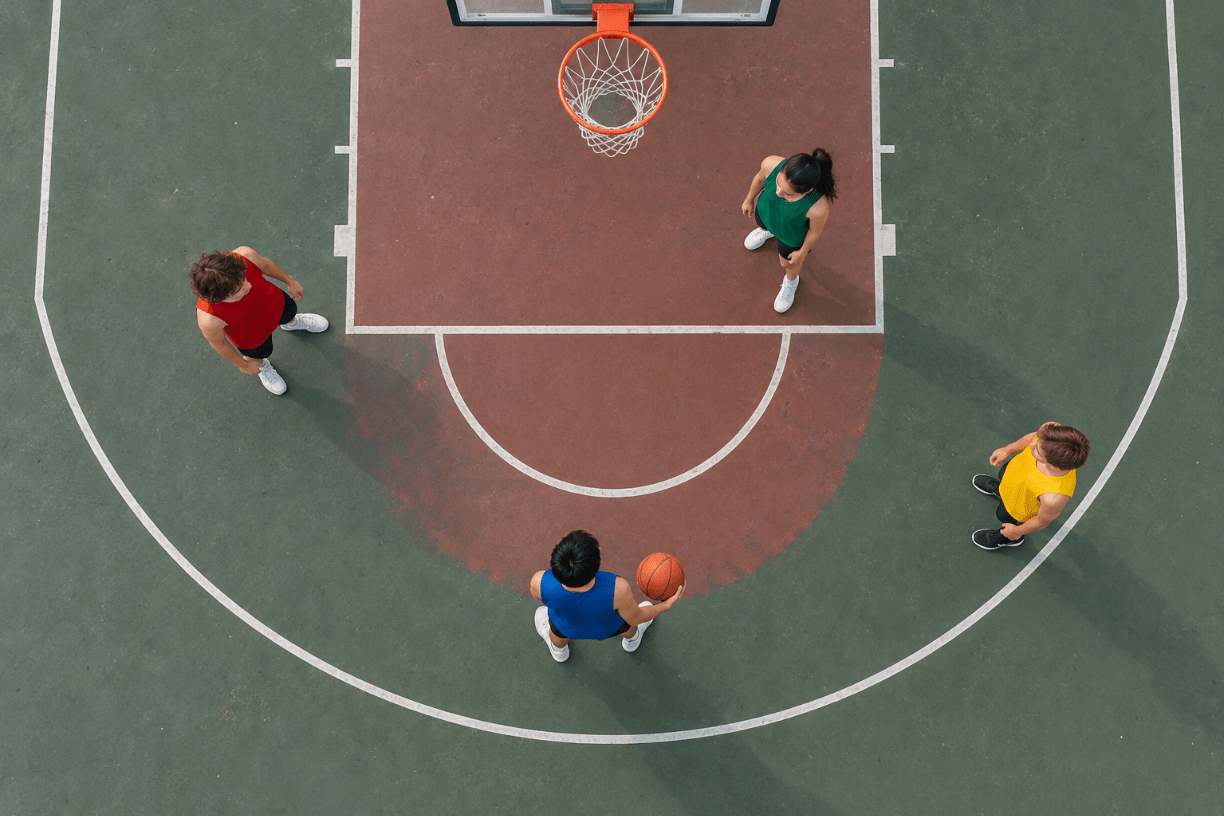
The tighter version emphasizes the player and ball but loses other players' positions and court context. The original viewpoint stays overhead.