Force and Motion
Thin Lenses
Heat Transfer
Specific Heat Capacity
(Blank)
100
What is acceleration?
The rate of change of velocity.
100
What is a convex lens?
A lens that converges parallel rays to a focal point
100
What is conduction?
Heat transfer through solids without movement of particles.
100
What is specific heat capacity?
The amount of heat energy needed to raise the temperature of 1 kg of a substance by 1°C.
100
What is Hooke’s Law?
The extension of a spring is directly proportional to the applied force.
200
The formula for speed.
speed = distance ÷ time?
200
What is a concave lens?
A lens that causes parallel rays to spread out.
200
What is convection?
Heat transfer by movement of fluids due to density differences.
200
What is the unit of specific heat capacity?
J/kg°C
200
What is formula for Hooke’s law?
F = kx
300
What is the unit of force?
Newton
300
What is focal length?
The distance from the center of the lens to the focal point.
300
What is radiation?
Heat transfer that does not require a medium.
300
What is the equation relating heat energy, mass, specific heat capacity, and temperature change?
Q=mcΔT?
300
The unit of the spring constant.
N/m or N/cm
400
What is Newton’s First Law?
The law stating that an object will remain at rest or in uniform motion unless acted on by a force.
400
Type of lens used in a magnifying glass.
Convex lens
400
Why metals are good conductor?
Metals are good conductors because they have many free electrons
400
Which has a lower specific heat capacity, water or copper?
copper
400
What is the limit of proportionality (or elastic limit)?
The point beyond which a spring does not return to its original shape.
500
How about the motion of object from this graph?
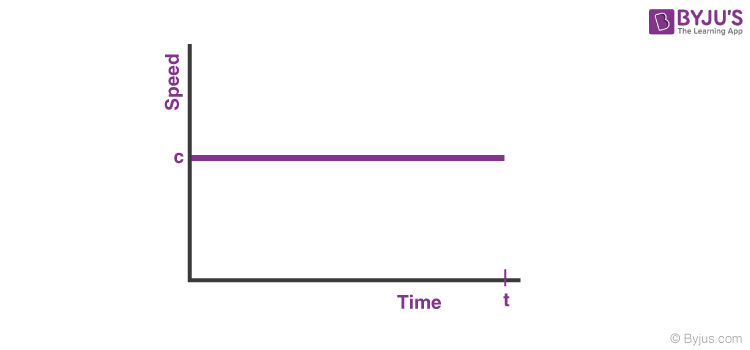
Constant acceleration
500
Type of image formed by a convex lens when the object is beyond the focal length.
real, inverted image
500
How does a black surface affect heat absorption and emission?
A surface absorbs and emits heat very well.
500
What are the effects of water having a high specific heat capacity?
Water heats up and cools down more slowly than most substances.
500
The gradient of a force–extension graph represents …
Spring constant