Measurements
Kinematic quantities
Distance-time graphs
100
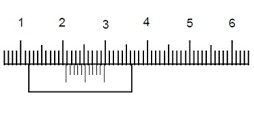
What is the reading on the vernier calipers?
2.07 cm
100
Define the term "displacement".
It is the distance measured from a reference point to a given point in a specified direction.
100
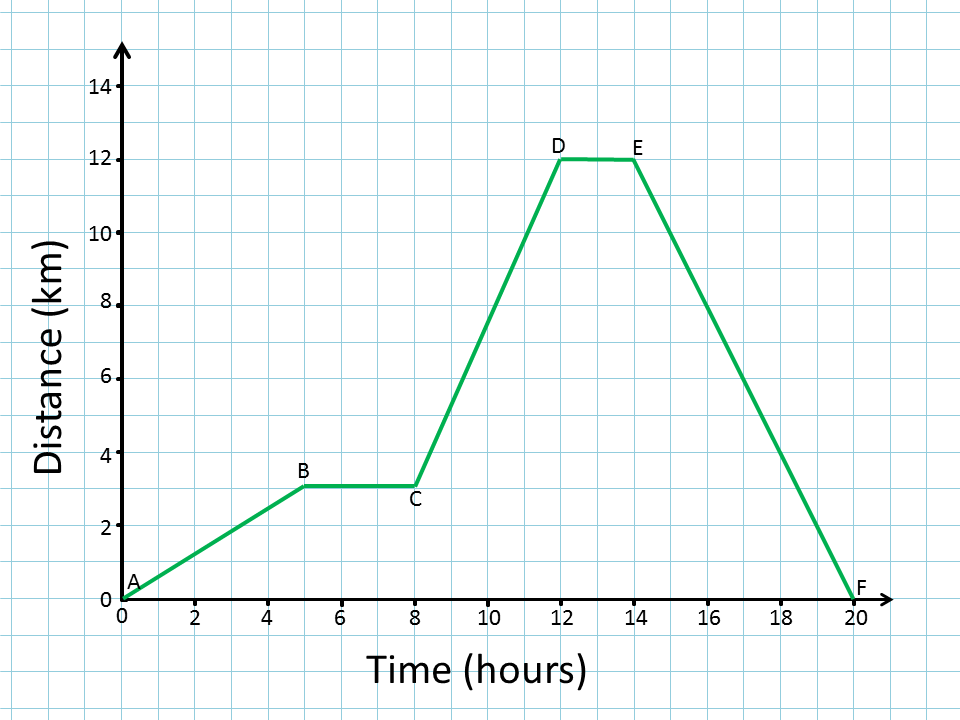
Describe the motion of the object from A to B and from B to C.
A to B: The object moves at a constant speed.
B to C: The object is at rest / stationary
200
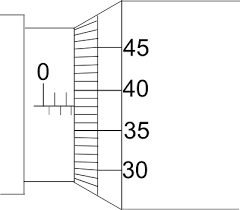
What is the reading on the micrometer screw gauge (in mm)?
2.88 mm
200
What is the difference a scalar and a vector?
A scalar is a quantity with magnitude only,
but a vector is quantity with both magnitude and direction.
200
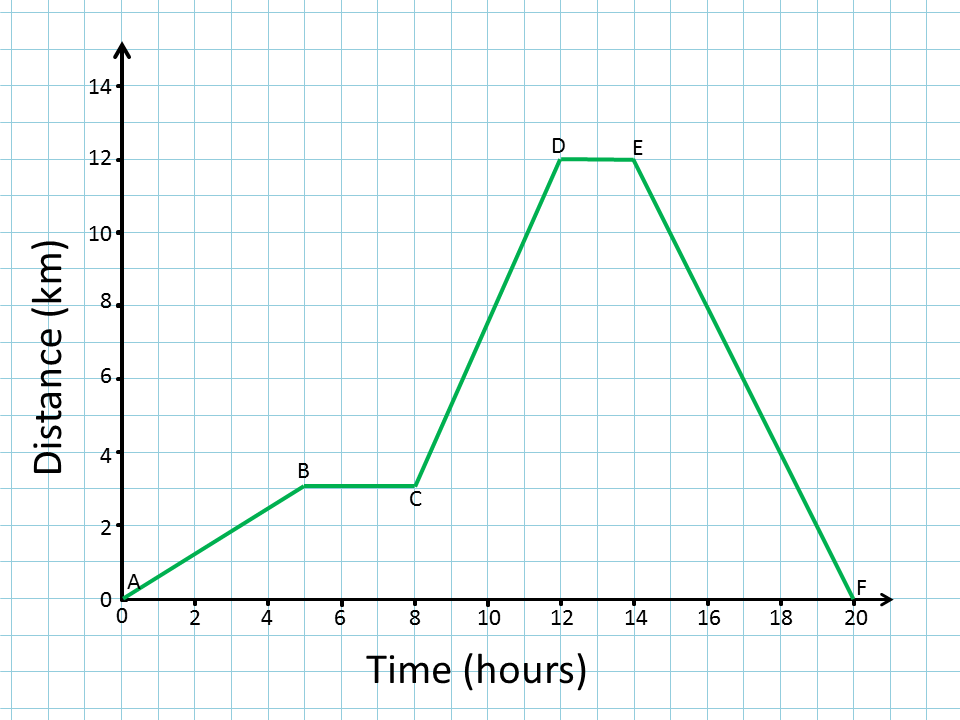
Calculate the objects speed from C to D.
Speed = 2.25 km/h
300
What are the precisions of a metre rule, vernier callipers and micrometer screw gauge?
Metre rule - 0.1 cm
Vernier calipers - 0.01 cm
Micrometer screw gauge - 0.01 mm
300
How can you determine velocity from a displacement-time graph?
Velocity is the gradient of a displacement-time graph.
300
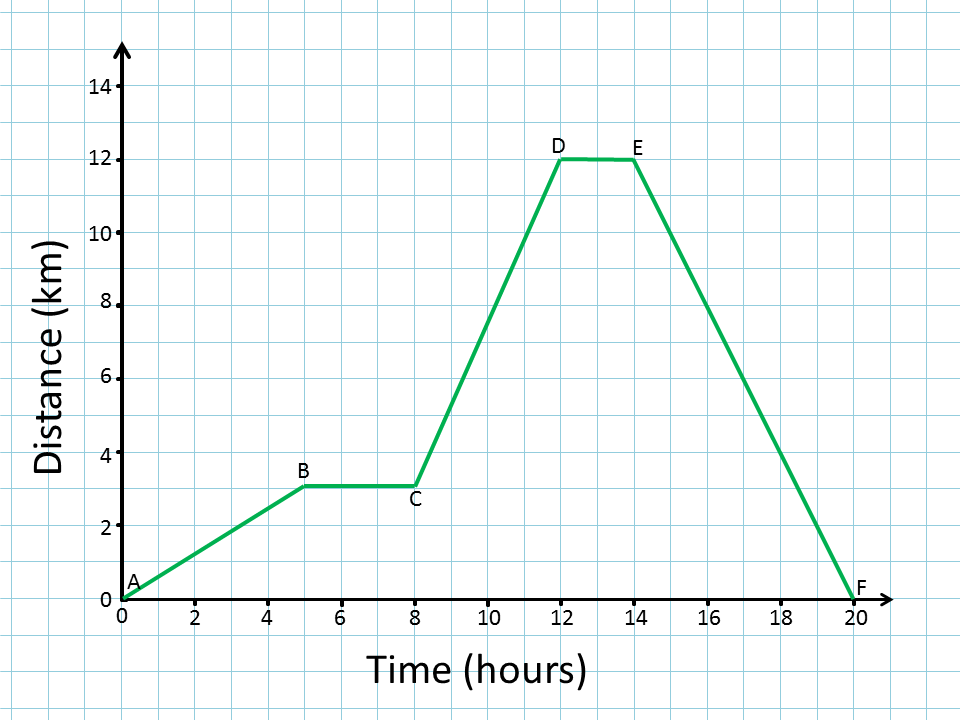
What is the total distance travelled by the body during the entire journey?
24 km
400
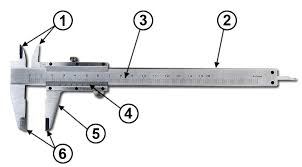 Name the parts of a vernier calipers labelled 1, 3, 4 and 5.
1 - internal jaws
3 - main scale
4 - vernier scale
5 - external jaws
400
Give two examples, each, of scalars and vectors.
SCALARS:
length, time, energy, temperature, mass etc.
VECTORS:
displacement, velocity, accleration, force etc.
400
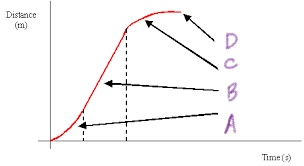
Describe the motion of the object during each section (A, B, C and D).
A - object moves with increasing speed (it accelerates)
B - object moves with constant speed
C - object moves with decreasing speed (it decelerates)
D - object comes to rest
500
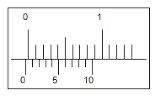
What is the zero error reading on the vernier calipers shown here?
-0.04 cm
500
Explain the motion of an object that is moving with a "constant velocity".
Give an example how an object's velocity can change while its speed is constant.
The object moves at a constant speed in a straight line.
An object moving at a constant speed in a circle /
500
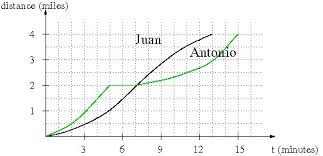
Two boys, Juan and Antonia, take part in a race against each other. Their motion are described in the graph above.
(i) Who is ahead at the start of the race?
(ii) At what point does the person in second place catch up with the person initially in first place?
(iii) Who reaches the finish line first? How long after does the second person cross the finish line?
(i) Antonio
(ii) At time t = 7 min
(iii) Juan. Antonio crosses the finish line 2 min after Juan.