Waves
Light
Acids & Bases
EM Spectrum
The Process
100
What is a longitudinal wave? Give an example.
Wave in which particle movement is parallel to wave propagation through the medium. Sound waves are an example.
100
What is a particle of light called?
A photon.
100
What does pH stand for?
potential Hydrogen
100
What is the electromagnetic spectrum?
The complete range of electromagnetic radiation from radio waves (longest) to gamma waves (shortest).
100
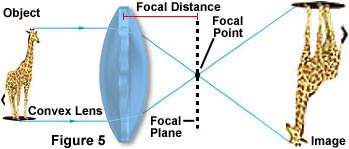
How is focal point related to the inverted image at the back of the camera?
Light crosses over itself at the focal point, causing any image on the other side to be inverted due to the rectilinear propagation of light.
200
Draw and label the parts of a transverse wave.
200
How does rectilinear propagation describe light behavior?
1. Light moves in straight lines.
2. Light moves in all directions from its source.
200
What pH ranges are associated with acids? Bases?
Acids: < 6.8
Bases: >7.2
200
What wavelengths are associated with the visible light spectrum?
400nm - 700nm
200
How does focal length (plane) affect the type of image taken? Exposure time?
The shorter the focal length, the shorter the exposure time, the wider the image.
The longer the focal length, the longer the exposure time, the more narrow the image.

300
Describe how reflection works.
Angle of incidence is equal to angle of reflection.
300
How are colors related to wavelength?
Each color is related to a specific wavelength in the visible light spectrum.
300
Name two properties of an acid.
Name two properties of a base.
Acid: Sour, corrosive, litmus paper turns red
Base: Slippery, bitter, conduct electricity, turn litmus blue
300
Which parts of the EM spectrum are adjacent to visible light? Make sure to say whether they fall on the longer or shorter side of the visible light spectrum.
Infrared --> longer side of spectrum
Ultraviolet --> shorter side of spectrum
300
Why did we paint the inside of the pinhole cameras black?
Black absorbs all wavelengths of light, preventing reflection and the distortion of the images.
400
Define refraction and give an example of light refracting.
The change in velocity (speed and direction) of a wave when it moves from one medium to another.

400
What is white light?
White is a combination of all wavelengths of light. It is when all wavelengths of light are reflected together.
400
How are protons (H+) related to the pH scale?
Acids release protons (H+) into solution while bases absorb protons (H+) from solution.
400
How is energy related to the amplitude of a wave? How is energy related to wavelength?
Why do we use red light in the dark room?
Positively correlated with amplitude.
Negatively correlated with wavelength.
Red is the longest wavelength, so we use it in the dark room as it does not affect the photo paper.
400
Explain the purpose of each chemical in the dark room.
Developer --> Base that reacts with silver crystals in photo paper, darkening them to form image.
Stop bath --> Acid that neutralizes developer to stop the development process.
Fixer --> Washes off unreacted AgBr, making the image permanent and no longer photosensitive.
500
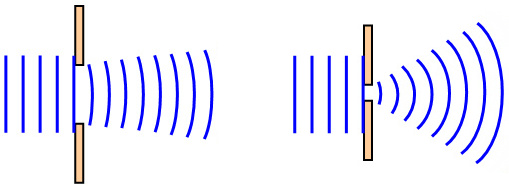
Define diffraction and give an example of light diffracting.
When waves encounter a barrier, they move around it. The blurry edges of a shadow are one example of light diffracting.
500
Describe how the pinhole camera works like the eye.

500
1. What ion is released by bases into solution?
2. What is a neutralization reaction? Give an example from our project.
1. OH- (hydroxide)
2. Mixing an acid and a base to form a neutral substance. The mixing of the developer and the stop bath created a neutral solution.
500
Explain how electromagnetic waves transfer energy.
When electromagnetic waves come into contact with a surface, they transfer energy to that surface. This energy becomes heat energy.
When light comes into contact with an object, photons transfer kinetic energy to the surface. When this energy is absorbed, it becomes thermal energy.
500
Explain how an image forms on the photo paper.
When a photon of light contacts the photo paper, it transfers kinetic energy to the paper.
This kinetic energy is a catalyst for the decomposition of silver bromide (AgBr).
The silver moves into the paper, while the bromine remains in the gloss.
The decomposed silver will darken in the developer to form an image.