1 Atoms and Elements
2 The Periodic Table
3 Chemical Bonding
4 Chemical Reactions
5 Quantitative Chemistry
6 Thermochemistry
7 Reaction Rates and Equilibrium
8 Acids & Bases
100
This is the tiny particle that makes up all matter.
What is an atom?
100
The periodic table is organized by increasing this number.
What is atomic number?
100
This is the outermost part of an atom where electrons are found.
What is the electron cloud?
100
In a chemical reaction, the substances you start with are called this.
What are reactants?
100
Chemists use this unit to count particles like atoms, molecules, or formula units.
What is a mole?
100
Heat always flows in this direction.
What is from high heat to low heat?
100
These must happen between particles for a chemical reaction to occur.
What are collisions?
100
A solution with a pH less than 7 is this.
What is acidic?
200
These are the three main subatomic particles found in atoms.
What are protons, neutrons, and electrons?
200
Elements in the same vertical column are called this.
What is a group or family?
200
This type of bond happens when electrons are shared.
What is a covalent bond?
200
In a chemical reaction, the substances made are called this.
What are products?
200
One mole equals this famous number: 6.02 × 10²³. This is the name of this number.
What is Avogadro’s number?
200
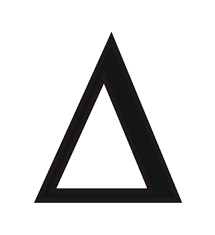 This is the meaning of this symbol.
What is change?
200
These are two factors that can increase the speed of a reaction.
What are higher temperature, concentration, surface area, or a catalyst?
Any two are acceptable.
200
A solution with a pH greater than 7 is this.
What is basic?
300
This part of the atom contains protons and neutrons.
What is the nucleus?
300
Most elements on the periodic table are classified as this type: metals, nonmetals, or metalloids.
What are metals?
300
This type of bond happens when electrons are transferred.
What is an ionic bond?
300
This law says matter is not created or destroyed during a chemical reaction.
What is the Law of Conservation of Mass?
300
This is the mass in grams of one mole of a substance (unit: g/mol).
What is molar mass?
300
This type of reaction releases heat.
What is exothermic?
300
This substance speeds up a reaction without being used up.
What is a catalyst?
300
A solution with a pH of 7 is considered this.
What is neutral?
400
This number tells you how many protons are in an atom.
What is the atomic number?
400
These highly reactive elements are found in Group 1 of the periodic table.
What are alkali metals?
400
A positive or negative charged atom is called this.
What is an ion?
400
This type of reaction happens when a substance reacts with oxygen and produces carbon dioxide and water (and often heat and light).
What is combustion?
400
In the formula H₂O, this is the name of the small number that tells how many hydrogen atoms are in one molecule.
What is a subscript?
400
This type of reaction absorbs heat.
What is endothermic?
400
This is reached when the forward and reverse reactions continue, but the amounts of reactants and products stay constant.
What is equilibrium?
400
This is the substance that changes color to show whether a solution is acidic or basic.
What is an indicator?
500
These are atoms of the same element that have different numbers of neutrons.
What are isotopes?
500
These elements are located on the far right side of the periodic table and are very unreactive.
What are noble gases?
500
This type of diagram uses dots to show valence electrons.
What is a Lewis dot diagram?
500
The numbers placed in front of formulas to balance chemical equations are called this.
What are coefficients?
500
This method helps you solve chemistry math problems by canceling units step by step.
What is dimensional analysis?
500
This is the amount of heat needed to raise the temperature of 1 gram of a substance by 1°C.
What is specific heat?
500
This term describes the minimum energy needed to start a chemical reaction.
What is activation energy?
500
This type of reaction happens when an acid and a base react to form water and a salt.
What is neutralization?