Roots
Stems
Leaves
Flowers
Seeds
100
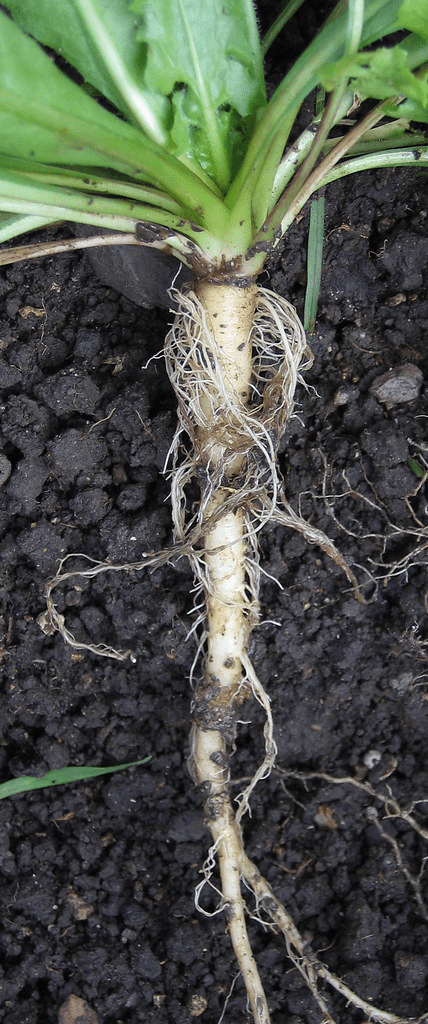 Taproot or Fibrous?
Taproot
100
Which of these is NOT a function of a stem?
Transports water, nutrients, & sugars
Supports the entire plant
Storage of food reserves
Photosynthesis
2. Supports the entire plant
(Physically it's supporting the leaves and the flowers - the roots would support the entire plant.)
100
Draw an example of each of the following types of leaf arrangement: alternate, opposite, whorled
Alternate, Opposite, Whorled
100
True or False: Flowers result in fruit & seed production. For most crop plants, this is our crop yield.
True
100
Seeds contain what three things?
Living embryo, energy supply, outer covering
200
Taproot or Fibrous?
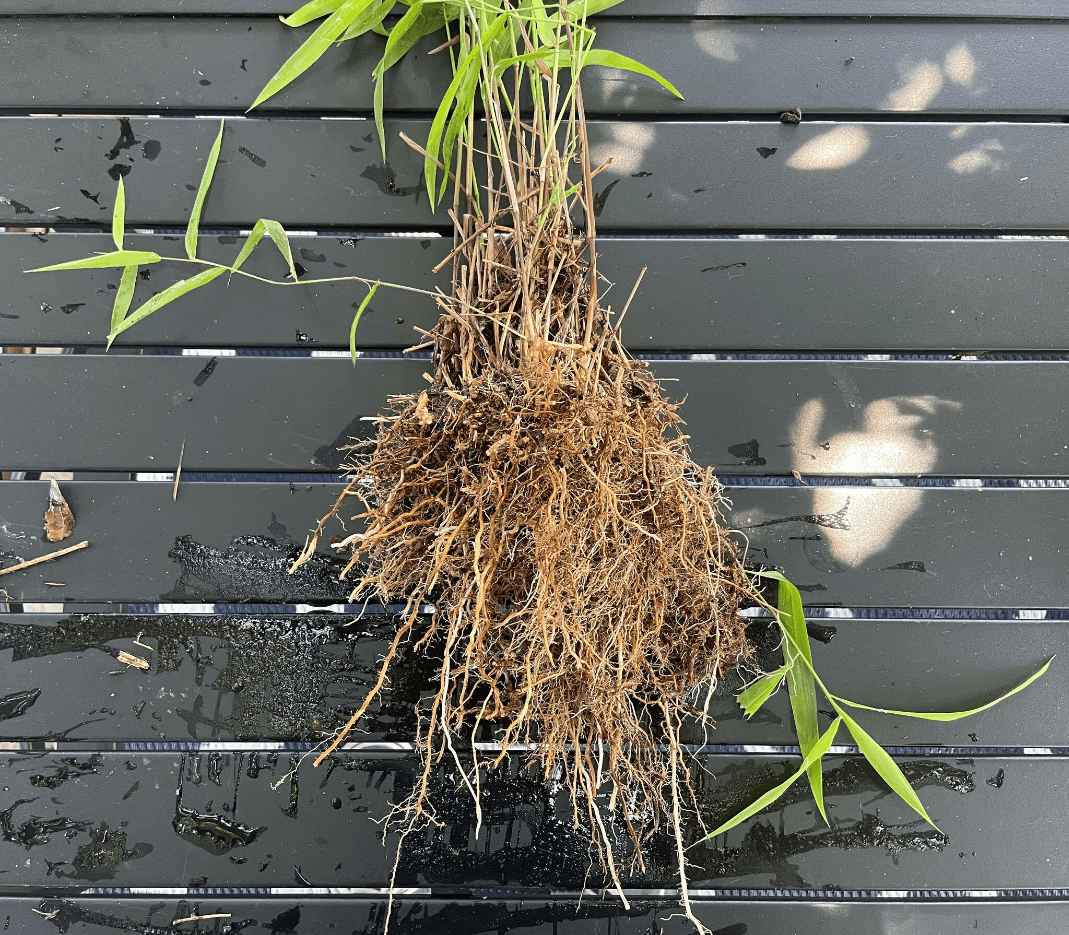
Fibrous
200
What is an example of a tuber?
Potato, Nutsedge, etc.
200
Draw an example of the three different types of venation.
Parallel, Pinnate, Palmate venation
Parallel, Pinnate, Palmate venation
200
Name two other uses of flowers.
Other uses of flowers: aesthetic, great for plant identification, food and industrial products
200
Match the following definitions to the vocabulary.
Seeds _____
Fruit _____
Pericarp _____
Outer wall of the fruit
Mature ovules
Mature ovary containing one or more seeds
1. 2
2. 3
3. 1
300
Which of these are NOT a function of a root?
Anchorage (prevent lodging)
Absorption
Photosynthesis
Storage of food reserves
3. Photosynthesis
300
What is an example of a bulb?
Onion, Tulip, Lilies, Timothy
300
What are the two main functions of leaves? What’s the difference between the two?
Photosynthesis - conversion of CO2 and H20 to sugars and O2 using light energy
Transpiration - evaporative loss of water from leaves through the stomata
Photosynthesis vs. Transpiration - a trade-off between growth and water use.
300
What is double fertilization? What does each produce?
One sperm unites with the egg to produce the zygote, the other unites with two polar nuclei to produce the endosperm
300
Describe the difference between epigeal emergence and hypogeal emergence.
Epigeal - growth points (and cotyledons) above the soil
Hypogeal - growth point (and cotyledons) below soil
400
Which of these DOES NOT describe a root hair?
Made of several epidermal cells.
They have a short life.
They require oxygen.
Site of water and mineral absorption.
1. Made of several epidermal cells
(Each root hair is only one cell)
400
What is the difference between a rhizome and a stolon?
Stolons "steal" or "snake" above the ground, while rhizomes "rise up" from beneath the ground.
400
Label these structures in the typical dicot leaf.
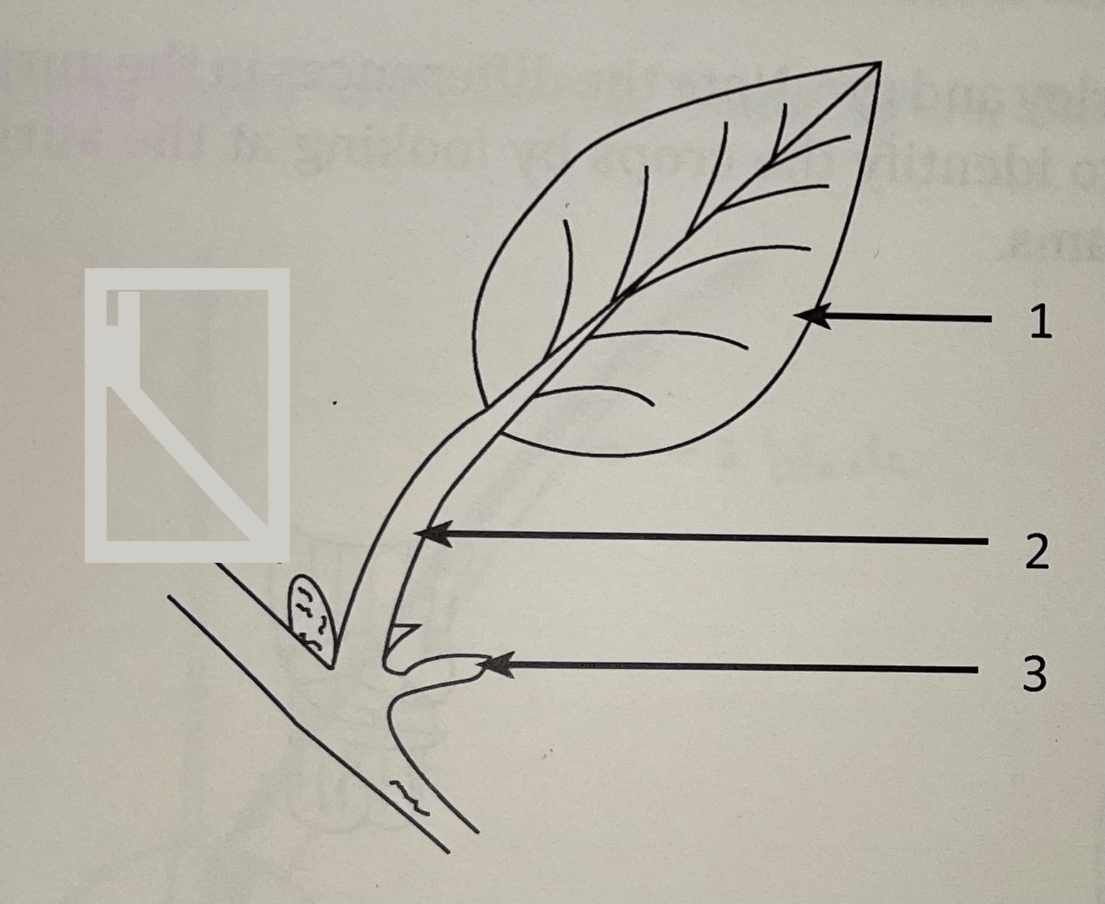
1. blade, 2. petiole, 3. stipules
400
Label the parts in the typical grass flower.
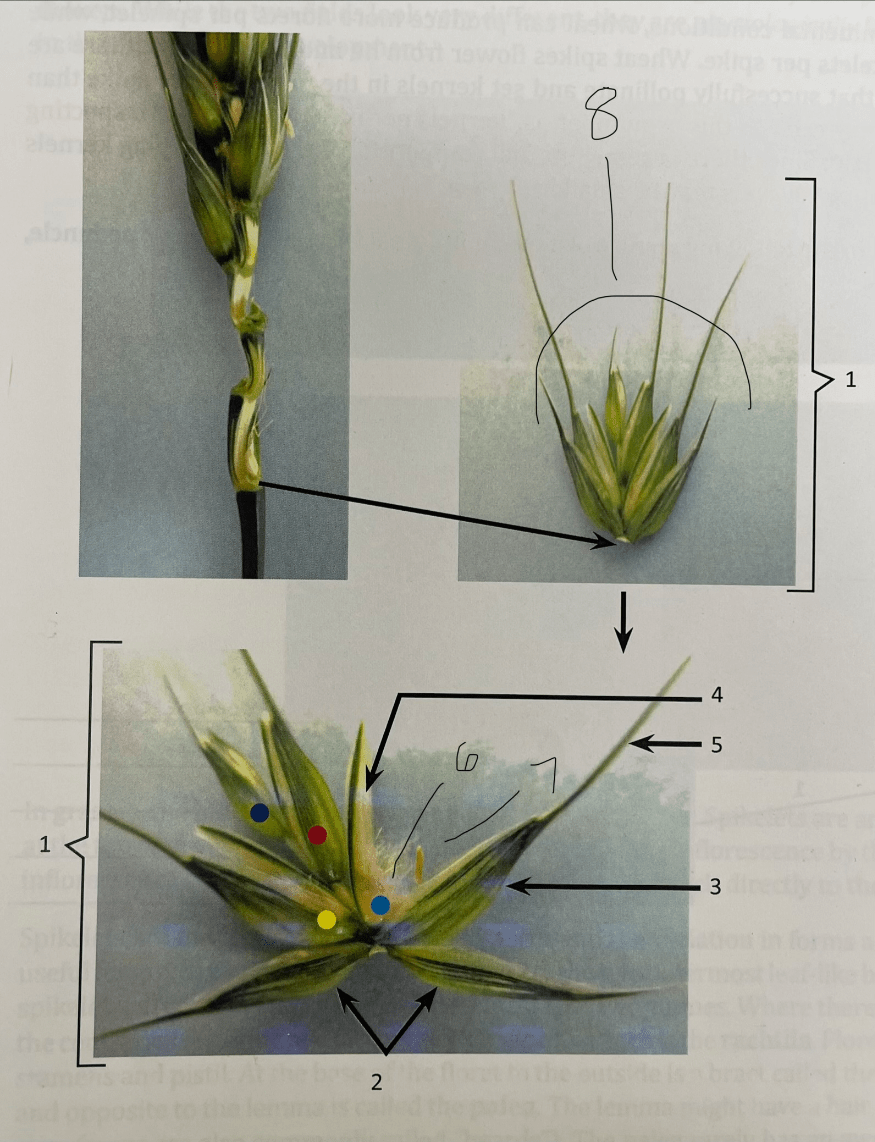
1. Spikelet, 2. Glumes, 3. Lemma, 4. Palea, 5. Awn, 6. Pistil, 7. Stamen, 8. Florets
400
Label the following diagram of a dicot seed. (Ignore #1)
Cotyledon, Embryo, Hilum, Hypocotyl, Plumule, Radicle, Seed Coat
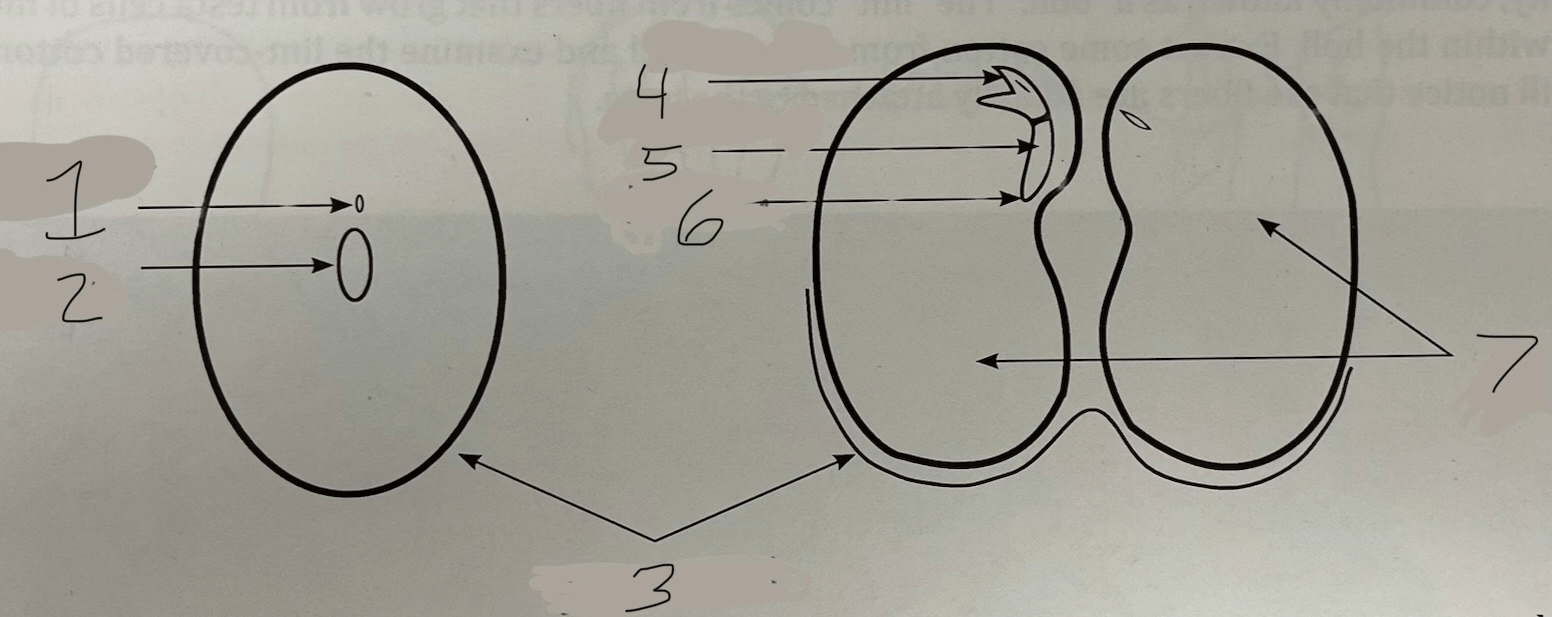
2. Hilum, 3. Seed Coat, 4. Plumule, 5. Hyopcotyl, 6. Radicle, 7. Cotyledons
500
What is the name of Jimmy Fallon's band?
The Roots
500
Fill in the blanks: Beyond apical buds and axillary buds, grass stems also have _____________________ _______________________ within the nodes that produce most of the growth (in height).
Intercalary meristems
500
Label these structures in the typical monocot leaf. 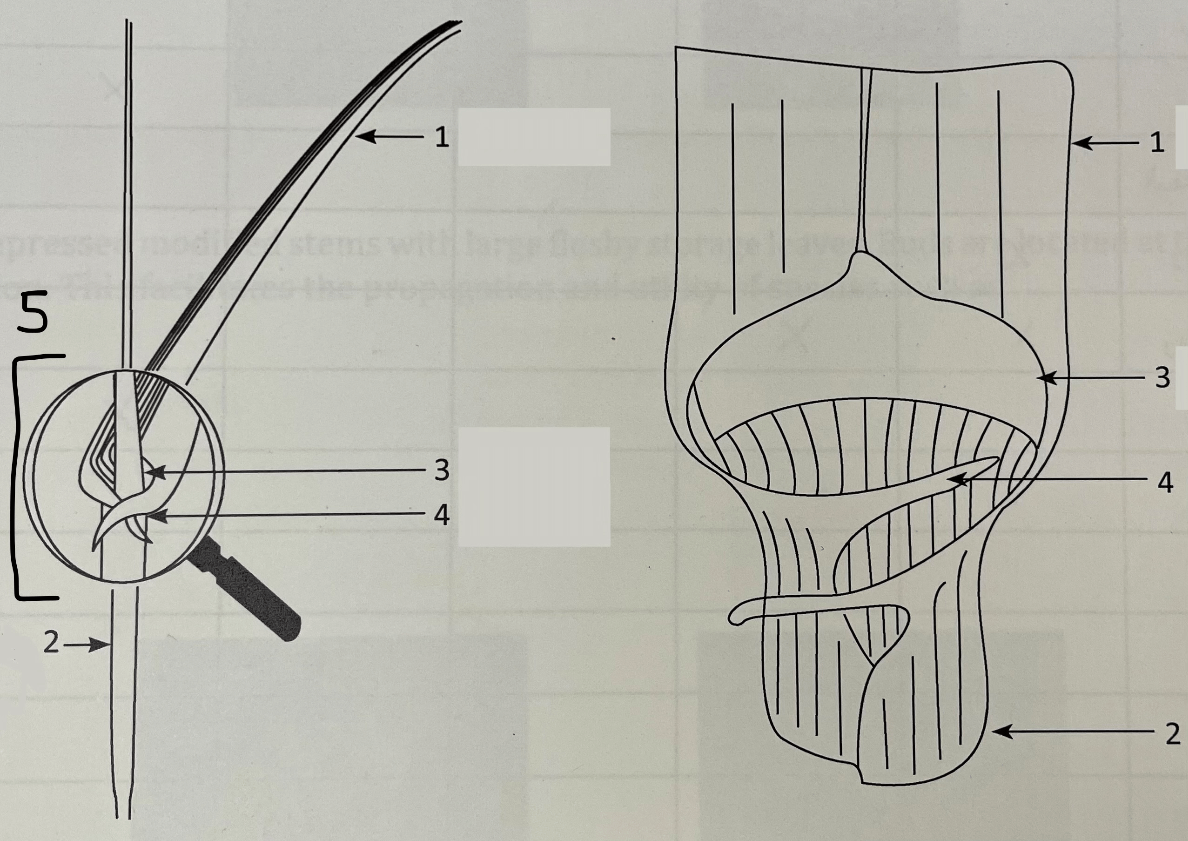
1. blade, 2. sheath, 3. ligule, 4. auricle, 5. collar
500
Label all the parts in the typical dicot flower.
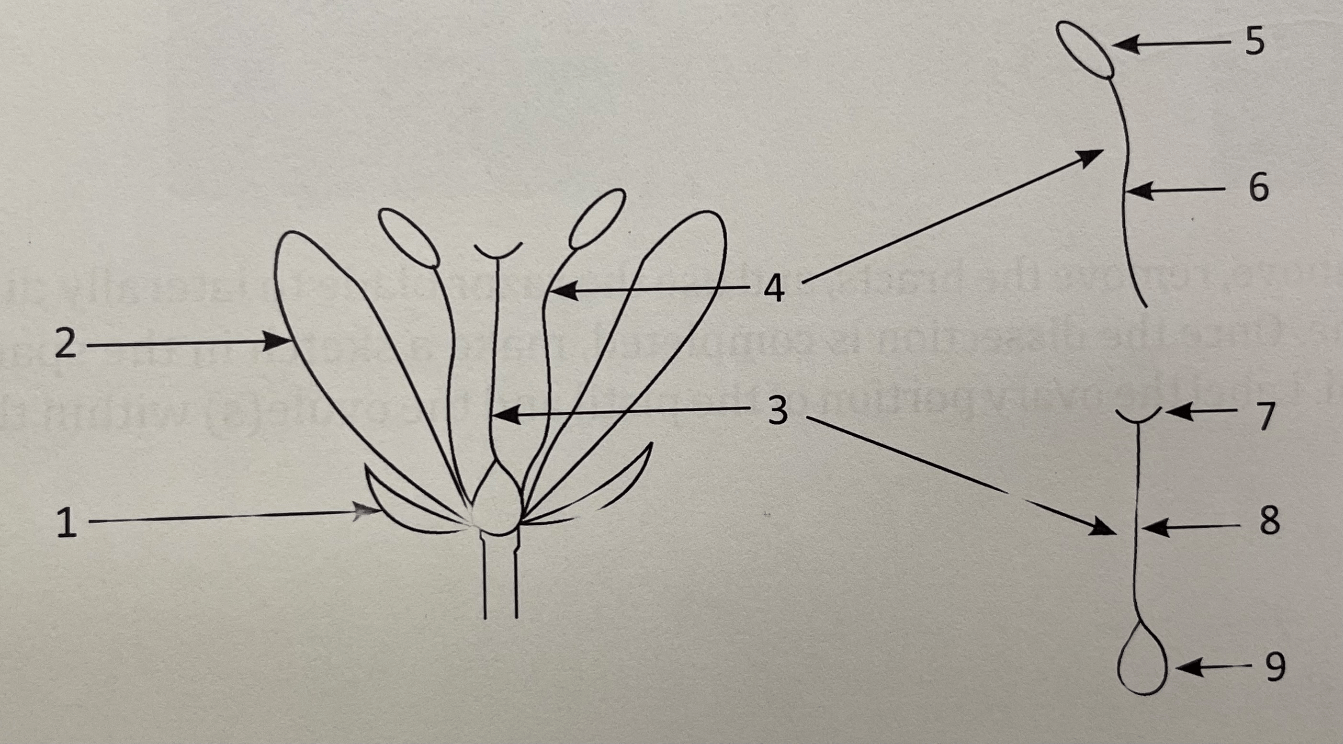
1. sepal, 2. petal, 3. pistil, 4. stamen, 5. anther, 6. filament, 7. stigma, 8. style, 9. ovary
500
Label the following diagram of a monocot seed.
Coleoptile, Coleorhiza, Cotyledon/Endosperm, Dark Layer, Embryo, Pericarp, Plumule, Radicle
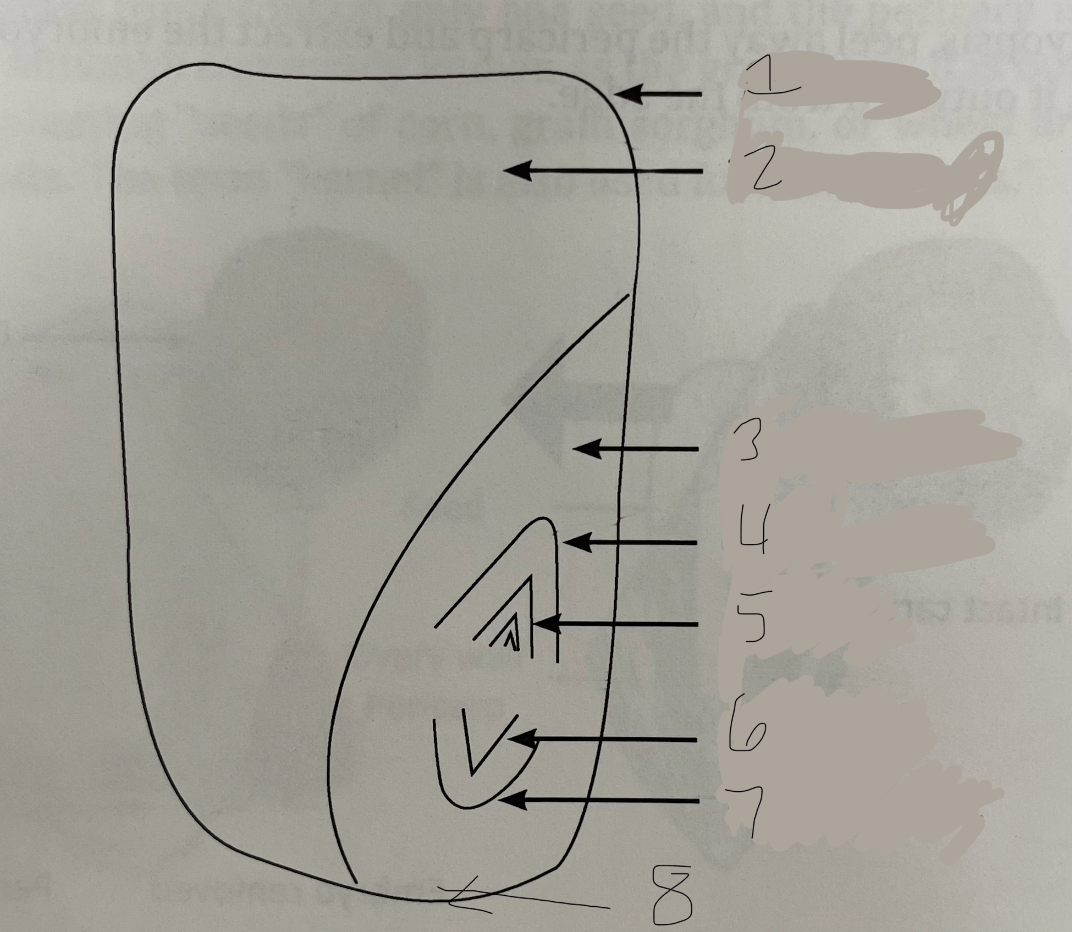
1. Pericarp (seed coat), 2. Endosperm (Cotyledon), 3. Embryo, 4. Coleoptile, 5. Plumule, 6. Radicle, 7. Coleorhiza, 8. Dark Layer