1
2
3
4
5
100
A scientist observes that a plant's leaves are wilting during a hot, dry spell. What is the most likely explanation for this?
The plant's xylem is transporting too much water
The stomata are remaining open, causing excessive water loss
The plant's phloem is not transporting enough sugar
The plant's roots are growing too quickly
The stomata are remaining open, causing excessive water loss
100
In an experiment, a student places a potted plant in a dark room with a single light source coming from one side. After a week, the plant's stem has bent towards the light. This response is an example of:
phototropism
100
Which of the following is NOT a function of the phloem in plants?
Transporting sugars from leaves to other parts of the plant
Transporting nutrients throughout the plant
Transporting hormones throughout the plant
Transporting water from roots to leaves
Transporting water from roots to leaves
100
Why is the phloem tissue in plants bidirectional, while the xylem is unidirectional?
Phloem needs to distribute sugars to all parts of the plant
100
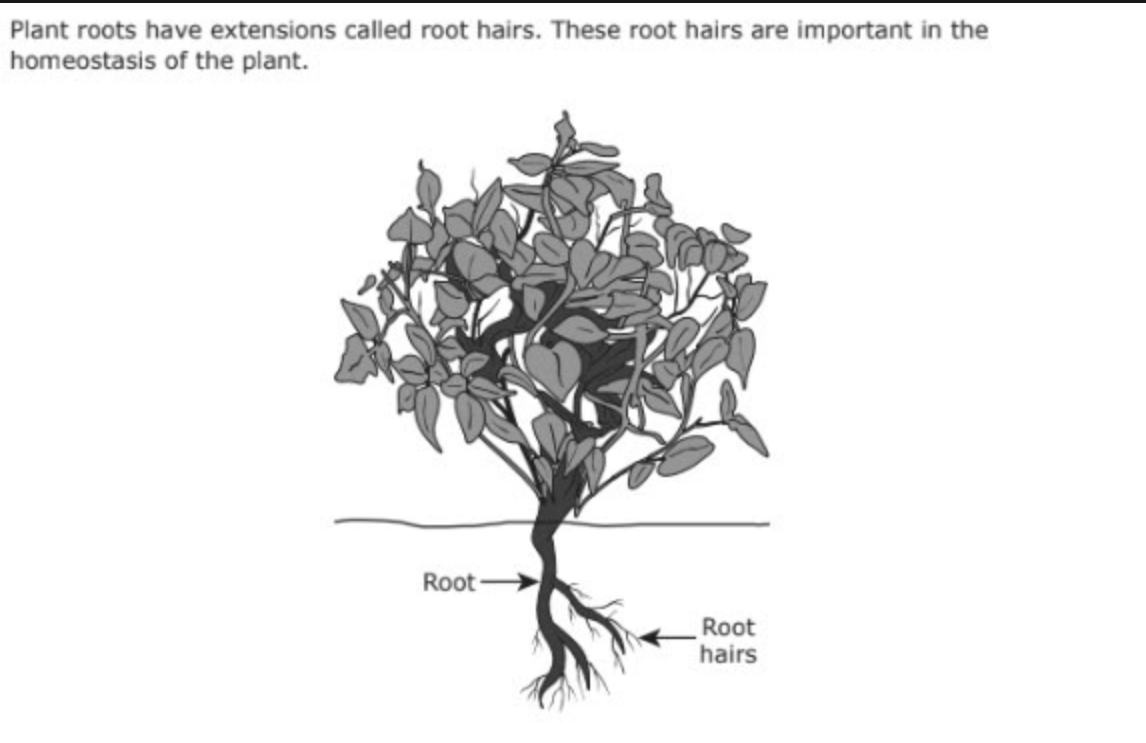 How do the root hairs help the plant?
Root hairs increase the surface area of the roots for nutrient and water absorption
200
Which plant adaptation would be most beneficial in an environment with limited water availability?
Broad leaves with a large surface area
Numerous stomata that remain open throughout the day
A thick, waxy cuticle on the leaves
Shallow, spreading roots
A thick, waxy cuticle on the leaves
200
Which of the following is NOT a function of plant roots?
Anchoring the plant in the soil
Absorbing water and minerals
Producing glucose through photosynthesis
Storing food reserves
Producing glucose through photosynthesis
200
A scientist observes that a certain species of plant closes its leaves at night. This behavior is most likely an adaptation to:
Reduce water loss
200
What role do guard cells play in maintaining homeostasis in plants?
They regulate water loss by opening and closing stomata
200
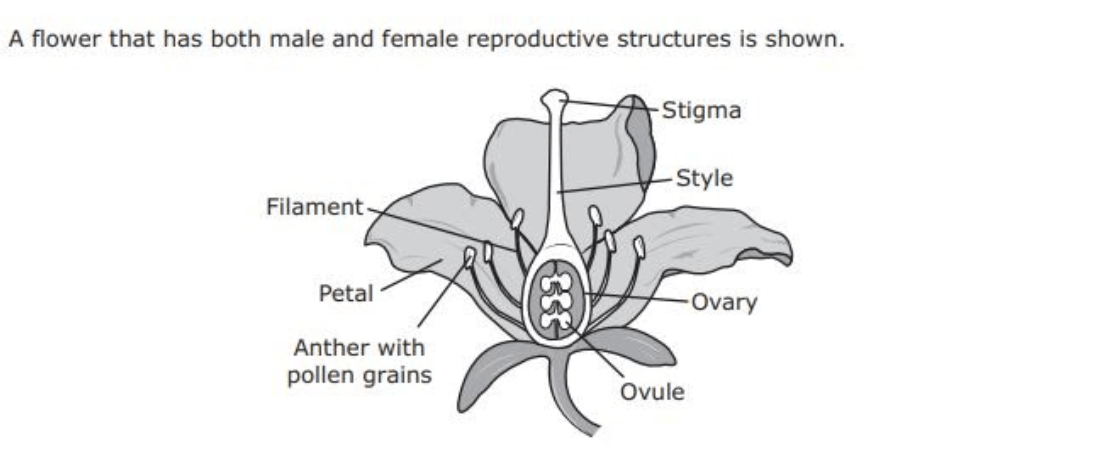
What are the steps of self pollination?
A pollen grain is transferred from an anther to the stigma of the same flower
300
Which of the following statements best explains the advantage of cross-pollination over self-pollination?
Cross-pollination leads to greater genetic diversity
300
A student observes that a plant's roots are growing towards a nearby water source. This is an example of:
Hydrotropism
300
A plant geneticist wants to create a drought-resistant variety of corn. Which of the following adaptations should they focus on enhancing?
Increasing the number of stomata
Developing broader leaves
Improving the efficiency of the plant's Calvin cycle
Enhancing the plant's ability to close stomata quickly
Enhancing the plant's ability to close stomata quickly
300
In what way does transpiration benefit a plant, despite the risk of water loss?
It creates negative pressure which drives the xylem
300
Flowering is a process that occurs in many plants to ensure reproductive success. Which statement most directly describes the interactions needed for flowering to occur?
A hormone triggers the production of pigments that travel to the flower and initiate blooming
Water is absorbed through the plant's shoots to increase the leaf's ability to support the opening of flowers
Plants respond to environmental factors by producing hormones needed for flowering
Warmer temperatures increase the rate at which water and nutrients are transported to the flower bud by traveling through the phloem
Plants respond to environmental factors by producing hormones needed for flowering
400
Which plant structure is primarily responsible for regulating water loss and gas exchange?
Stomata
400
Which plant hormone is primarily responsible for stimulating cell elongation in response to light?
Auxin
400
How do the root and shoot systems work together to ensure the survival of a plant in a terrestrial environment?
By transporting water and nutrients between each other
400
What is the significance of seed dispersal in plant reproduction?
It reduces competition and spreads offspring to new areas
400
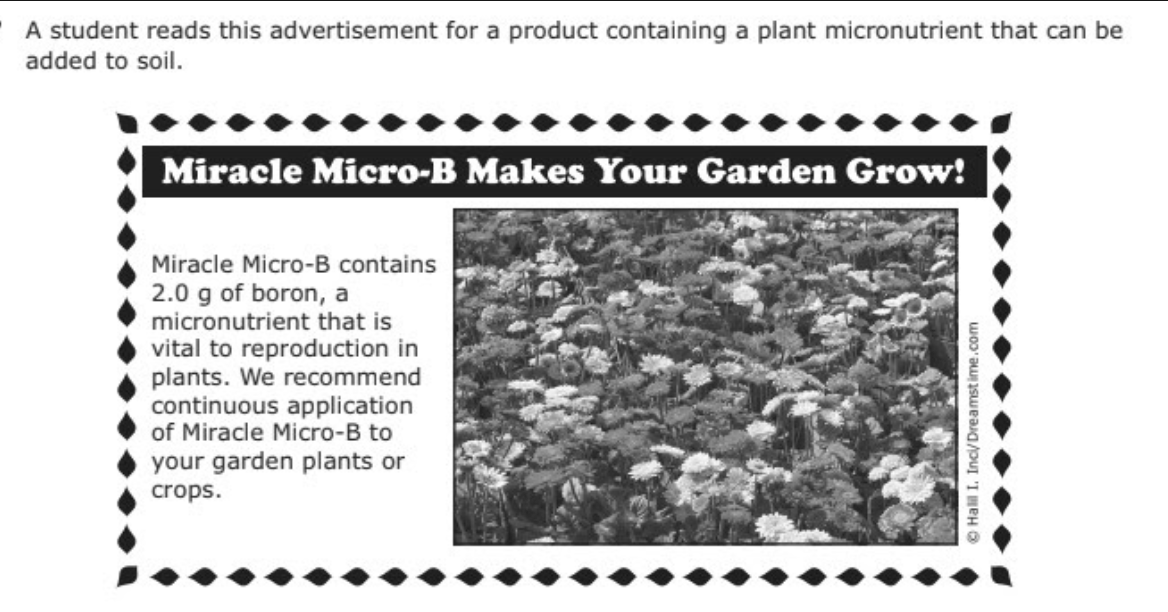
Based on this information, the student can conclude that boron is absorbed by plant roots from soil and then what happens to it?
transported to reproductive tissues by the plant's shoot system
500
A scientist observes that a certain species of plant produces bitter-tasting leaves. What is the most likely evolutionary advantage of this trait?
To deter herbivores
500
What best explains why many flowering plants have colorful, fragrant flowers?
Attract pollinators
500
What is the primary reason for the development of vascular tissue in plants?
To transport water, nutrients, and sugars
500
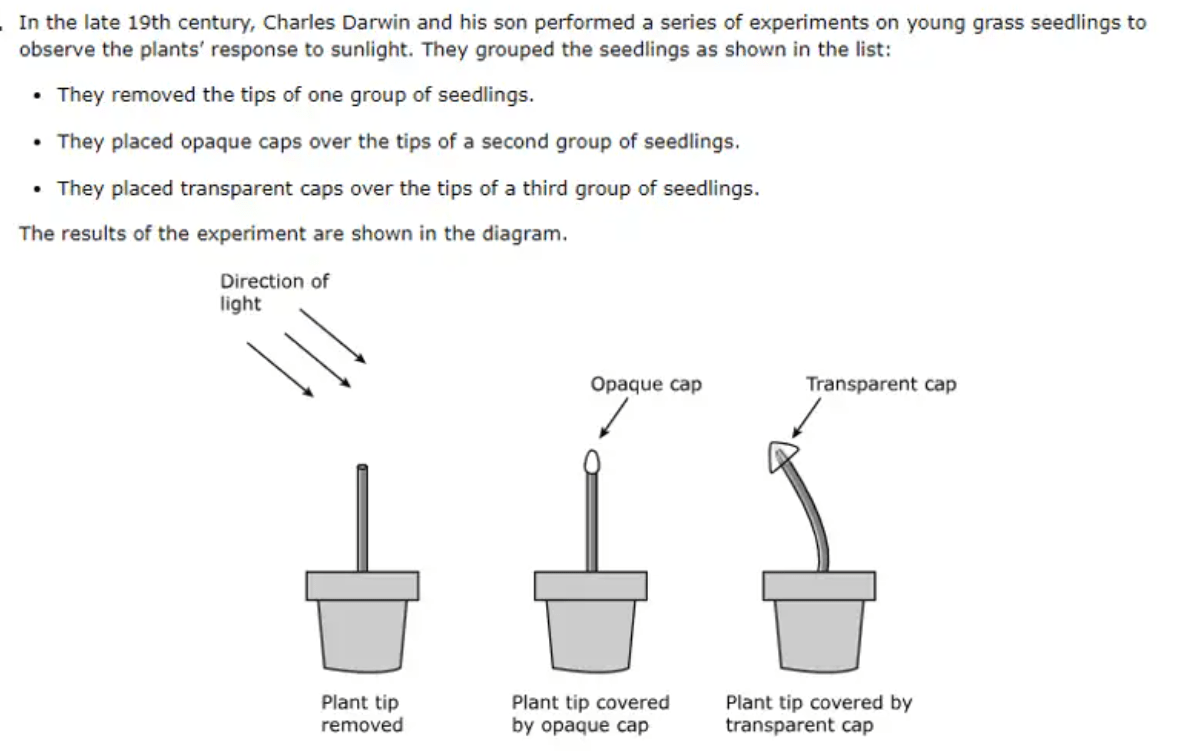
What tropism is occurring and why?
Phototropism, Plant bending towards light
500
Do cacti have more or less stomata?
less