Plate tectonics
Plate Tectonics 2: Electric Boogaloo
Earth's Interior
Earthquakes
Volcanoes
Rock Cycle
Igneous Rocks
100
What is the name of the super continent which all of the land on Earth was one?
Pangea
100
Where two plates push together
Convergent Boundary
100
The outermost layer of the Earth...?
Crust
100
What are the waves released by an Earthquake and how fast are they
P-wave and S-wave, P is fast S is slow
100
What is a hot spot
A place in the earth’s crust where magma escapes and land is formed over top of it
100
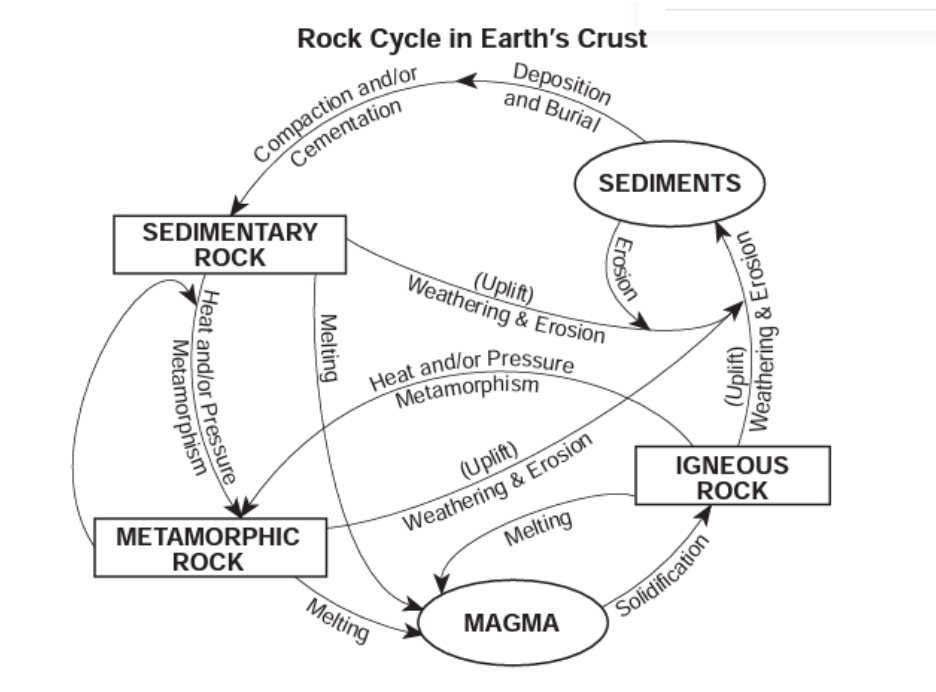 Where on this diagram do all rocks begin?
From magma, which comes from the Earth's interior.
100
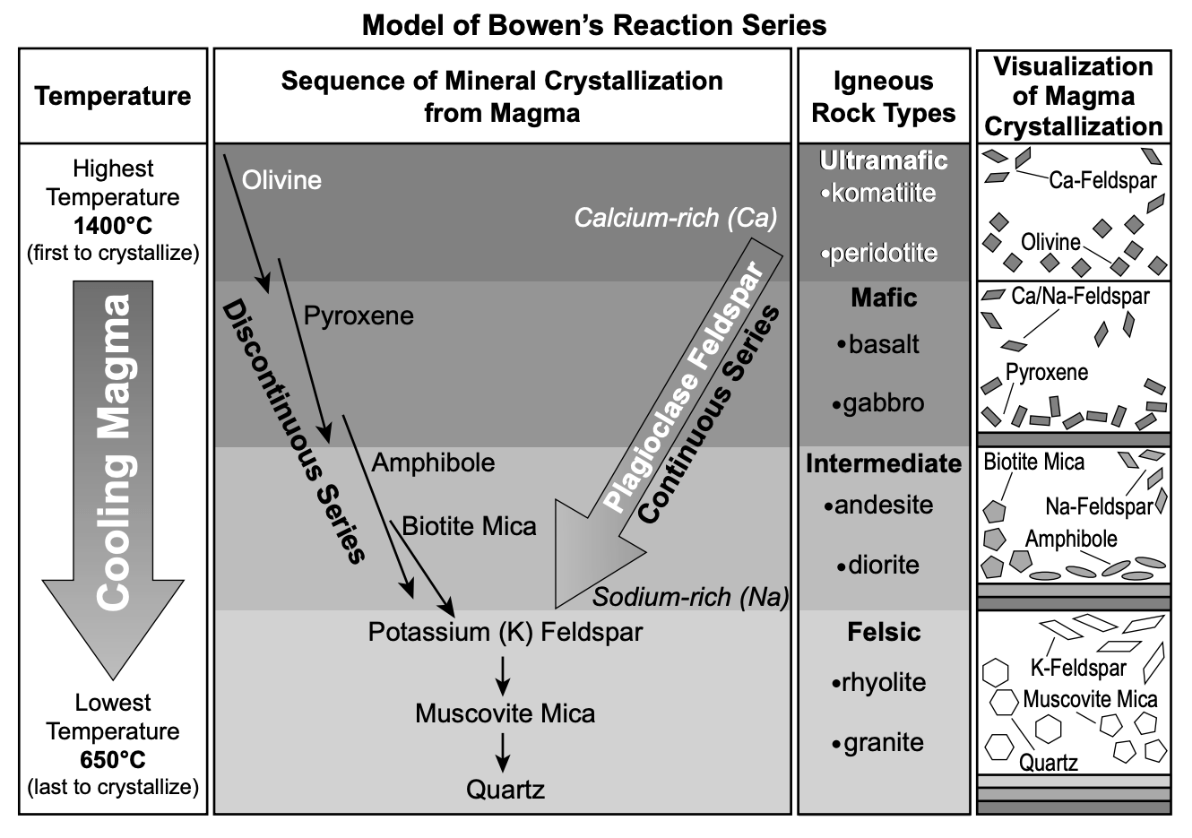 What mineral is the only one that forms in the continuous series?
Feldspar, but it changes from calcium rich to sodium rich as it cools.
200
What were 2 of Alfred Wegner's pieces of evidence for continental drift?
Fossils, Climate, Rocks at mountains on different continents, how the continents fit like a puzzle
200
Where two plates pull apart
Divergent Boundary
200
What is the outer core made of
Liquid metal (molten iron and nickel)
200
Earthquakes occur where there are cracks in the Earth's surface called ______
Faults
200
Whats the difference between a pahoehoe flow and an AA flow?
Pahoehoe flows fast like water, AA is slow and jagged.
200
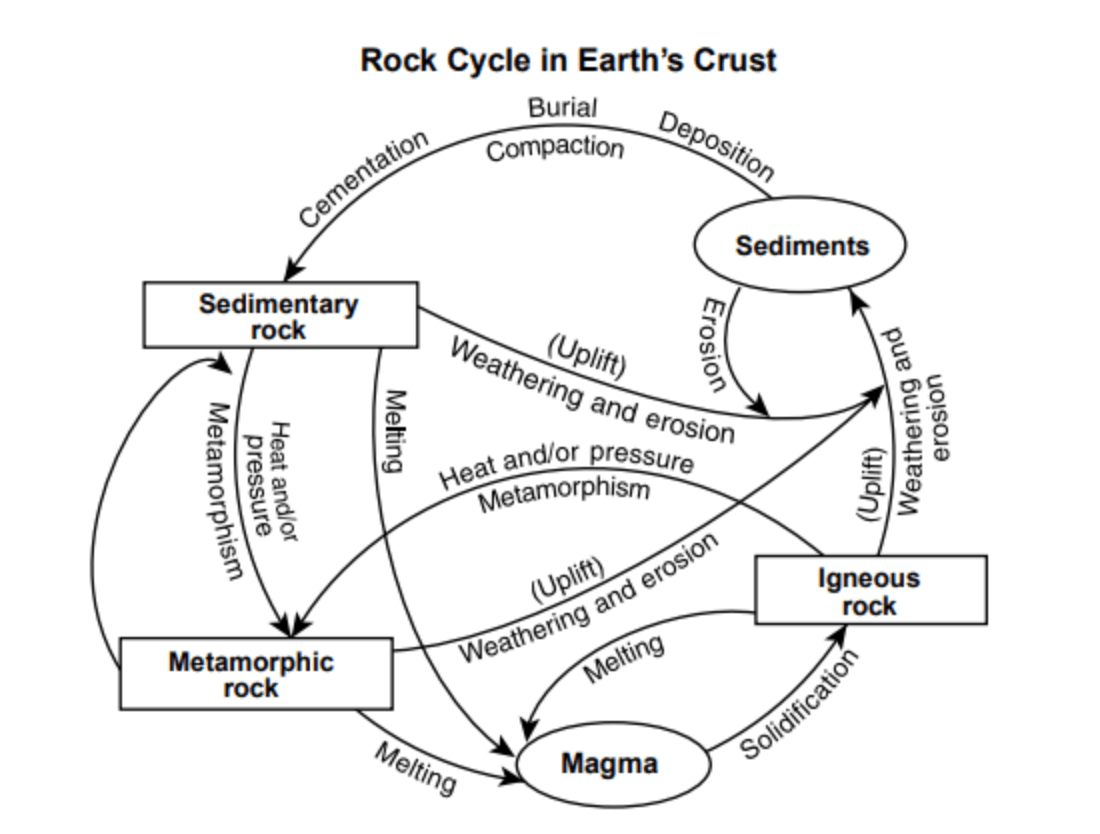 Using the rock cycle describe with the appropriate terms, how a rock moves from magma to a sedimentary rock.
Magma cools into an igneous rock, then is *probably uplifted*, weathered and eroded into sediments, finally compacted or cemented into a sedimentary rock.
200
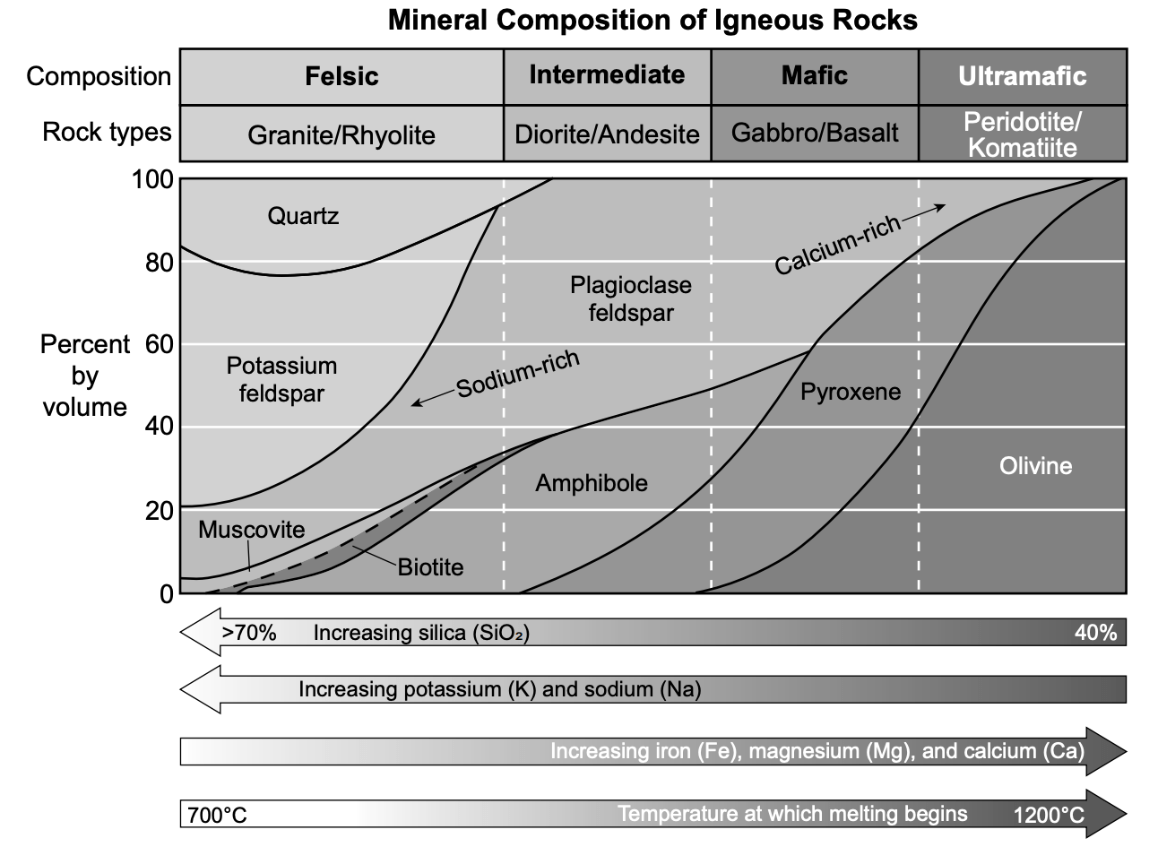 Which rocks are mafic?
Gabbro and Basalt
300
This explains that the Earth’s surface is made up of rigid slabs of rock, or plates, that move with respect to each other
The theory of plate tectonics
300
A tectonic plate is a piece of which part of the Earth's interior (one of the layers) moving?
Crust (an part of upper mantle but crust is acceptable)
300
This layer of the Earth is in the very center and is made of mostly solid nickel and iron.
Inner core
300
Congrats! Free point for you on the test
300 points for each team
300
Describe what a shield volcano looks like and how it erupts
Large, gentle slopes. Non explosive, fast flowing basaltic lava
300
 Using the rock cycle, How many ways can a metamorphic rock become a sedimentary rock?
2. It can be melted into magma, turned into an igneous rock then weathered/eroded then compacted/cemented together into a sedimentary rock
or skip the melting and immediately weathered/eroded --> compacted/cemented
300
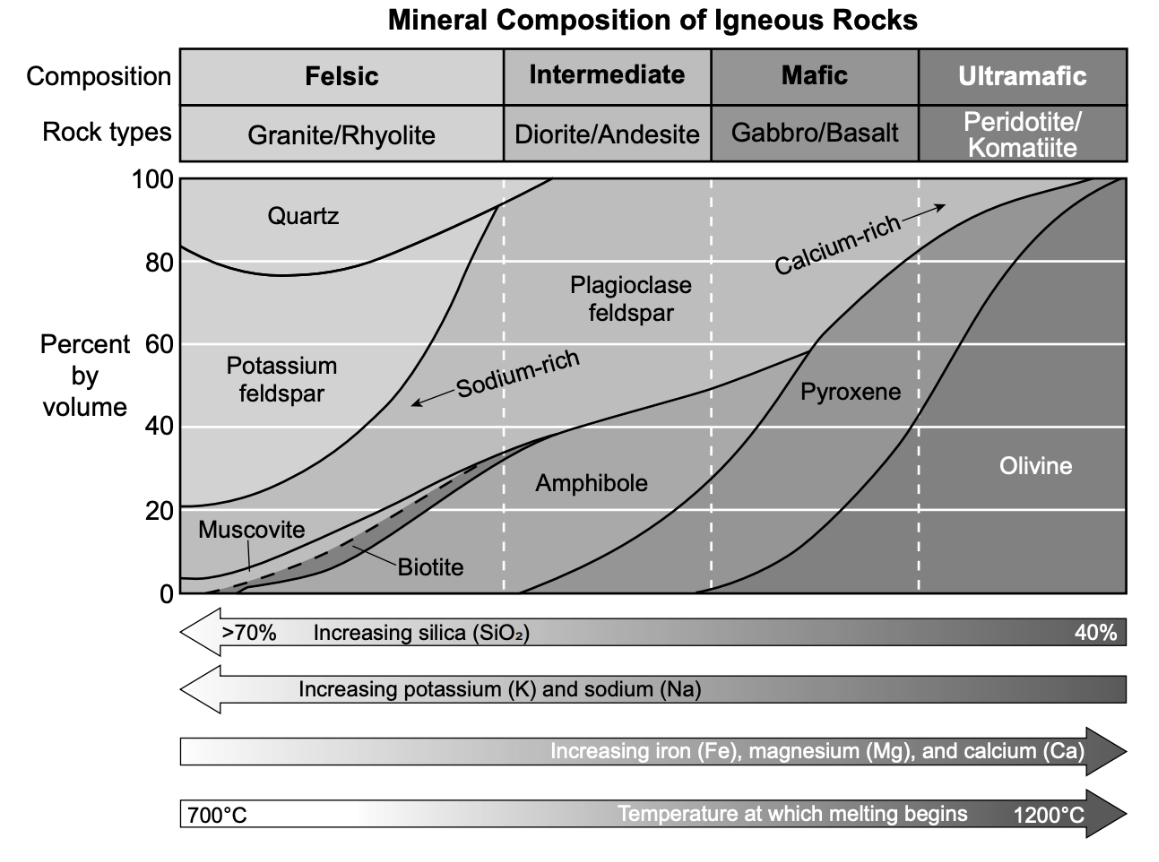 Describe what changes occur when you go right on this chart
Less silica, potassium and sodium
More Iron, magnesium and calcium
Temperature increases
400
This often forms when a continental plate converges with a continental plate
Mountains
400
What is it called when the denser of the two plates sinks below the other lesser dense plate after a collision?
Subduction
400
This is the biggest layer and describe what phenomena happens here
Mantle, convection currents cause magma to rise and fall.
400
What was the difference in arrival times and distance to the epicenter for station x? (you need the old reference table page, provided for you)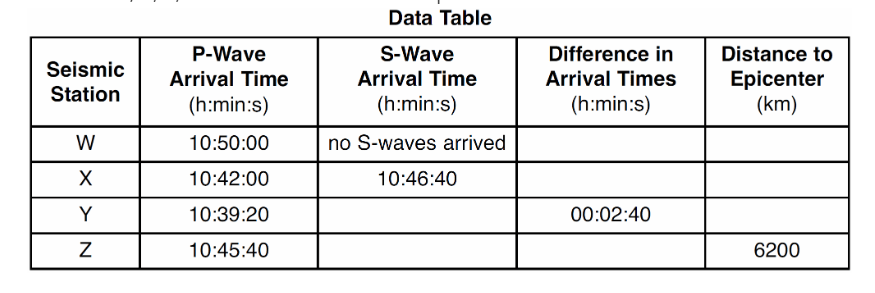
4:40
3400 Km
400
Describe what a composite volcano looks like and how it erupts
Tall, steep sided slopes. Very explosive eruptions of ash and lava. (andesite and rhyolite)
400
Using the rock cycle describe with the appropriate terms, how a rock moves from sediments to a metamorphic rock.
Sediments are deposited then buried and compacted. Which eventually will be cemented into a sedimentary rock. Through heat and pressure metamorphism, it will become a metamorphic rock.
400
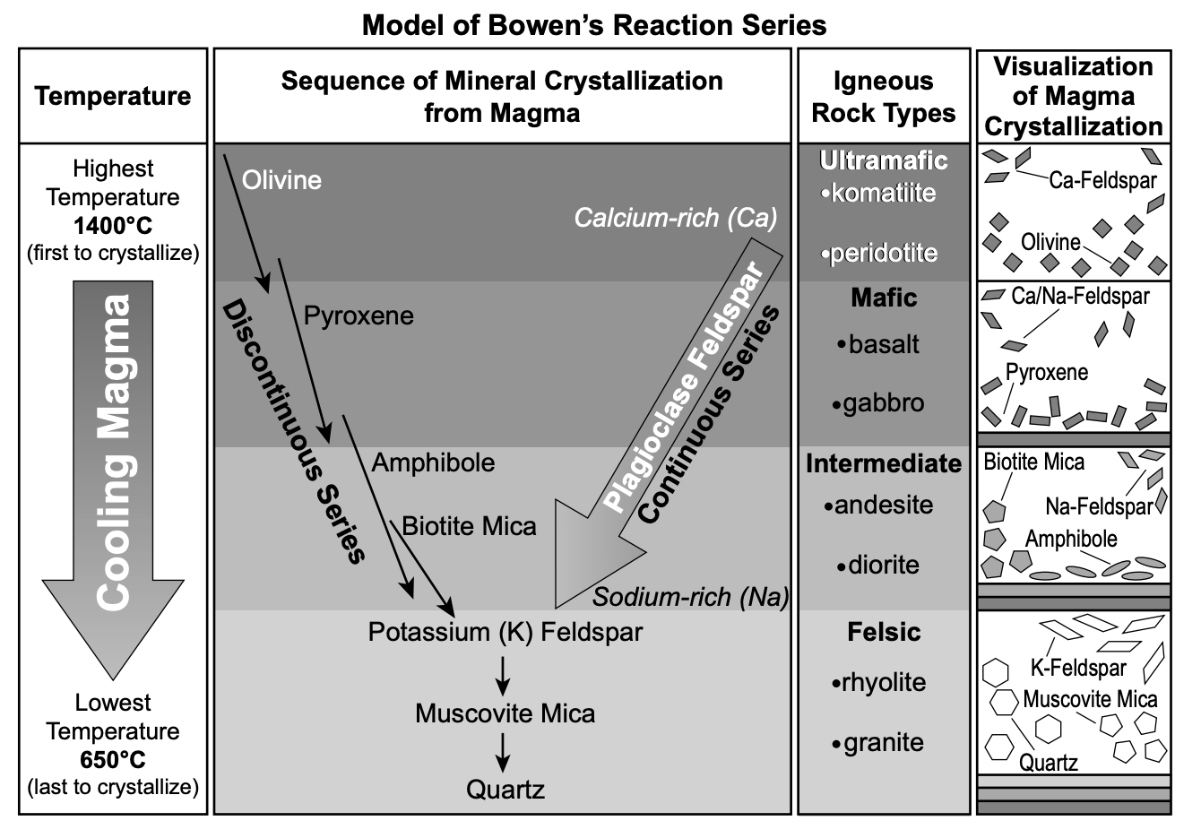 Describe how the discontinuous series works as the temperature decreases
Olivine forms first at the highest temperature, then pyroxene as it cools, then amphibole and finally biotite. Once a certain temperature is reached, some minerals stop forming
500
Where would you find volcanic activity and earthquakes on this map?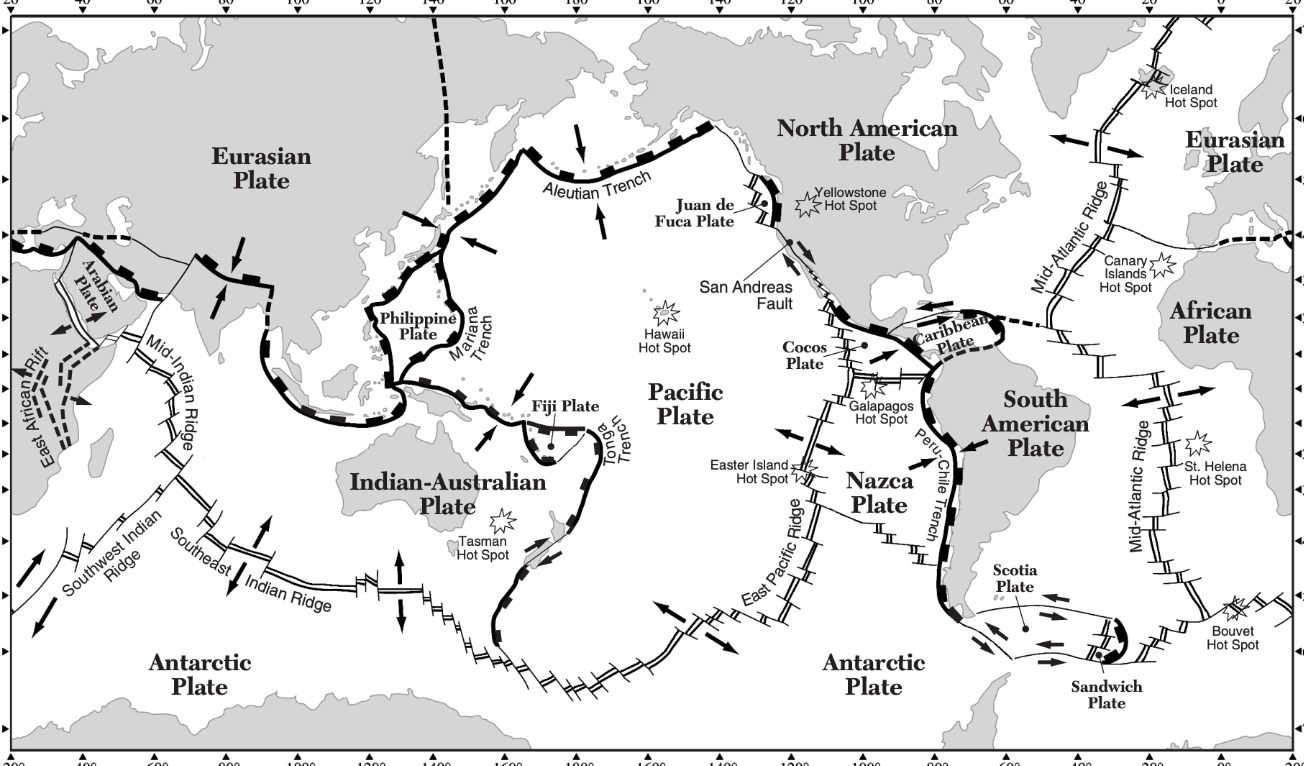
Near the boundaries.
Ring of fire is not an acceptable answer. Although that is where the MAJORITY of volcanoes and E.Q's are.
500
At divergent boundaries, describe the age of the rocks that are near the rift valley and far away from it.
Young by the rift, older far away
500
Describe how we know the Earth's magnetic field "flips" every 300,000 or so years
As the molten material in the convection currents found within the mantle cool, those iron based minerals point the "current magnetic north". Because it takes so long for that material to cycle through the mantle, the magnetic pole has changed by the time the new rocks cool at the surface and point in their "north" direction.
500
Describe how earthquakes are traced on a map
3 stations need to read and triangulate to find out where they intersect
500
Describe what a Cinder cone volcano looks like and how it erupts
Short, steep sided slopes. Semi explosive with basaltic lava flows
500
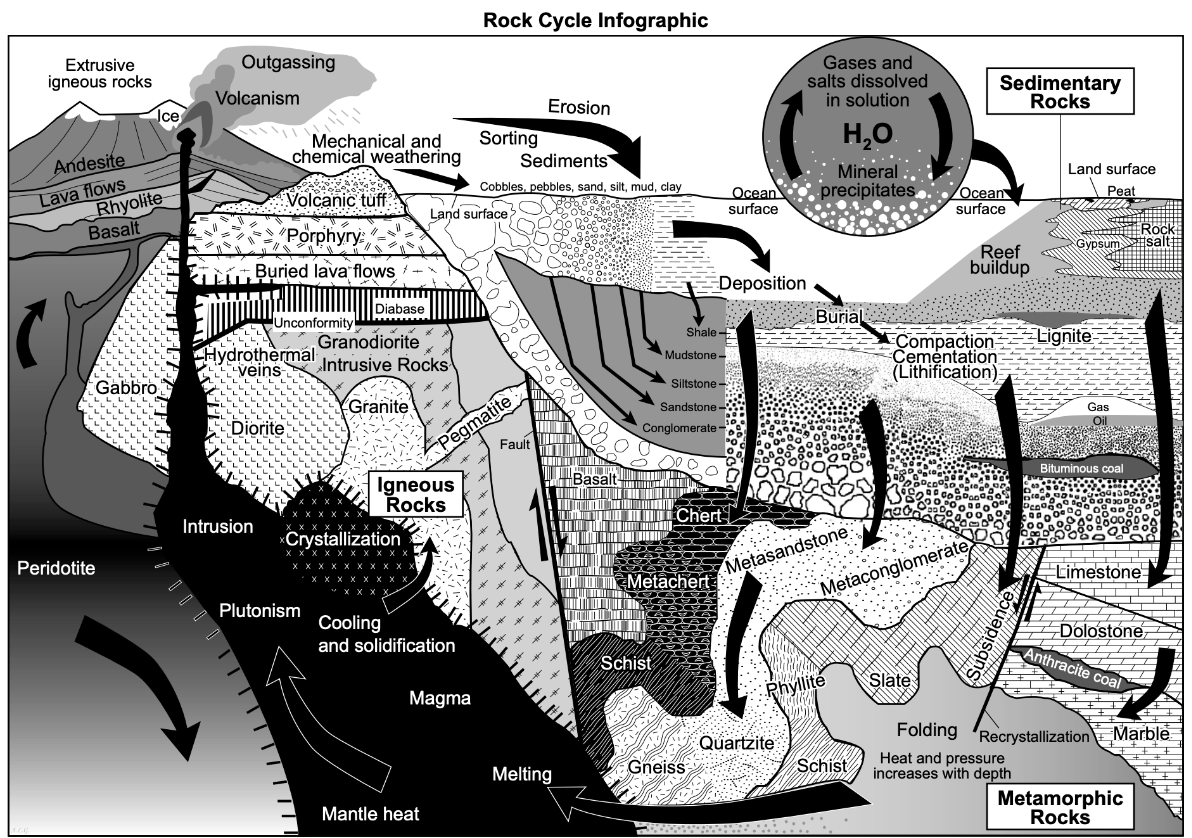 Based on this diagram, describe the differences between shale, mudstone, siltstone, sandstone and conglomerate
They each have different sized sediments, depending on the size, once they settle and are compacted a different rock forms.
500
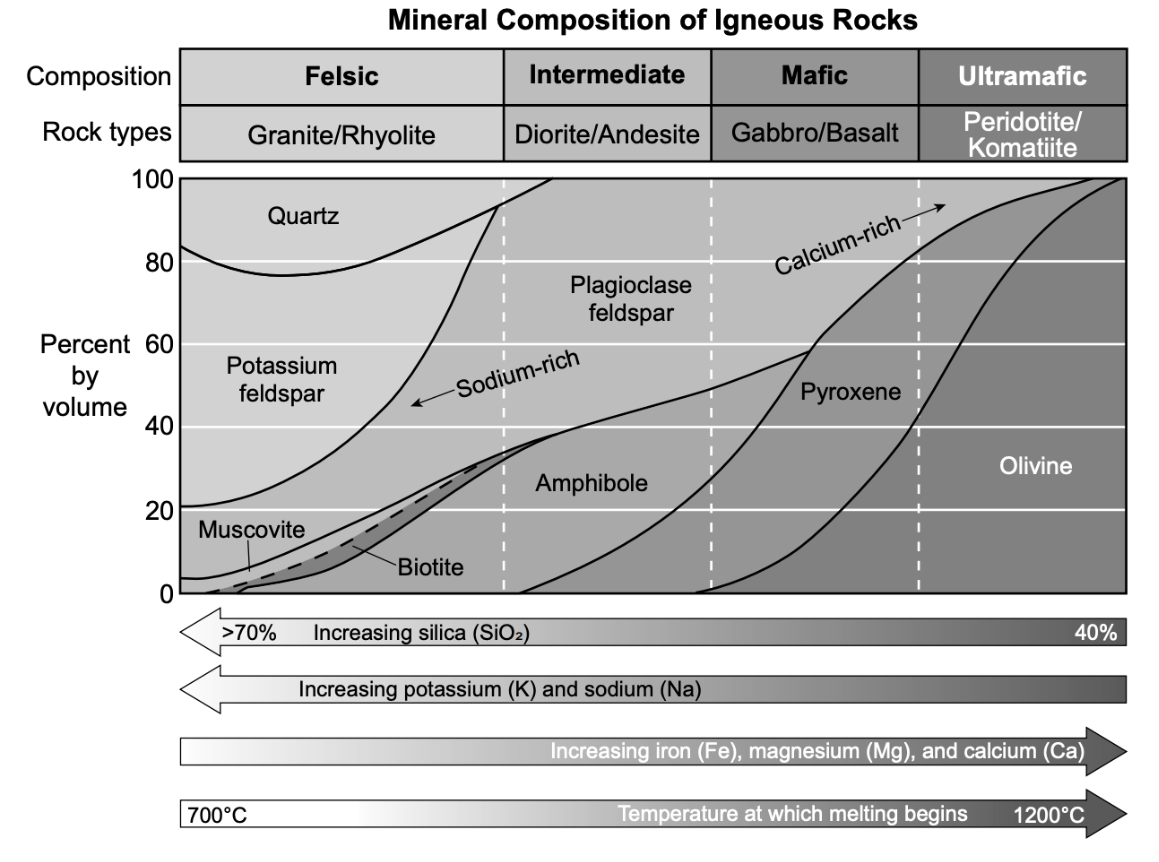 What minerals can be found in Andesite?
Quartz, Plagioclase feldspar, Muscovite, Biotite, Amphibole and Pyroxene