Evidence
Inside Earth
Ridges and Hotspots
Subduction
Transform and Hazards
100
South America and Africa do not fit perfectly at the shoreline. Why does the continental-shelf fit matter more?
Because shorelines change over time, but continental shelves mark the true edges of the continents and fit much better.
100
If mantle convection stopped, what is one long-term change you would expect at Earth’s surface?
Accept answers such as plate motion would slow or stop, seafloor spreading and subduction would decrease, and there would be fewer plate-boundary earthquakes and volcanoes.
100
The Hawaiian-Emperor bend matters because it shows that this changed about 47 million years ago.
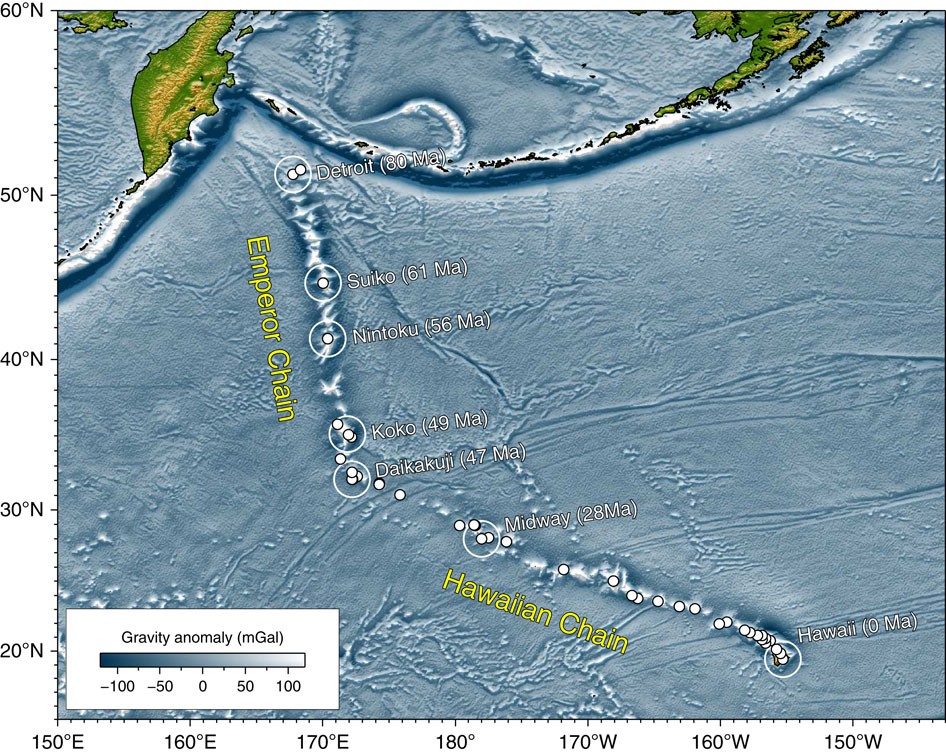
The direction of Pacific Plate motion.
100
Name the specific boundary type and the subducting plate along the west coast of South America.
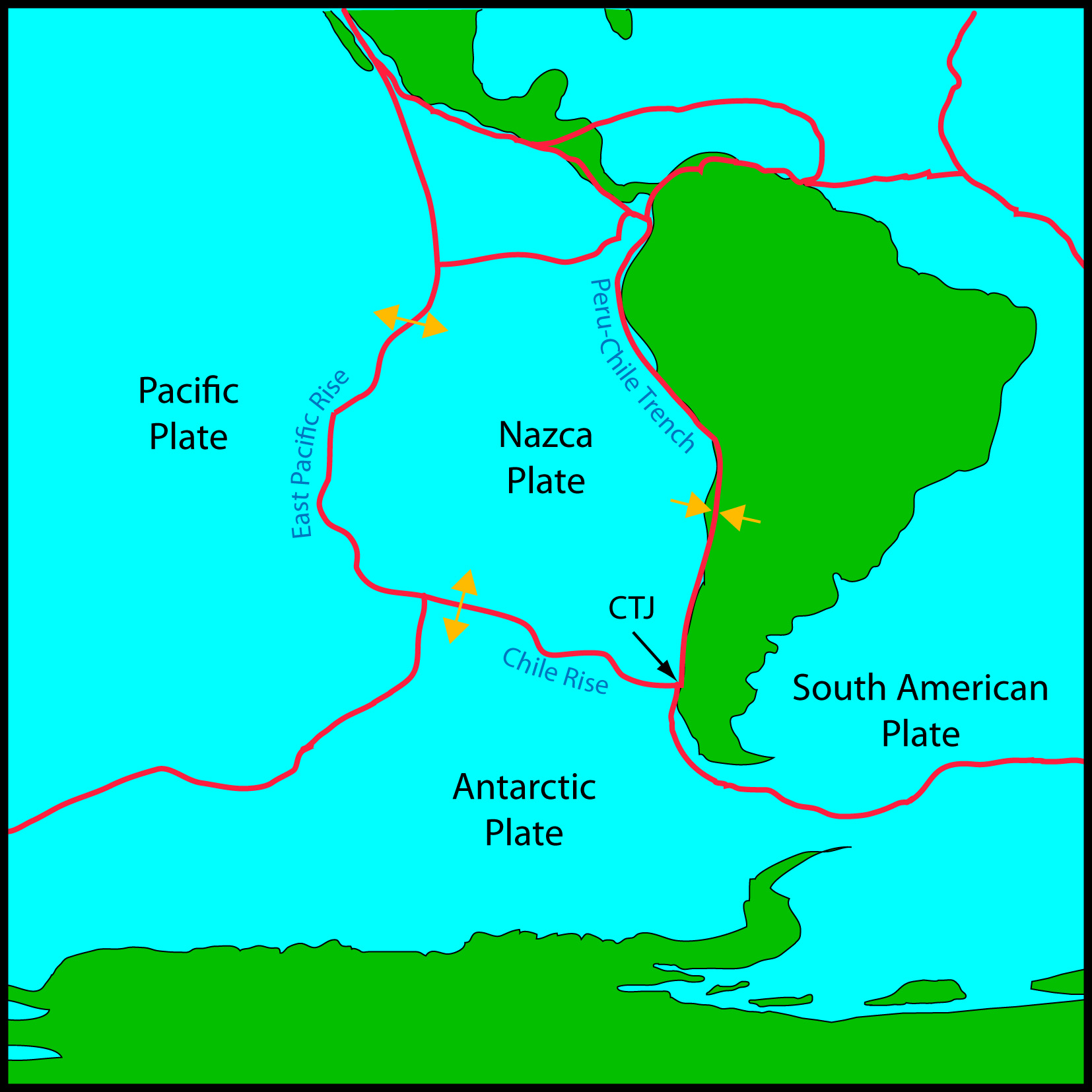
An oceanic-continental convergent boundary, with the Nazca Plate subducting beneath the South American Plate.
100
What tectonic setting is most likely to produce earthquakes, volcanoes, and tsunamis all in the same place?
A convergent subduction zone.
200
Scientists rejected Wegener at first because he could not explain this.
A mechanism for how continents move
200
The inner core is hotter than the outer core, but it stays solid because this increases with depth and raises the melting point.
Pressure
200
The Pacific Plate moves in this direction over the Hawaiian hotspot.
Northwest
200
In an oceanic-continental subduction zone, volcanoes form inland instead of right at the trench because the slab must do this first.
It must sink deeper before melting occurs beneath the continent
200
At a transform boundary, a long quiet period can be dangerous because this builds up while plates stay locked.
Stress
300
The fit improves when scientists match continents using these underwater edges, not modern coastlines.
The continental shelves
300
Dense materials sank and lighter materials rose in early Earth. This process is called this.
Differentiation
300
In a hotspot chain like Hawaii, the youngest volcano is found closest to this feature.
The hotspot, or mantle plume
300
Along western South America, earthquake foci become deeper as you move in this direction from the trench.

Inland, or east
300
This famous California fault marks the boundary between the Pacific Plate and the North American Plate.
The San Andreas Fault
400
Wegener used fossils of this freshwater reptile found in both South America and Africa.
Mesosaurus
400
This layer is liquid iron and nickel and generates Earth’s magnetic field.
The outer core
400
The Mid-Atlantic Ridge is this type of plate boundary.
A divergent boundary
400
This deep-ocean feature forms where one oceanic plate bends downward beneath another plate. This landform forms when two continents collide and neither plate subducts easily.
A trench
400
Unlike subduction zones, transform boundaries usually do not produce this hazard because there is little or no melting.
Volcanoes
500
This supercontinent existed before today’s continents split apart.
Pangaea
500
This weak, plastic upper mantle layer flows slowly, and tectonic plates move on top of it.
The asthenosphere
500
The process that creates new oceanic crust at a mid-ocean ridge.
Seafloor spreading
500
In an oceanic-continental collision, this plate usually subducts.
The oceanic plate
500
The main geologic hazard at transform boundaries.
Earthquakes