The Basics
READING A POPULATION PYRAMID
GROWTH TYPES
Baby Booms!
Causes and Effects
EUROPE’S SOLUTIONS
Final Jeopardy
100
France has a total fertility rate of just over 1. Egypt has a total fertility rate of more than 5.
Who is more likely to have a younger population?
Egypt
100
On a population pyramid, what does the vertical (up-down) axis show?
Age groups
100
Which country’s pyramid shows rapid population growth?
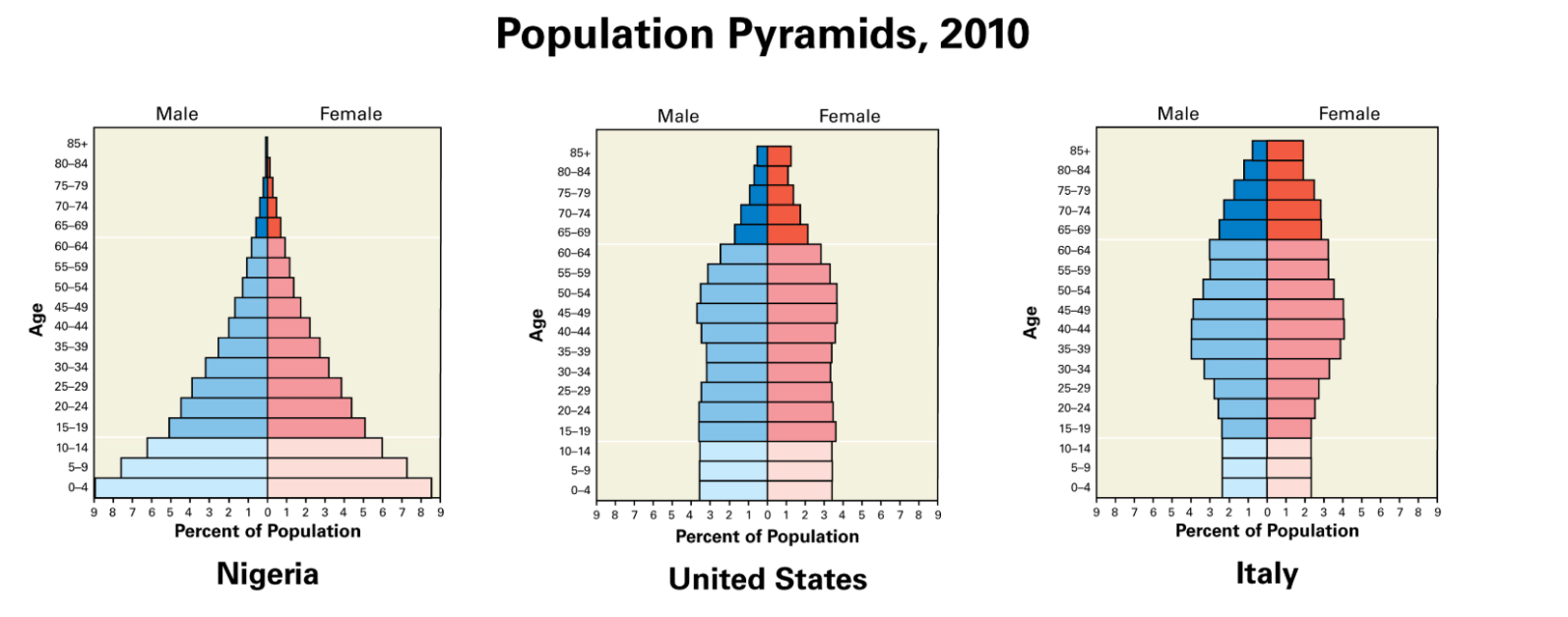
Nigeria
100
Since about 2000, which type of population growth best describes Europe’s trend?
A. rapid growth
B. slow growth
C. negative growth
Negative Growth
100
Name the 3 main factors that change a population size.
Births, deaths, and migration.
100
What program gives families money each month to help raise children?
Monthly child allowance (family allowance)
200
What does “demography” mean?
The study of human populations and how they change.
200
On a population pyramid, what do the left and right sides usually represent?
Left = males, right = females.
200
Which country’s pyramid shows slow population growth?
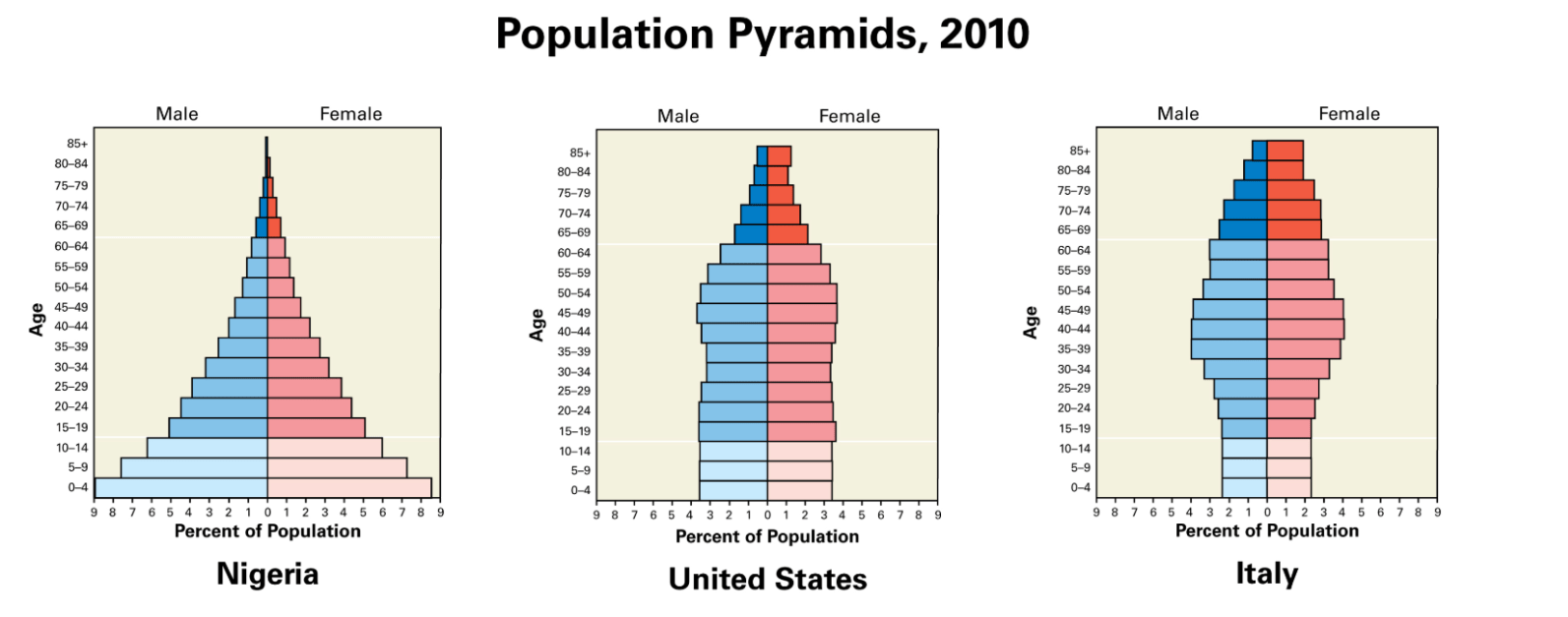
United States.
200
On the Spain 2017 population pyramid, the baby boom group (the four widest bars) is mostly in what age range?
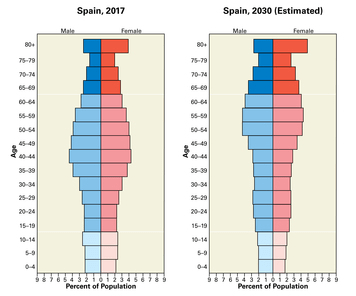
35–54 years old
200
Why can low birth rates cause job/labor shortages later?
There will be fewer young people growing up to become workers.
200
What is the name for a one-time payment given when a baby is born?
Birth bonus
300
What does “total fertility rate (TFR)” tell you?
The average number of children a woman has in her lifetime.
300
What is an “age band” on a population pyramid?
One bar showing a specific age group (often 5 years).
300
Which country’s pyramid shows negative population growth?
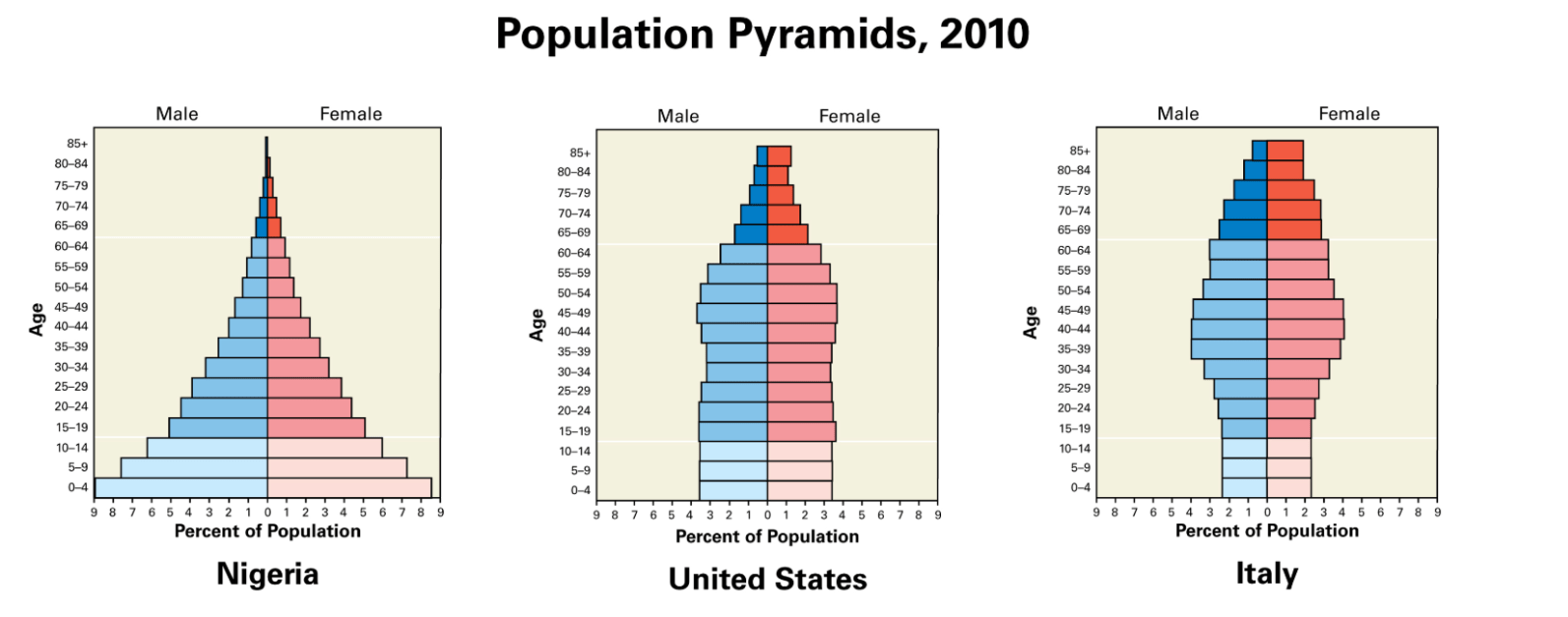
Italy
300
On the Spain 2030 (estimated) pyramid, the baby boom group is mostly in what age range?
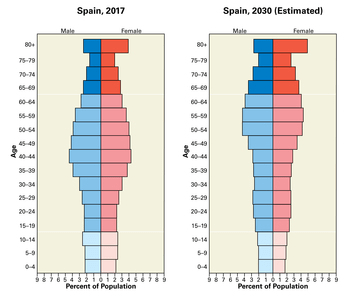
50–69 years old
300
What is one problem that can happen when a population shrinks?
School closures / closed businesses / labor shortages / vacant housing.
300
What policy lets parents take time off for a new baby without losing their job (and often with pay)?
Maternity/paternity leave (paid parental leave)
400
What is the “replacement rate” (about 2.1) used for?
It tells how many children are needed to replace a population over time.
400
If the base (0–14) is wide, what does that usually suggest about birth rates?
Birth rates are high (more kids are being born).
400
Which country is most likely to need MORE schools soon based on its pyramid?
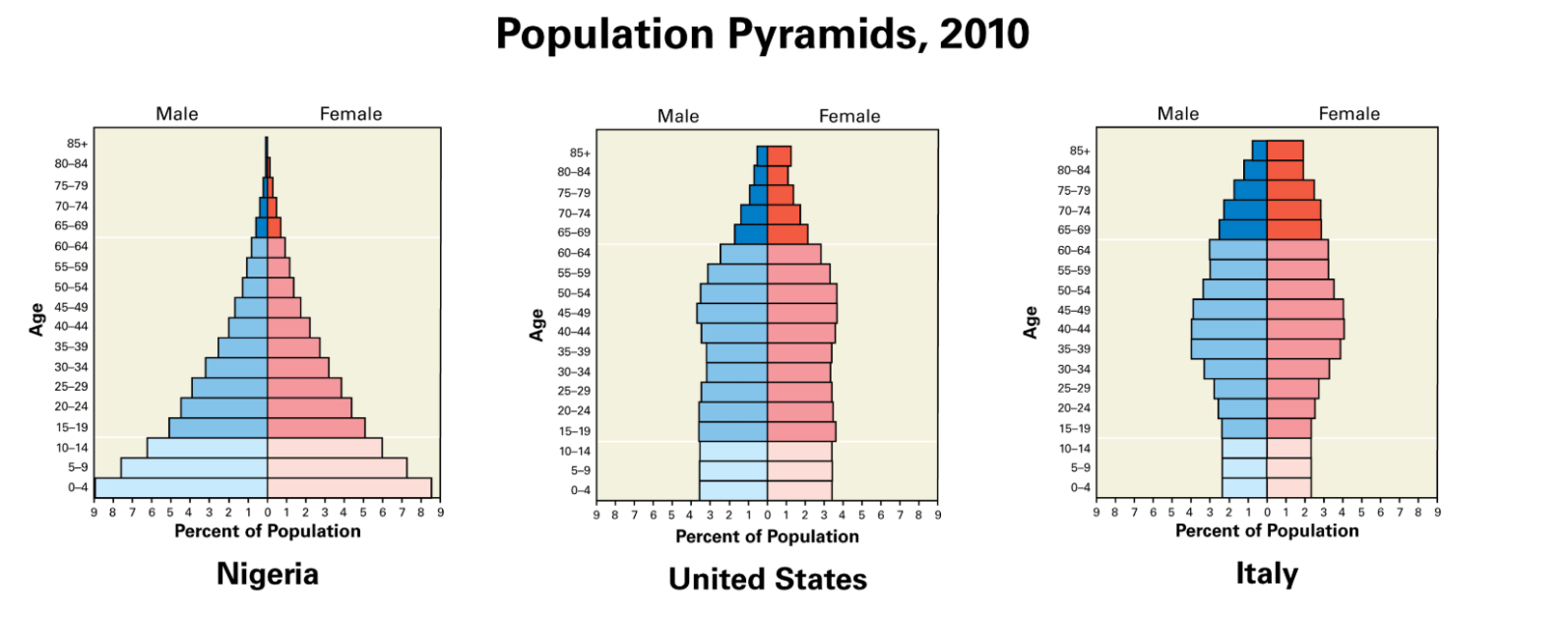
Nigeria
400
In 2017, is the baby boom group is most likely in the workforce or out of the workforce?
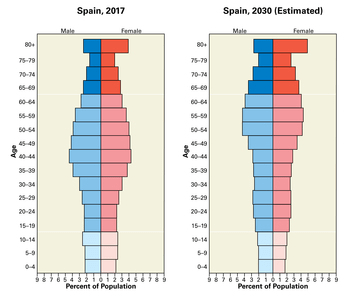
In the workforce
400
How does raising the retirement age help with pension costs?
People work longer and collect pensions for fewer years.
400
What program helps parents work and still have children?
Government-funded childcare
500
What is a “dependency ratio”?
A comparison of dependents (young + old) to working-age people.
500
If the top (65+) is wide, what does that usually suggest about the population?
The population is aging (more older adults).
500
Which country is most likely to face the biggest problem paying for pensions soon based on its pyramid?
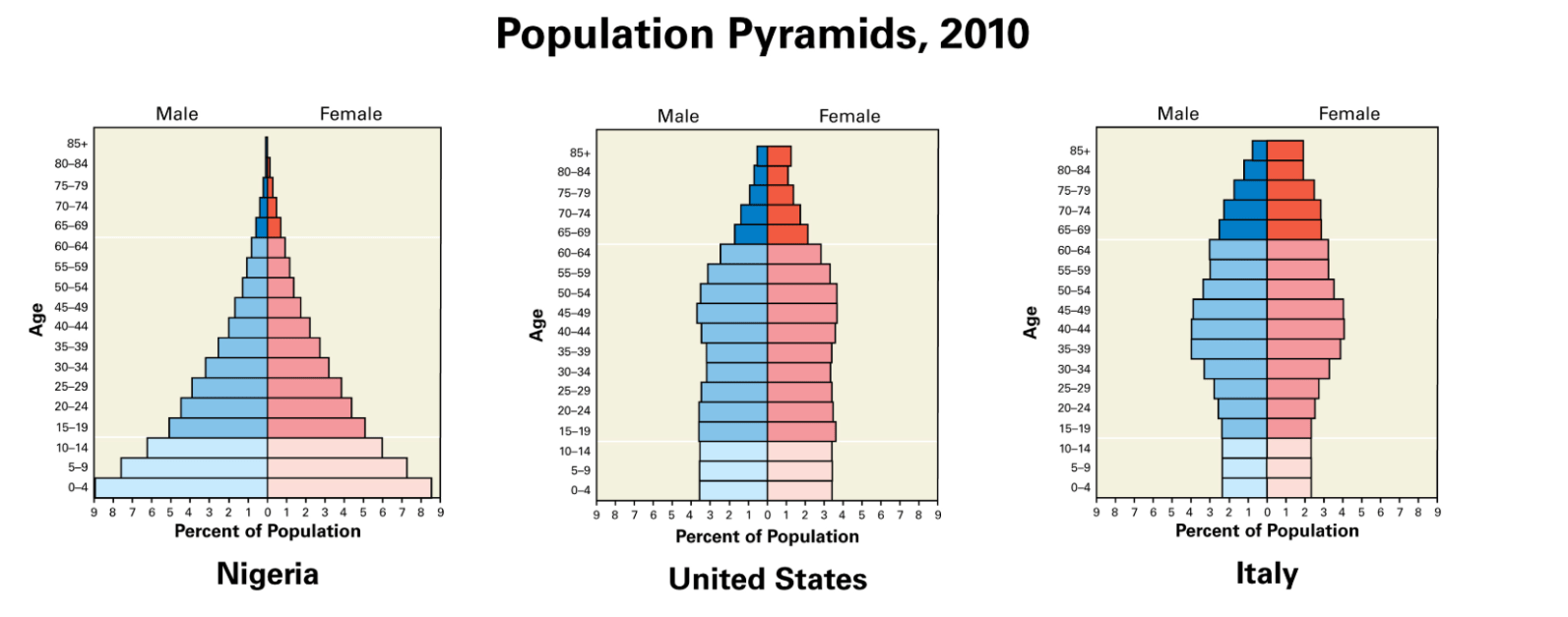
Italy
500
As the baby boom group moves upward from 2017 to 2030, what major challenge is Spain more likely to face?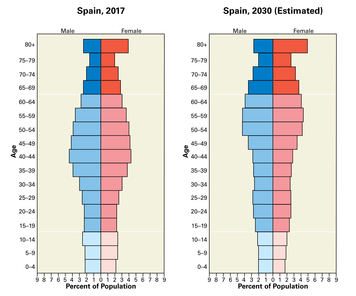
Higher pension and healthcare costs (more older adults to support)
500
Which solution can increase the working-age population the fastest?
Immigration (bringing in workers from other countries).
500
What policy can reduce pension costs by keeping people working longer?
Raising the retirement age
500
In recent years, Europe’s elderly population has
A - Grown
B - Shrunk
C - Stayed the same
Grown