Demography?
Density
Pyrmids
DTM
Overpopulation
100
What is Demography? The study of...
Characteristics of Populations.
100
Population Desnity is a way to measure which of the following?
1. The brith rate in a society.
2. The number of people living per square mile of land in an area.
3. The average number of children a woman has in her life span.
#3 People per square mile.
100
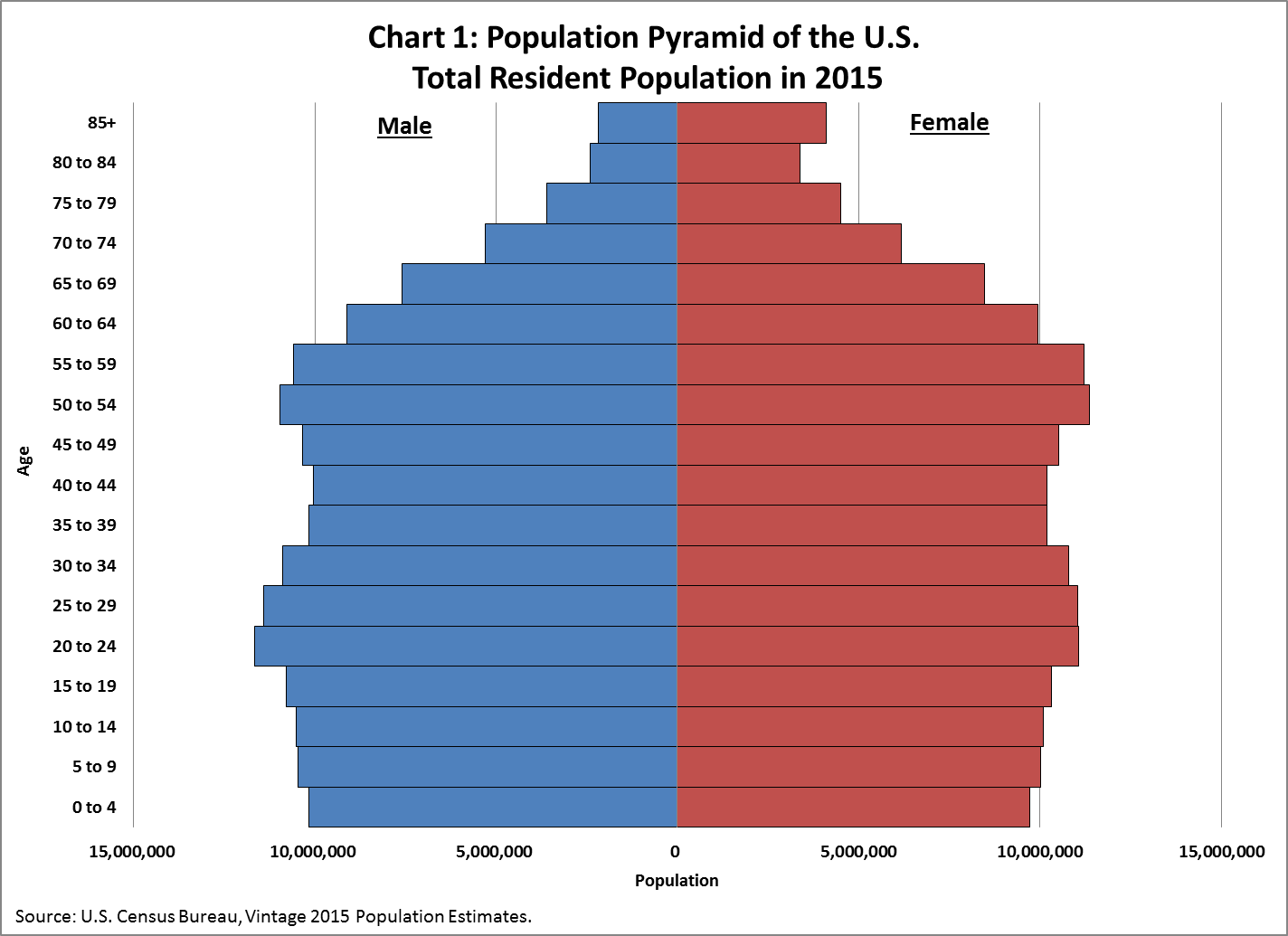
Which of these statements is true of the U.S. Population.
1. An increasing birth rate.
2. A very low life expectency / high death rate.
3. A stabalized population with a low death rate.
3. Stable age groups, low death rate & high life expectency.
100
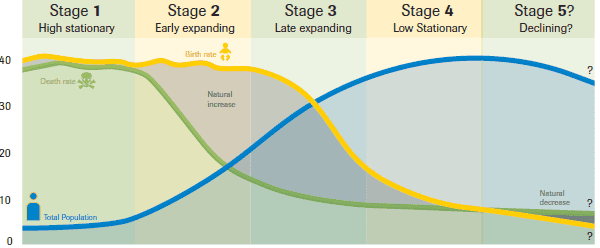
What happens to a countrys population as it transitions from Stage 1 to Stage 2.
Population increases as Death rate declines.
100
Carrying Capacity is the ....
max amount of people an area can sustain / provide for.
200
The Characteristics of a population, such as Life Expectency, Gender ratio, Birth & Death Rate would be called....
Demographics
200
Which of these is NOT correct about "Physiological Density"?
1. Physiological Density measures People divided by Farmland (Arable Land)
2. Physiological Density is used to better view People per square mile based on what land people can acutally live on.
3. A higher Physiological Density is typicaly a sign of a less developed country like Japan.
#3. No connectiong between Physioligical Density and Development.
200

The Steepness of the sides of the pyramids likely represents...
1. A low birth rate
2. A High Death Rate
3. A stabalizing populaion.
2. High Death rate! lots of people die off each age bracket.
200
What likely causes the sudden decrease of the death rate in a Stage 2 country?
1. They begin to impose Pro-Natal Policies
2. They begin to invest in Mining of energy sources
3. New found access to technology and advanced medicine.
#3 Medicine & technology!
200
Which of these was NOT an argument made by Thomas Malthus!
A. Population grows exponentialy (Doubles on itself)
B. Population growth will eventually leads to food shortages.
C. The more people there are, the greater our ability to produce food.
C> He thought our ability to grow food was fixed (more people would be worse!)
300
Which of these Statements is most true of Global population...
1. The world population is distributed evenly across the earths land surface.
2. The World population has been on a consistant decline the past 200 years.
3. The World population is largely clustered in certain regions due to Site & Situation factors.
#3. We are largely clustered in certain regions.
300
Agricultural Density is a way to measure...
A. Total Population divided by Farmland.
B. Amound of Farmers per Sq Mile of Farmland.
C. Total People divided by Farmland.
B Farmers / Farmland.
300
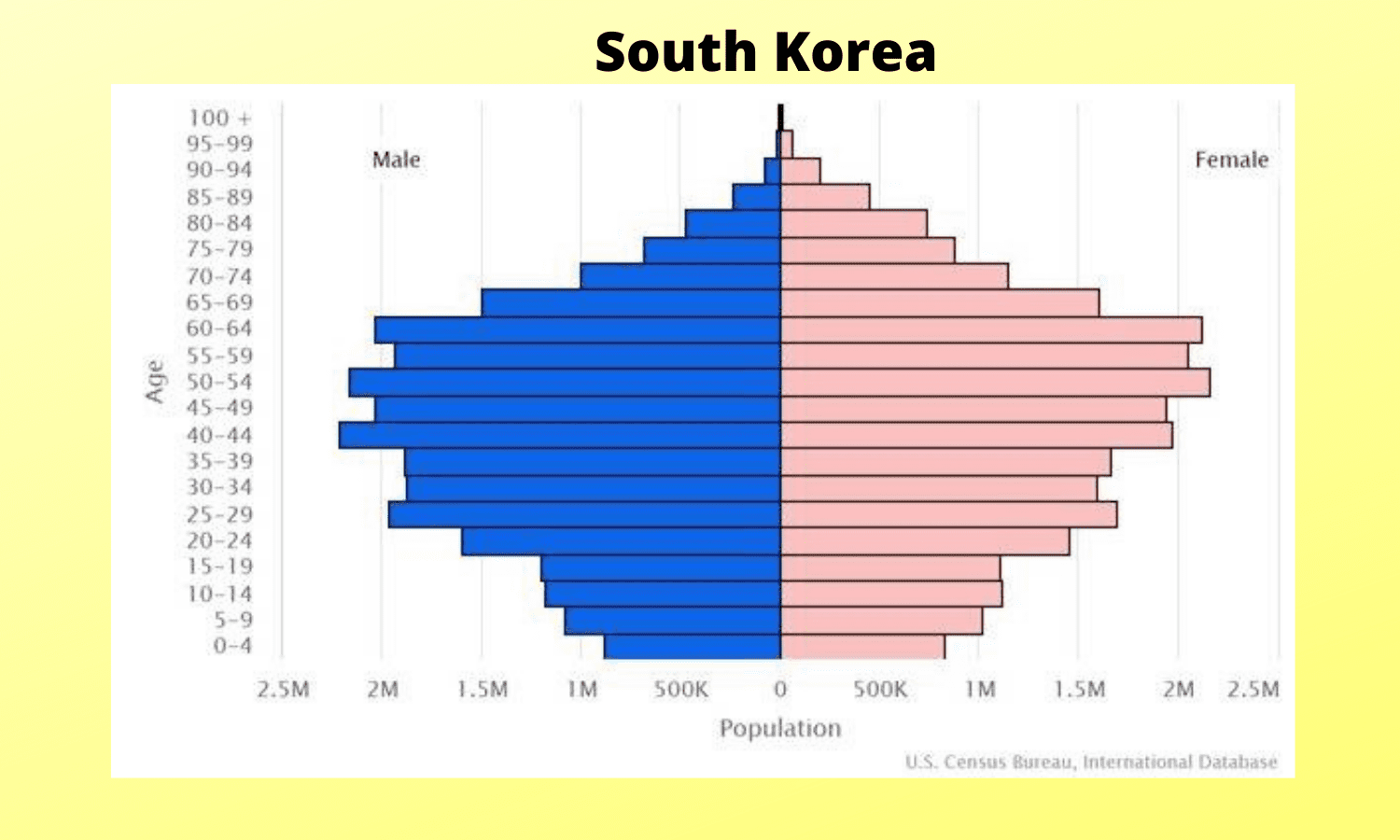
In south korea, which of these is true of their Dependecy ratio.
1. The vast majority of South Korea is in the working population.
2. In South Korea, there is a high number of Young dependents.
3. In South Korea, there is not enough workers to take care of the large "old Dependents" of the country.
#1. Large workforce! Small amount of young to care for.
300
As a country transitions from Stage 3 to Stage 4, what happens to the Birth Rate?
The Birthrate declines
300
Which of these are NOT examples of Pro-Natal Policies.
1. Free Public Schools.
2. Federal Financial Assistance to new parents.
3. Propoganda campaigns to promote limited family size and use of birth control.
3. Birth Control would be Anti-Natal!
400
This term refers to the portion of the earth on which human live on.
Ecumene
400
Fertility Rate refers to...
The average amount of children a women has in a country.
400
Which of these is likely an issue that south korea will face in the future (50 years) if its current trends continue.
1. South Korea will see a growing workforce in the future, which may lead to a stress on the job market.
2. In the future, South Korea will not replace its workforce and will have many Old Dependents with a smaller workforce to provide for them.
3. South Korea is a rick of large scale overpopulation in the future due to its rapid expansion and high birth rate.
2. Look at the Birth Rate! 50 years from now they will have almost no workforce compared to large amount of Dependents!
400
Which stage of Development is the U.S. in?
Stage 4.
400
Which of these was an "Economic Cost" of the China 1-Child Policy?
1. More financial burden on single children to take care of their aiging parents.
2. A greater strain on resources due to the rapidly expanding population.
3. The lower birth rate led to overpopulation.
#1. Dependency Ratio!
500
Pawleys Island sits on Highway 17, a road that connects the Pawleys island community to other major cities such as Charleston, Myrtle Beach, Savannah, and Wilmington. This has allowed Pawleys Island to grow into a popular vacation destination that is easily accessible via highway access.
Site or Situation?
Situation!
500
How is a High Agricultural Density a way to measure economic development of a country?
1. A low agricultural density shows that a society does not have enough money to pay farmers.
2. A higher agricultural density shows a country is less developed, since they need more farmers due to a lack of farm technology.
3. A Higher Agricultural density means a country is very developed since they seem to have many farmers.
2. High amount of Farmers per sq mile of farm land means they lack modern farm technology, less developed!
500

Stage 2: Rapid Expansion
Stage 3: Slower Growth
Stage 4: population stabalizing.
Stage 2! Less developed country
500
What likely accounts for the falling birth rate in Stage 3 & Stage 4 Countries? (Pick all that apply)
A. The population Urbanizes and moves to cities where there is less space for large familes.
B. Families become less relient on large familes since the economy has shifted away from agriculture.
C. The population is intriduced to forms of Pro-natal Policies.
D. Women gaining education, work opportunities, and more social freedom leads to a lower fertility rate.
A, B, and D!
500
What is the similarity between Pro-Natal & Anti-Natal Policies.
1. Both seek to limit the Fertility Rate in a country.
2. Both are government policies to control fertility in some way.
3. Both are only used by authoritarian dictatorships and oppressive governments.
2. Both are stratagies to control fertility in a country.