Vocab
Symbiotic Relationships
Calculations
Interpreting Graphs
Miscellaneous
100
Define what a "species" is.
A group of organisms that are similar and reproduce to produce fertile offspring.
100
Describe all three types of symbiotic relationships.
Mutualism: 😁😁
Commensalism: 😁😐
Parasitism: 😁😥
100
Studying populations, if the area a population lives in shrinks, what happens to the population density? What if the area grows?
Shrink - PD will increase
Grows - PD will decrease
100
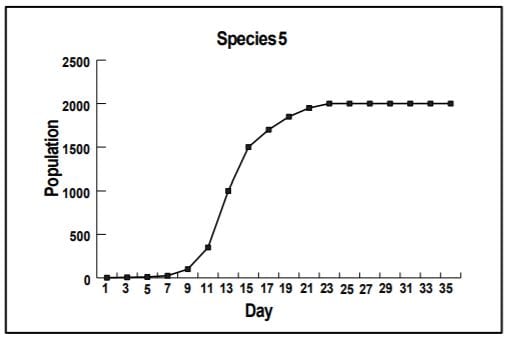
On the graph below what a population would look like as it progresses and then reaches carrying capacity within the ecosystem it is in.

100
Describe the difference between immigration and emigration.
immigration - individuals moving into a new area
emigration - individuals leaving a specific area
200
Put the following terms in order from smallest to greatest:
ecosystem, community, species, population
species, population, community, ecosystem
200
Corals feed off the byproducts of a microscopic algae living within their own tissue, called zooxanthellae. The photosynthetic activity of the algae is vital to the survival of the coral animals, which use the energy to extract calcium from the seawater and build their calcareous skeletons. The zooxanthellae are protected by the hard coral and obtain plant nutrients from the coral.
Explain what type of symbiotic relationship is described and the roll of each organism in the relationship.
Mutualism - both are benefiting!
200
What is the difference between an indirect and direct observation when estimating a population size?
Direct: counting every organism in the population
Indirect: estimating population by the amount of tracks, nests, etc.
200
Describe the relationship between predators and prey and how those populations vary and would affect the other if one increases/decreases and vis versa.
Predators eat prey, if the predator population is very high, prey will be low. If the predator population is low, prey population will be able to increase. This relationship will go back and forth oscillating between carrying capacity of both.
200
What is population density and and what is the equation for it?
Population density is how many individuals are in a given area.
PD = #of individuals/unit area
300
In your own words, explain what "ecology" is.
The study of how living things interact with each other and their enviroment.
300
Give an example of each type of symbiotic relationship.
Answers will vary...
300
Calculate for the # of individuals in a population given:
area = 150 km2
population density = 10 individuals/km21,500 individuals in the population
300
Explain why the population of this fish goes a little above and then below carrying capacity continually.
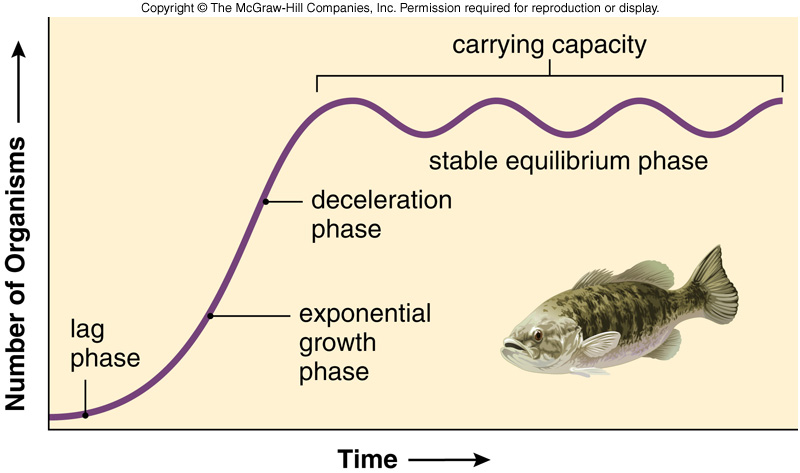
A population tends to always be increase or decreasing, so as a population increases it goes a little above CC but then due to some limiting factor, it will cause the population to decrease below CC. This pattern will continue on and continue on.
300
What is the main factor that INCREASES a population.
What is the main factor that DECREASES a population.
Increase - birth rate
decrease - death rate
400
Describe the difference between a population and a community. Give an example of each.
Population: all members of one species in a particular area (deer population)
Community: all the different populations that live together in an area (deer, flowers, fox, trees, etc.)
400
Describe why it is important for ecologists to study symbiotic relationships that occur within our world.
Answers will vary...
400
Using the mark & recapture equation on the board and given the following, calculate for the population size.
Original amount captured & marked: 500
Size of second captured sample: 100
Amount in second captured marked: 18
About 50,000 individuals in the population
400
Describe the relationship between the hare and the fox.
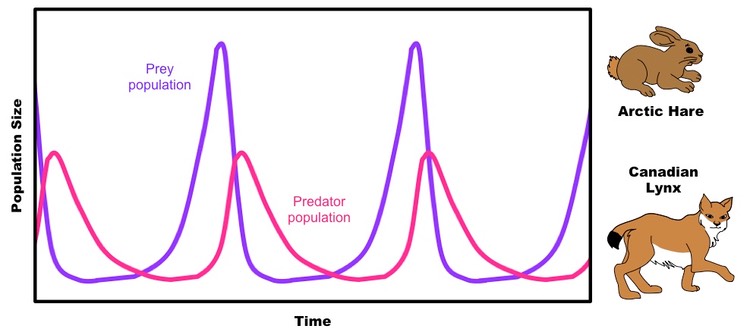
The fox is the predator and the hare is the prey. The fox population increases after the hare population increases because their is more food, but as the fox population increases, the hare population decreases. This pattern continues and continues.
400
What are the 4 different ways a population can be estimated.
Direct observation, indirect observation, mark & recapture method, and sampling.
500
What is a limiting factor? Then, describe how limiting factors relate to the carrying capacity of a population within an ecosystem.
limiting factor: an environmental factor that prevents a population from increasing
500
Observe the graph below. Describe what type of symbiotic relationship is being shown...explain!!
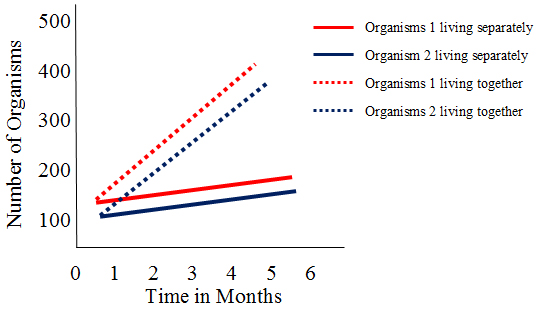
Mutualism... both organisms are more successful (populations grow) when living together.
500
Using the mark & recapture equation on the board and given the following, calculate for how many individuals were marked in the second capturing.
Original amount captured & marked: 500
Size of second captured sample: 100
Population estimate: 1,500
33.33 (33 individuals)
500
Predict what will happen within the next 5-10 years...then predict what will happen within 5-10 years after that. Explain your prediction.

We can predict that since the moose (prey) population is very high at the end of this graph, that it will begin to decrease because the wolves (predator) will have more of a food source. Then, in another 5-10 years the opposite will happen because the moose population will have decreased due to being eaten, causing the wolf population to decrease.
500
Explain why ecologists usually study a specific population of organisms rather than study the entire species.
Answers may vary.