4-1
4-2
4-3
4-4&4-5
4-6
100
Is the following a polynomial function? If so, what's the degree? If not, why?
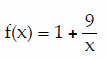
No, because of negative exponent
100
Use the remainder theorem to find the remainder when f(x) is divided by x-c

B
100
Information Is given about a polynomial f(x) whose coefficients are real numbers. Find the remaining zeros of f.

A
100
Find the domain of the rational function

C
100
Use the graph of the function f to solve the inequality.
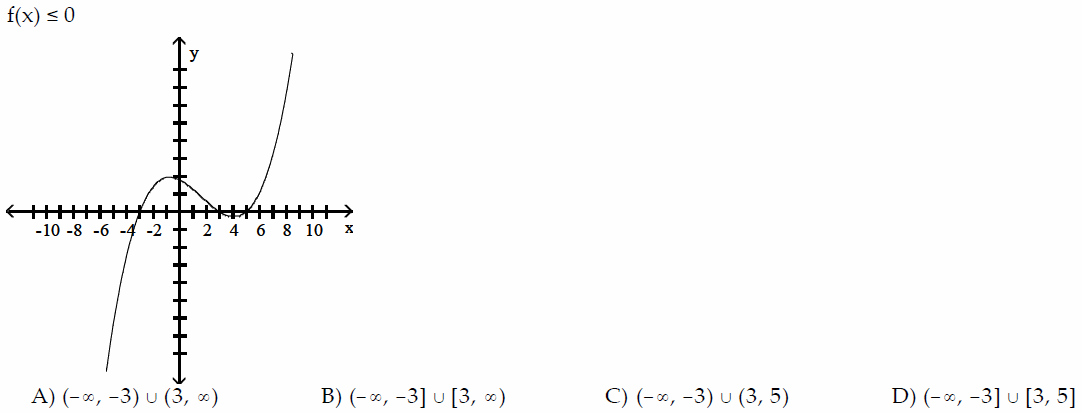
D
200
For the polynomial, list each real zero and its multiplicity. Determine whether the graph touches or crosses the x-axis at each x-intercept.
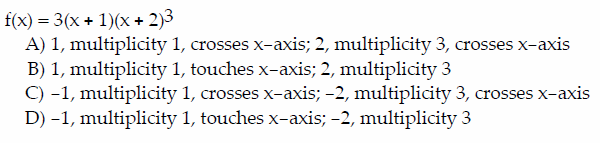
C
200
Find the intercepts of the function f(x)

x=-2,0,2
200
Information Is given about a polynomial f(x) whose coefficients are real numbers. Find the remaining zeros of f.

3-5i
6i
200
Use the graph to determine the domain and range of the function. Identify any asymptotes.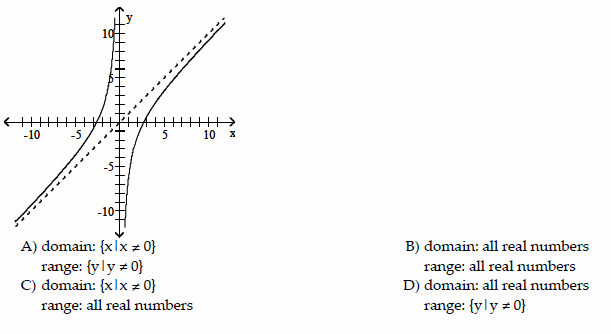
C
200
Solve the inequality algebraically

C
300
Daily Double
Time: 30 Seconds
Is the following a polynomial function? If so, what's the degree? If not, why?

300
Use the intermediate value theorem to determine whether the polynomial function has a zero in the given interval.

D
300
Form a polynomial f(x) with real coefficients having the given degree and zero

B
300
Graph the function using transformations
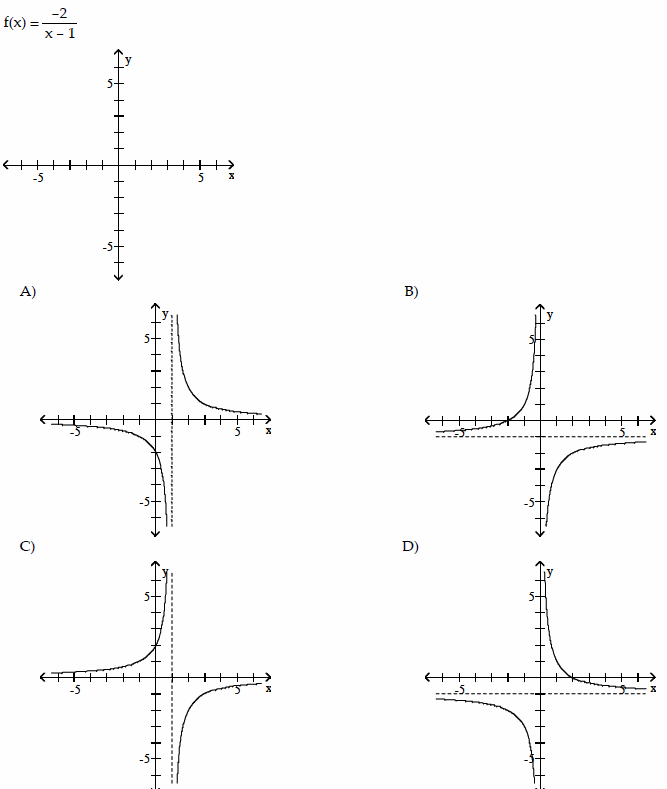
c
300
Solve the inequality by using the graph of the function
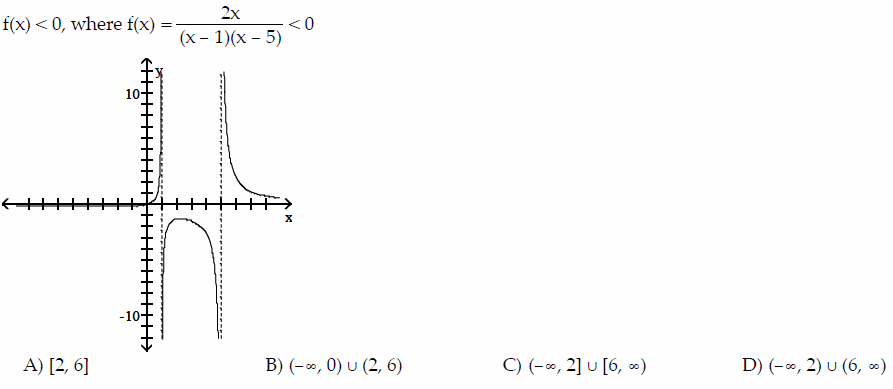
B
400
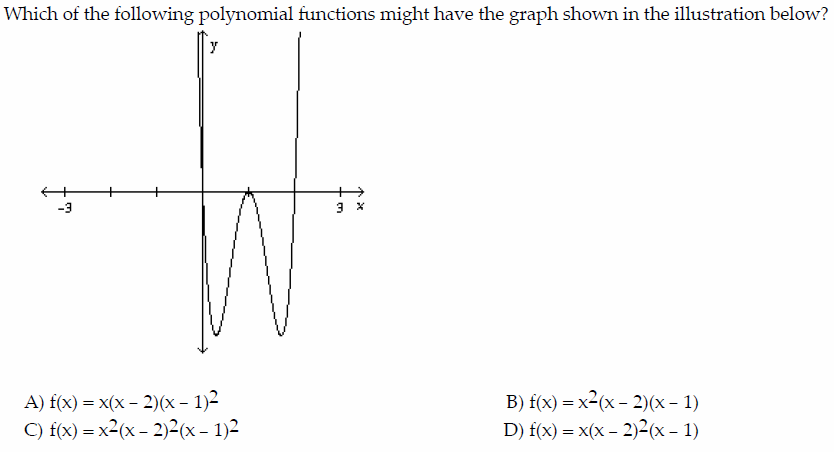
A
400
Find the real solutions of the equation.

(1,0)
400
Daily Double
Time: 2 Minutes
Find all zeros of the function and write the polynomial as a product of linear functions.
400
Give an equation of the horizontal or oblique asymptote, if any, of the function
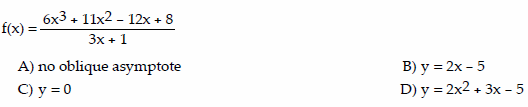
A
400
Solve the inequality algebraically. Express the solution in interval notation.

B
500
Graph the function
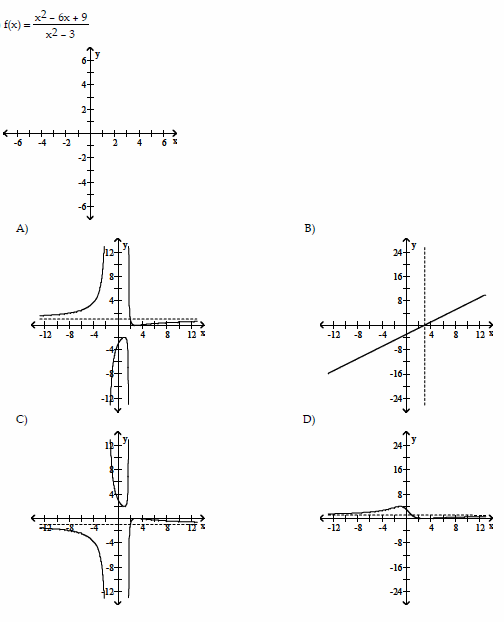
A