Structure of Water
Properties of Water
Bonding
Atomic Structure
Misc
100
the chemical structure of water
H2O
100
Allows water striders to walk on water
surface tension
100
it takes a large amount of enery to raise or lower the temperature of water
high heat capacity
100
Three subatomic particles
Protons, neutrons, and electrons
100
Why can water dissolve many substances because of its characteristic?
Because it's a polar compound
200
How many hydrogen atoms are in a water molecule?
There are 2
200
What allows water to dissolve many substances?
Universal solvent
200
it takes a lot of energy to make liquid water vaporize
high heat of vaporazation
200
Located outside of the nucleus and have a negative charge.
Electrons
200
According to the laws of physicals, water should be a gas at room temperature T/F
True
300
What is a molecule that has "electrically" charged areas?
Polar molecule
300
Water rising in a tube is an example of what property?
Capillary action
300
Water is less dense as a solid than a liquid
True
300
Located inside of the nucleus and have a positive charge.
Protons
300
A substance that dissolves another substance
A solvent
400
When molecules are attracted to other molecules of the same substance
Cohesion: a force of attraction between the same kind of molecules
400
Why does water molecules stick to one another?
hydrogen bonding
or
polar molecule
400
What is a weak bond formed between water molecules?
A hydrogen bond
400
The sum of the protons and neutrons
Atomic Mass
400
How many protons are in an atom of this element? What is the atomic mass of this element?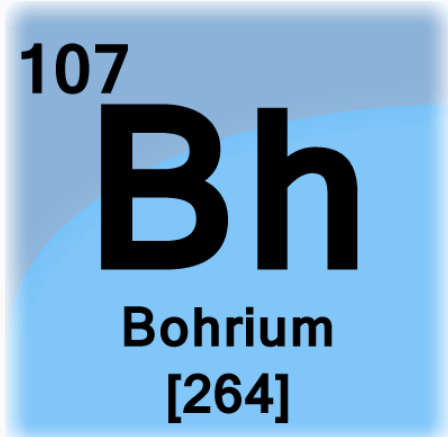
107 protons
264 amu
500
When molecules are attracted to other molecules of a different substance
adhesion: a force of attraction between different kinds of molecules
500
If water will not dissolve a particular substance, what is it?
Non-polar
500
Water dissolves all polar and ionic substances
Universal solvent
500
The number of protons in an atom of a certain element.
Atomic Number
500
An atom has an atomic number of 50 and atomic mass of 150. How many neutrons does it contain?
150 (atomic mass) - 50 (atomic #)= 100 neutrons