Enzyme 1
Enzyme 2
Numeracy
Literacy
Real-World Application
100
Name a metabolic process that is tightly controlled by enzymes.
Digestion
100
What happens at Optimum Temperature?
The enzyme operates at its highest efficiency with the most effective rate of substrate binding and conversion to products.
100
Identify the approximate pH for Pepsin and Trypsin based on the below graph
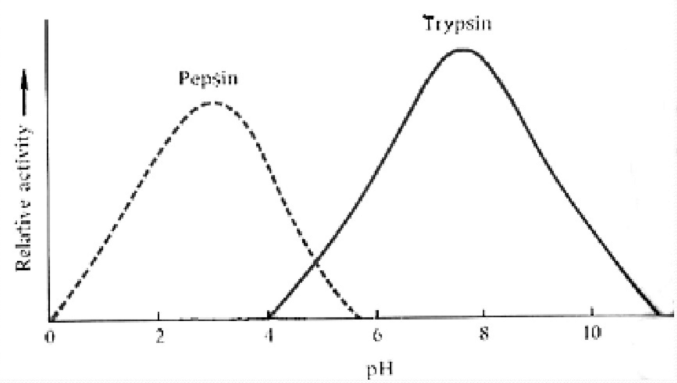
Pepsin: 3
Trypsin: 7.6
100
When asked to "Identify" something, what does that mean?
To name something
100
What substance does the digestive enzyme "Sucrase" digest?
Sucrose (Glucose or sugar)
200
What are the two types of active sites within the protein structure of an enzyme?
Binding sites and catalytic sites
200
What is the difference between the lock-and-key model and the induced fit model?
lock-in-key: the active site of the enzyme is rigid and requires a specific substrate.
induced fit: the enzyme is flexible and can change form upon substrate binding.
200
Describe the rate of enzyme activity between 20 and 30 degrees
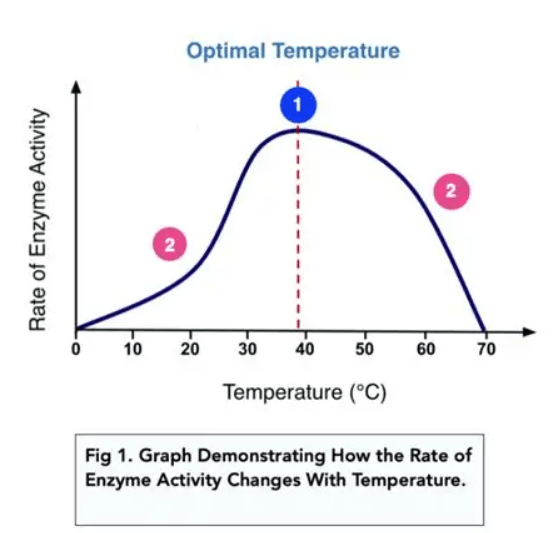
There is a sharp increase in the rate of enzyme activity from 20 degrees to 30 degrees.
200
What does the word "predict" mean?
to make an educated guess on what will happen
200
What does the enzyme Nuclease digest?
DNA and RNA
300
Enzymes have a unique ______-___________ structure that is essential for their function
Three-dimensional
300
Name the four factors that affect enzyme activity
Temp, pH, presence of inhibitors and substrate concentration
300
After the sharp increase in rate of reaction for both higher and lower enzyme concentration, how would you describe the trend of both higher and lower enzyme concentration
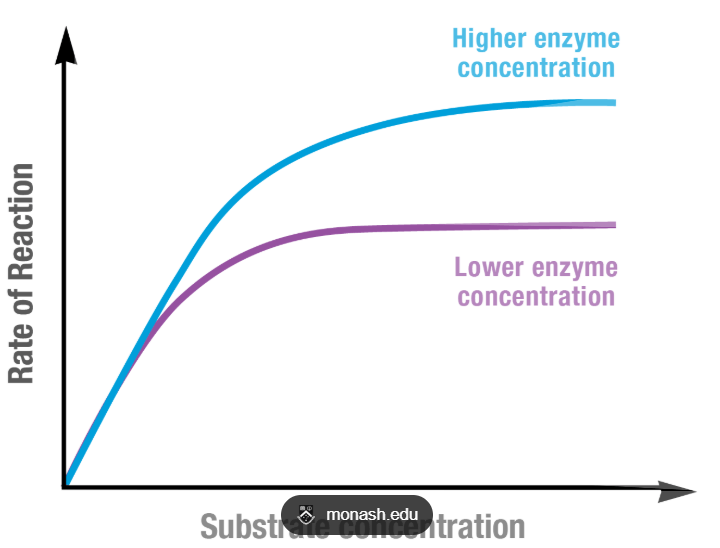
both trends plateau.
300
what does the term "infer" mean?
to make a suggestion based on the data available to you
300
What is the role of the enzyme "Insulin", where can it be found, and which disease is most commonly associated with it?
Insulin regulates glucose levels in the blood, it can be found in the small intestine, and issues with insulin cause Diabetes.
400
What is an enzyme?
Enzymes are specialised proteins that act as a biological catalyst, accelerating chemical reactions in cells without being used up in the process.
400
What is the function of Allosteric Regulation?
It allows enzymes to respond to cellular signals and adjust their activity according to the body's needs
400
Looking at the graph below, what does the dotted line represent?
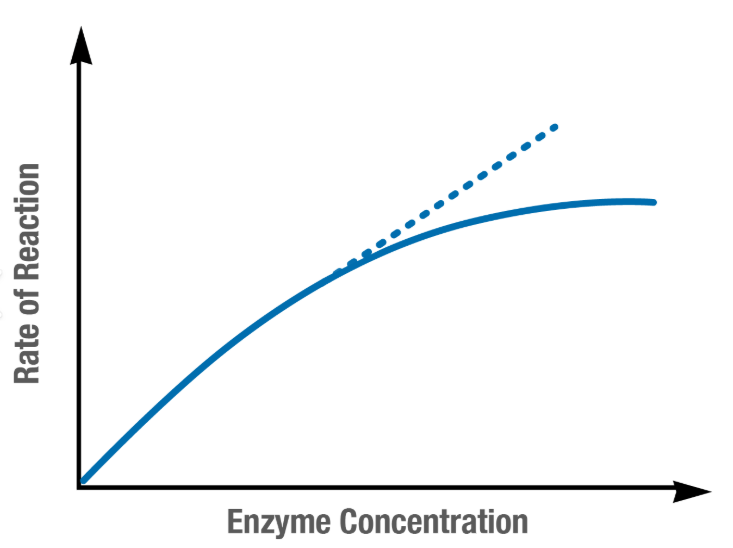
the dotted line represents what the graph would look like if the enzyme had access to unlimited substrate.
400
The prefixes Poly..., Di... and Mono..., indicate what about the suffix? Give examples for each prefix
Number/amount. Poly = many, Di = 2, Mono = 1
400
If humans did not have digestive enzymes, how long would it take them to digest one meal?
23-37.4 hours
500
what are cofactors and coenzymes, and what do they do?
Cofactors (metal ions) and coenzymes (organic molecules like vitamins) assist in enzyme activity, providing additional means of regulation through their availability
500
What is the name of digestive enzymes secreted in an inactive form?
zymogens
500
Draw a conclusion about the required energy of a reaction using the below graphs
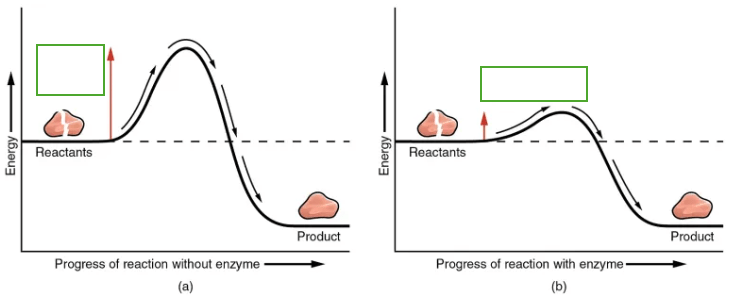
Graph A shows that a greater amount of energy is required to activate a reaction without enzymes, and Graph B shows that less energy is required to activate a reaction due to the presence of enzymes.
500
What does the term "Analyse" mean, and how can it be done?
To examine in detail, to explain and interpret. This involves breaking down complex topics into smaller components to gain a deeper understanding.
500
Give an example of a polysaccharide, disaccharide and monosaccharide
Polysaccharide: Starch, Disaccharide: Maltose, Monosaccharide: Glucose