Factor
Solve by Factoring
Parabola Features
Vertex Form
Standard Form
100
Factor
10x2-5x
5x(2x-1)
100
Solve.
(2x-9)(x+3)=0
x = 9/2 and x = -3
100
Identify the x- and y-intercepts. 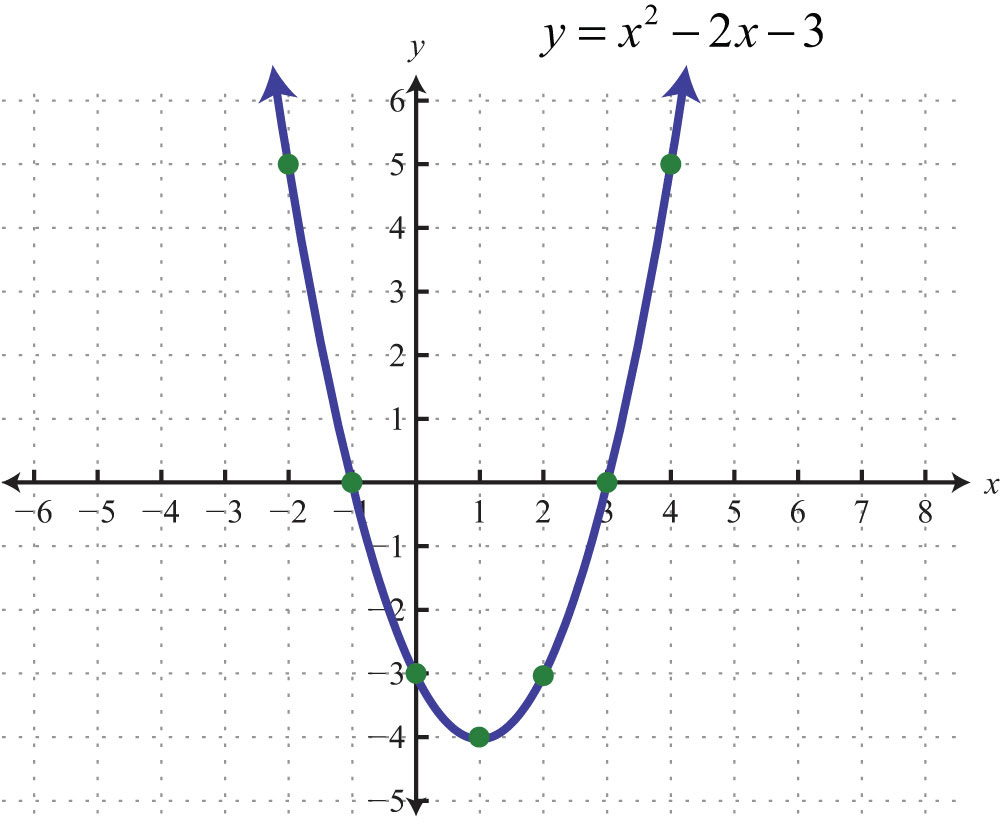
(0, -3)
(-1,0)
(3,0)
100
State the transformations from the parent function.
y = -4(x-3)2+1
Reflection over the x-axis, Vertical Stretch of 4, Right 3, Up 1
100
Determine the y-intercept.
y = 3x2-17x+41
(0, 41)
200
Factor
4x2-49
(2x-7)(2x+7)
200
Solve by factoring.
x2+x-2=0
x = -2 and x = 1
200
Identify the axis of symmetry and vertex. 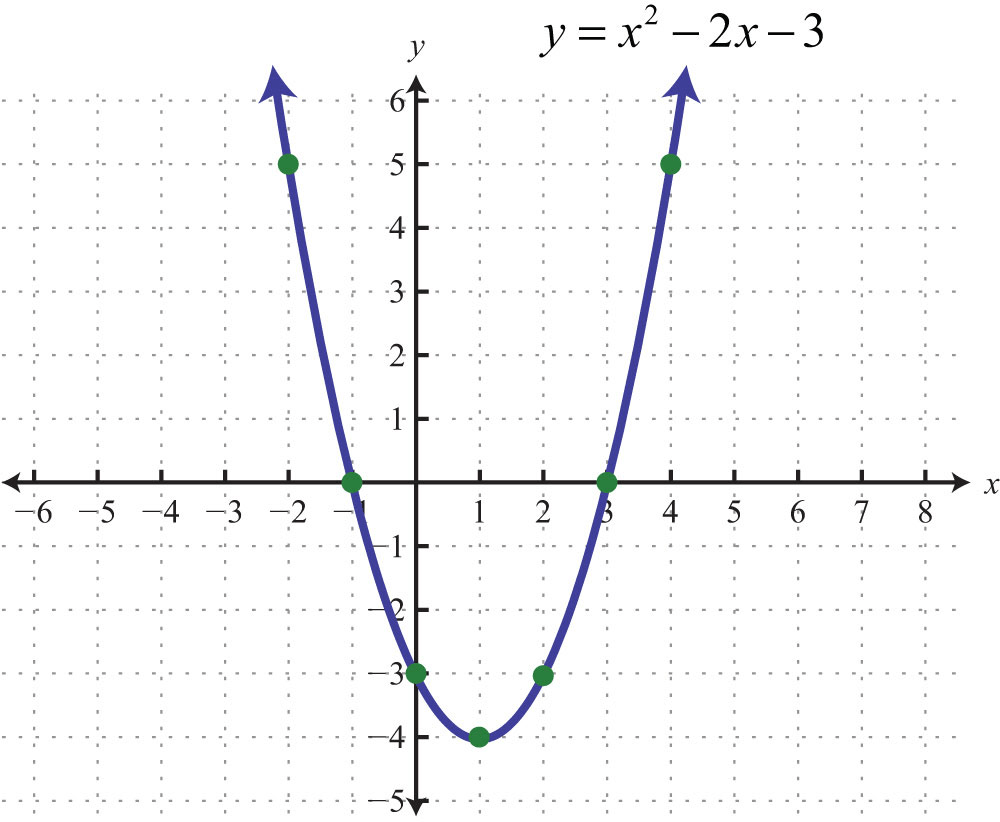
x=1
(1, -4)
200
Write the equation of a quadratic in vertex form that has been reflected over x-axis and shifted left 2 and down 4
y = - (x+2)2 - 4
200
What is the formula for finding axis of symmetry from standard form?
x=(-b)/(2a)
300
Given the equation of a parabola in standard form, write the equation in factored form.
y=3x2-21x+36
y=3(x-3)(x-4)
300
Solve by factoring.
9x2-25=0
(3x-5)(3x+5)
x = 5/3 and x = -5/3
300
Identify where the function is increasing.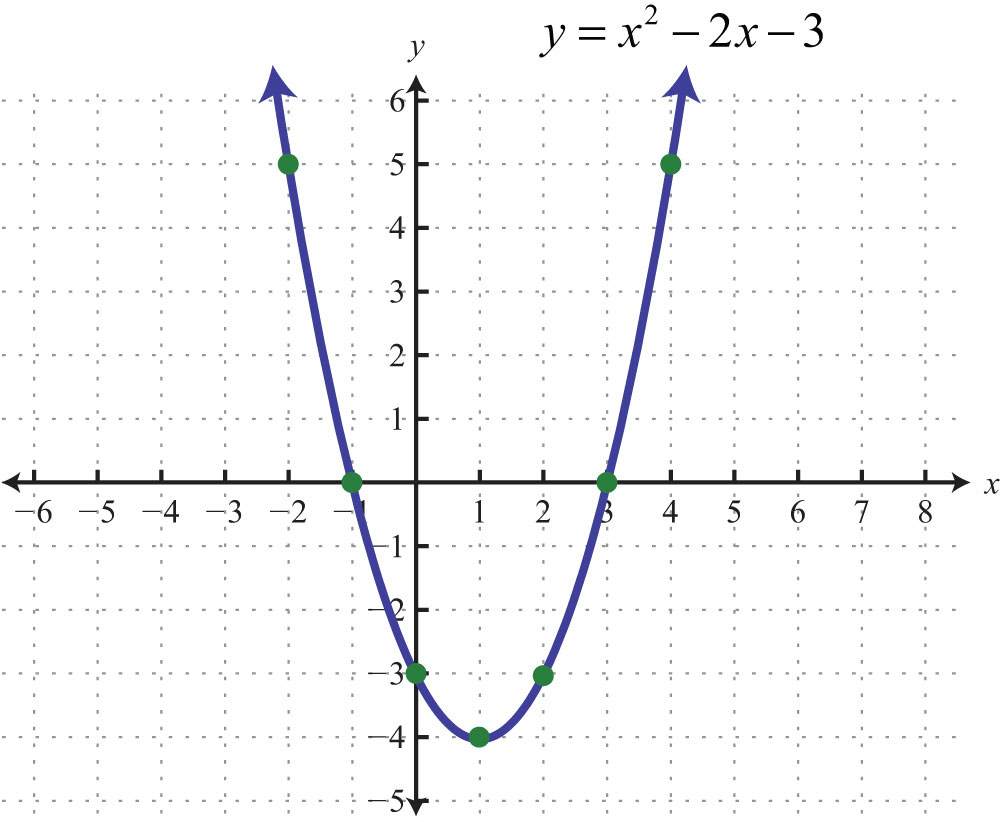
x > 1
300
Describe the transformations from the parent function. 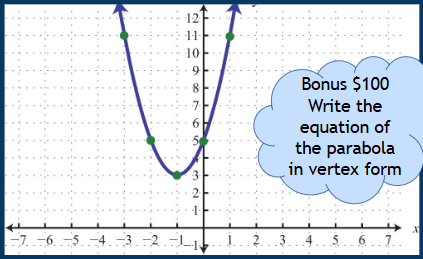
Left 1, Up 3, Vertical Stretch by 2
Bonus $100: y = 2(x+1)2 +3
300
Determine the equation of the axis of symmetry and the vertex.
-x2+4x+3
x = 2
(2,7)
400
Factor the trinomial.
2x2+3x-5
(x-1)(2x+5)
400
Solve by factoring.
2x2+8x+8=0
x = -2
400
Identify 4 different words to describe the bolded points indicated on the graph.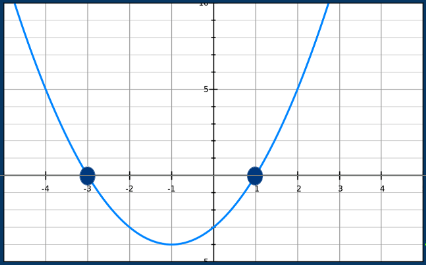
x-intercepts
solutions
roots
zeros
400
Use the graph to write the equation of the parabola in vertex form. 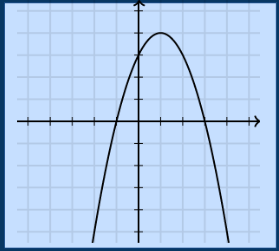
y = - (x - 1)2 + 4
400
Write an equation in standard form for a parabola that has x-intercepts at x=5 and x=-2 with a vertical compression of ½.
y = 0.5x2 - 1.5x - 5
500
Factor.
2x3+17x2+21x
x(x+7)(2x+3)
500
Solve by factoring.
2x2-3x-5=0
(2x-5)(x+1)
x = 5/2 and x = -1
500
Identify where the function is positive.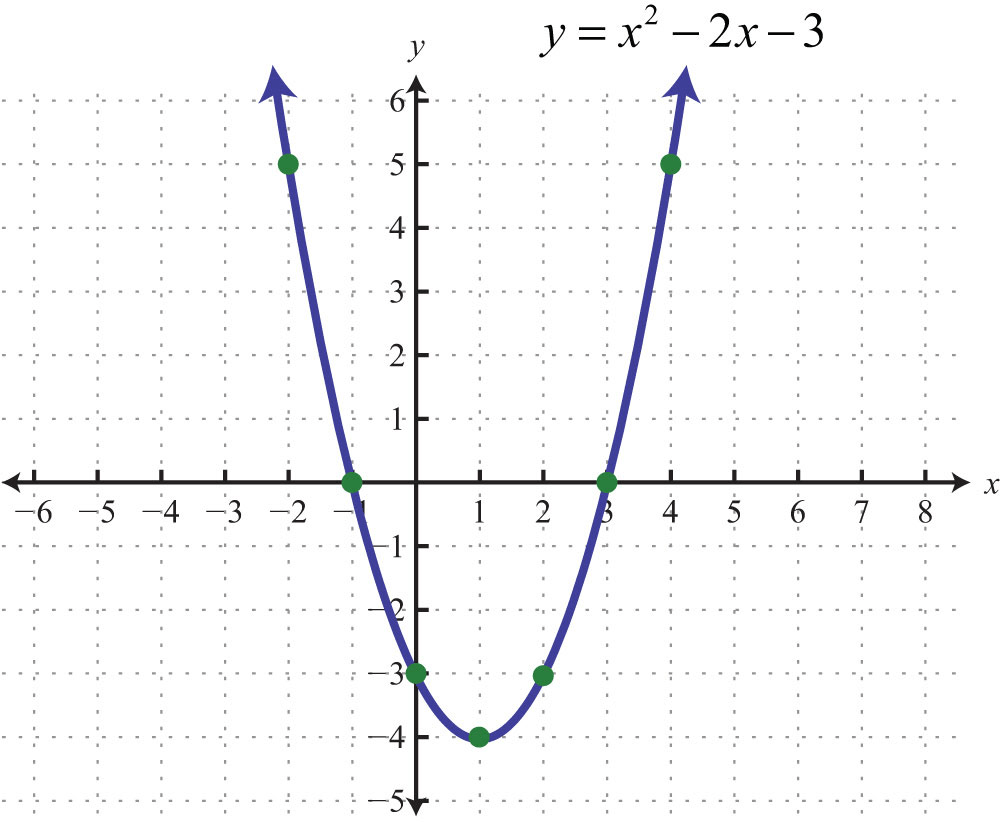
x < -1 and x > 3
500
Use the table to write the equation of the parabola in vertex form. 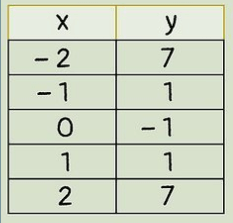
y = 2x2 - 1
500
Determine the y-intercept, x-intercepts, axis of symmetry, and vertex.
y = 4x2-4x-15
y-int: (0,-15)
x-ints: (2.5, 0) and (-1.5, 0)
AOS: x=0.5
vertex: (0.5, -16)