Properties of Water
Macromolecules
Cell Structure & Function
Cellular Energy
Cellular Reproduction
Molecular Genetics
100
Water is essential for life. Its special properties make water the single most important molecule in plant life. Which of the following properties of water enable it to move from the roots to the leaves of plants?
A. Water expands as it freezes.
B. Water is an excellent solvent.
C. Water exhibits cohesive behavior.
D. Water is able to moderate temperatures.
C. Water exhibits cohesive behavior.
100
Biological macromolecules are organic compounds. They all contain carbon. The function of a biological macromolecule depends on what other elements it contains. Which of these biological macromolecule is rich in carbon-hydrogen bonds and functions as a long-term energy storage?
A. Carbohydrate
B. Lipid
C. Nucleic Acid
D. Protein
B. Lipid
100
What is a primary function of the cell membrane?
A determining genetic traits
B defending against foreign particles
C breaking down proteins for energy
D generating energy from mineral nutrients
B defending against foreign particles
100
6CO2 + 6H2O → C6H12O6 + 6O2
Based on this equation, what is the correct equation for cellular respiration?
A. 12O2 + C6H12O6 → 6CO2 + 6H2O
B. 6O2 + C6H12O6 → 6CO2 + 6H2O
C. 12CO2 + 6H2O → C6H12O6 + 6O2
D. 2CO2 + 6H2O → C6H12O6 + 6O2
B. 6O2 + C6H12O6 → 6CO2 + 6H2O
100
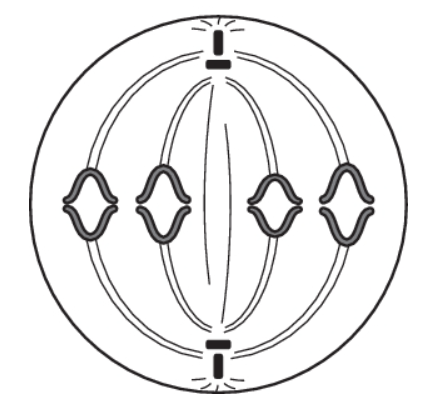
Which statement best explains what is occurring in the cell?
A. The chromosomes are being replicated.
B. The spindle fibers are separating the chromosomes.
C. The spindle fibers are attaching to the chromosomes.
D. The chromosomes are condensing and becoming visible.
B. The spindle fibers are separating the chromosomes.
100
If a single DNA strand contains 40 adenines prior to replication, what conclusion can be made about its complementary strand after replication, assuming no mutations occurred?
A. The complementary strand contains a total of 40 uracils.
B. The complementary strand contains a total of 40 cytosines.
C. The complementary strand contains a total of 40 guanines.
D. The complementary strand contains a total of 40 thymines.
D. The complementary strand contains a total of 40 thymines.
200
Which of the following best describes a result of the polar nature of water molecules?
A. Ionic compounds dissolve easily in water
B. The volume of water decreases by nearly half when its frozen
C. Water molecules repel each other.
D. Water molecules repel most other substances.
A. Ionic compounds dissolve easily in water
200
What is the function of a macromolecule that is composed of several of these subunits?
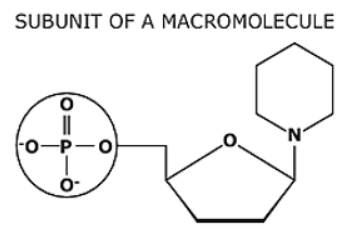
A. regulating metabolism
B. storing genetic information
C. providing structural support
D. controlling chemical reactions
B. Storing genetic information
200
To help patients replenish bodily fluids quickly during an illness, doctors need to understand how cells behave in their environment. Doctors have confidence in what they know about how cells behave because
A. the cell theory has been tested, refined, and observed to be true over hundreds of years
B. large medical institutions have conducted their own experiments justifying cell theory
C. the basics of cell theory have not changed much since the original experiments
D. what we know about cell theory has been published in reputable journals
A. cell theory has been tested, refined, and observed to be true over hundreds of years
200
Some organisms depend on oxygen to obtain the energy needed to carry out life processes for survival. Other types of organisms do not depend on oxygen to obtain the energy needed for survival; they are able to survive in environments where there is no or little oxygen or where oxygen levels are depleting. In addition, some organisms produce their own oxygen, while other types of organisms depend on others to obtain the oxygen they need to survive.
If an organism doesn’t depend on oxygen to obtain the energy needed to survive, what process does it carry out to obtain the energy for its life processes?
A. Aerobic respiration
B. Anaerobic respiration
C. Glycolysis
D. Photosynthesis
B. Anaerobic respiration
200
The different steps of cell division are shown below. The steps are NOT listed in the correct order.
1 Cytoplasm divides
2 Genetic material replicates
3 Spindle fibers shorten, pulling chromatids to opposite sides
4 Homologous chromosomes match up
5 Nuclear membrane disappears
Which sequence represents the steps of cell division in the correct order?
A. 1, 2, 3, 5, 4
B. 2, 5, 4, 3, 1
C. 3, 5, 1, 4, 2
D. 4, 2, 5, 1, 3
B. 2, 5, 4, 3, 1
200
DNA replication is a necessary process associated with the cell cycle. Which of the following statements best identifies when DNA replication occurs and why it is important.
A. during cell division, to ensure that the DNA will fit into the resulting cells
B. before a cell divides, to ensure that the DNA will fit into the resulting cells
C. after a cell divides, to provide each of the two resulting cells with a complete set of DNA instructions
D. before a cell divides, to provide each of the two resulting cells with a complete set of DNA instructions
D. before a cell divides, to provide each of the two resulting cells with a complete set of DNA instructions
300
Greenhouse gases that cause the formation of acid rain are also contributing to extreme weather patterns such as extreme heat waves and extreme cold spells. Different varieties of plants are able to withstand specific ranges of temperatures without being harmed. If the temperature lowers to levels below what they can withstand for an extended period of time, plants are likely to freeze and die due to their cells bursting. What property of water causes the cells to burst?
A. Adhesion
B. Cohesion
C. Expansion
D. High specific heat capacity
C. Expansion upon Freezing
300
As food travels through the digestive system, it is exposed to a variety of pH levels. The stomach has a pH of 2 due to the presence of hydrochloric acid (HCl), and the small intestine has a pH ranging from 7 to 9. HCl converts pepsinogen into pepsin, an enzyme that digests proteins in the stomach. Which of the following most likely happens to pepsin as it enters the small intestine?
A It becomes inactive.
B It begins to replicate.
C Its shape changes to engulf large proteins.
D Its activity increases to digest more proteins.
A It becomes inactive.
300
Which of the following characteristics defines a cell as a eukaryote?
A. Being able to move
B. being able to reproduce
C. Having a nucleus
D. Having ribosomes
C. Having a nucleus
300
Photosynthesis and cellular respiration are carried out by organisms to produce energy. Which substance meets all of the following three criteria?
1. Is a product of plant photosynthesis.
2. Is a reactant in aerobic respiration.
3. Is neither a reactant or a product of anaerobic respiration.
A. Carbon dioxide
B. Glucose
C. Lactic acid
D. Oxygen
D. Oxygen
300
During meiosis, chromosomes in a diploid cell produce haploid daughter cells. This step allows for genetic diversity. The image below shows a cell with four chromosomes during Prophase I.
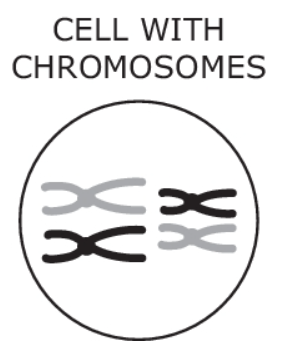
Which image shows one of the cells produced after the full process of normal meiosis?
A. 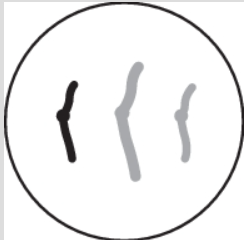
B. 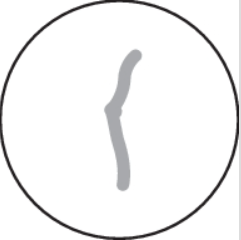 C.
C. 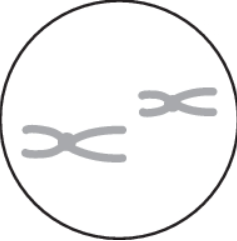
D. 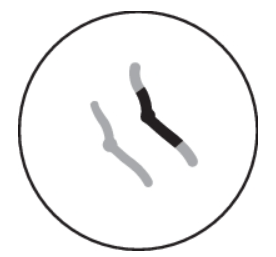
D. 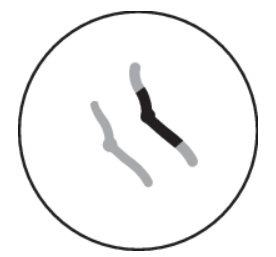
300
The diagram below shows a process that occurs in the human body.
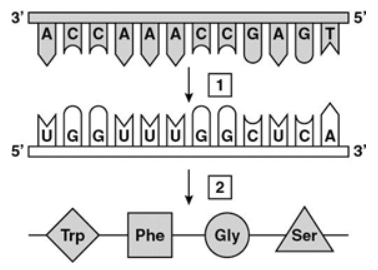
What statement best describes the process shown at step 1?
A. A new rRNA strand is replicated during translation.
B. A new mRNA strand is produced during transcription.
C. A new set of amino acids are coded for by tRNA during protein formation.
A new mRNA strand is produced during transcription.
400
Paddle boarders and surfers depend on water’s properties to carry out these activities. The cohesive property of water makes it so that the water molecules are attracted to each other, creating a strong layer on the water’s surface due to high surface tension. What is this cohesive property of water responsible for when it comes to paddle boarding and surfing? (Select all that apply)
I. Wave formation and shape
II. Keeping the paddle board afloat
III. Droplets of water on the paddle boarder’s wet suit
IV. The paddle’s ability to push water back, moving the paddle board forward along the water.
I. Wave formation and shape
II. Keeping the paddle board afloat
III. Droplets of water on the paddle boarder’s wet suit
400
What would the human body not have the ability to do if carbohydrates were totally absent?
A. the ability to build the inner components of cell membranes
B. the ability to pass genetic information from parent to offspring
C. the ability to create quick energy and serve as the primary energy source for the body
D. the ability to repair and build cells as well as create both enzymes and neurotransmitters
C. the ability to create quick energy and serve as the primary energy source for the body
400
Which of the following best compares the structures found in plant cells and animal cells?
A. Animal cells contain cell walls and a large central vacuole while plant cells contain cell membranes and many small vacuoles
B. Animal cells do not contain chloroplasts, cell walls, or a large central vacuole while plant cells do
C. Plant cells contain rough endoplasmic reticulum and a Golgi apparatus while animal cells contain smooth endoplasmic reticulum surrounded by lysosomes
D. Plant cells have rigid cell walls and do not contain mitochondria or ribosomes while animal cells do
B. Animal cells do not contain chloroplasts, cell walls, or a large central vacuole while plant cells do
400
In terms of photosynthesis and cellular respiration, how do plants and animals depend on each other?
A. Animals release glucose and oxygen during photosynthesis, which plants take in
B. Plants release carbon dioxide, which animals need for cellular respiration
C. Animals release carbon dioxide, which plants take in, and plants release oxygen, which animals take in
D. Plants absorb sunlight energy, which was released by animals during cellular respiration
C. Animals release carbon dioxide, which plants take in, and plants release oxygen, which animals take in
400
A biological process is shown below.
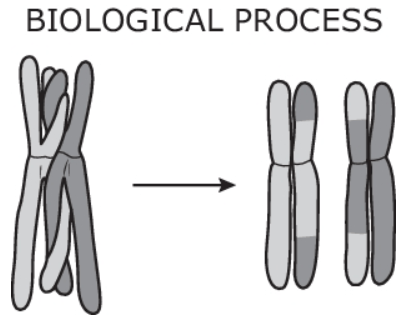
What is the direct result of this biological process?
A. duplication of genetic material
B. formation of mutations within cells
C. fertilization of an egg with a sperm
D. generating new combinations of alleles
D. generating new combinations of alleles
400
Which of the following statements best summarizes the processes of transcription and translation resulting in the expression of a particular gene?
A. The genetic information carried by DNA is transcribed into a code that is carried by RNA, which is translated into a specific protein that determines a phenotype.
B. The genetic information carried by DNA is translated into a code that is copied by RNA and transcribed into a protein chain that results in a specific phenotype.
C. The genetic information carried by RNA is transcribed into a code that is carried by DNA and translated into a protein chain that results in a specific phenotype.
D. The genetic information carried by RNA is translated into a code that is copied by DNA and transcribed into a protein chain that results in a specific phenotype.
A. The genetic information carried by DNA is transcribed into a code that is carried by RNA, which is translated into a specific protein that determines a phenotype.
500
Water is a polar molecule because
A. It shares electrons equally between oxygen and hydrogen
B. The oxygen has a slight positive charge and the hydrogen has a slight negative charge
C. The hydrogen has a slight positive charge and the oxygen has a slight negative charge
D. It forms hydrogen bonds with other water molecules
C. The hydrogen has a slight positive charge and the oxygen has a slight negative charge
500
Correctly complete the table?
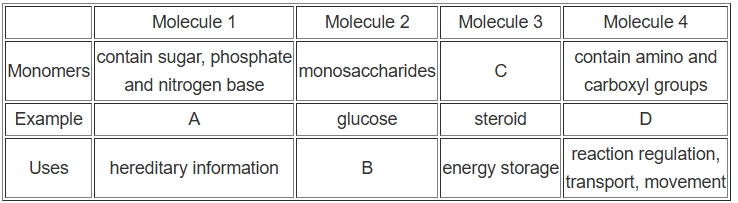
A=DNA or RNA
B=cell fuel and support
C=fatty acids and glycerol
D=hemoglobin and amylase
500
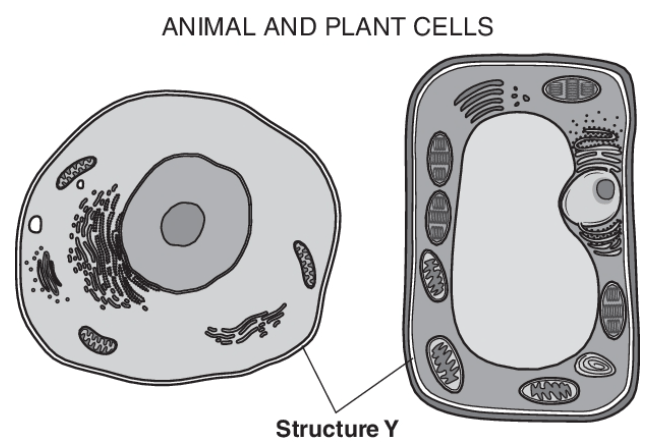
Which function is performed by Structure Y in both animal and plant cells?
A. makes proteins
B. produces energy
C. controls translation
D. maintains homeostasis
D. maintains homeostasis
500
A weightlifter is using heavy weights in short bursts for a competition. Because his muscle cells are not able to take in enough oxygen, the weightlifter begins to get fatigue in his muscles. Which of the following processes is most likely going on in the muscles of the weightlifter as he competes in his event?
A. As the cells run out of oxygen they switch to anaerobic respiration, which allows the cells to make small amounts of ATP in the absence of oxygen.
B. As the cells run out of oxygen, they die off gradually and the weightlifter's muscles have fewer contracting muscle cells.
C. The cells will never run out of oxygen if the weightlifter is breathing.
D. As the cells run out of oxygen, they will continue to make the same amount of ATP, since oxygen is not required to make ATP.
A. As the cells run out of oxygen they switch to anaerobic respiration, which allows the cells to make small amounts of ATP in the absence of oxygen.
500
Which statement best describes the diagrams shown?
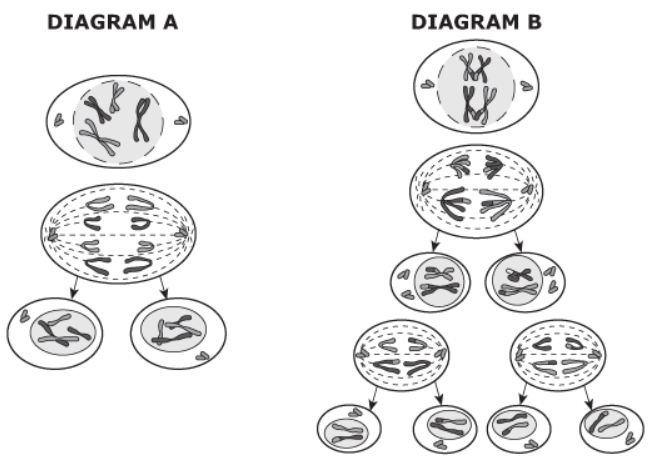
A. Diagram A represents meiosis resulting with identical daughter cells. Diagram B represents mitosis resulting with identical daughter cells.
B. Diagram A represents meiosis resulting with genetically unique daughter cells. Diagram B represents mitosis resulting with genetically identical daughter cells.
C. Diagram A represents mitosis resulting with genetically identical daughter cells. Diagram B represents meiosis resulting with genetically unique daughter cells.
D. Diagram A represents mitosis and increased genetic diversity in daughter cells. Diagram B represents meiosis and decreased genetic diversity in daughter cells.
C. Diagram A represents mitosis resulting with genetically identical daughter cells. Diagram B represents meiosis resulting with genetically unique daughter cells.
500
The table below shows four partial DNA sequences. An error occurred and resulted in four mutated mRNA sequences.
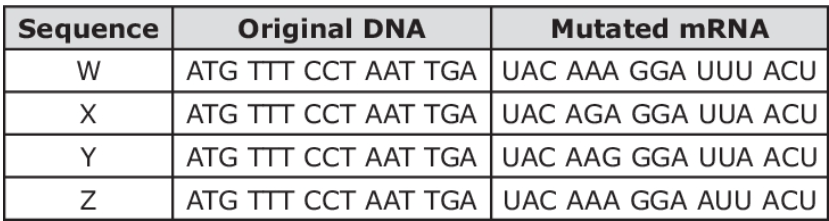
Using the codon chart, which mutated mRNA sequence would NOT result in a change in the organism's phenotype?
A. Sequence W
B. Sequence X
C. Sequence Y
D. Sequence Z
B. Sequence X