Sun, Moon, Earth
Sun
Motion
Light
Stars
Space Stuff
Big Bang and More
100
This is when the northern hemisphere gets the shortest amount of light in a day
Winter Solstice (Dec, 21-23)
100
The process by by which the nuclei of atoms are combined to make larger atoms. It is also the power of the stars.
Fusion
100
The force of attraction between two objects with mass.
gravity
100
The type of electromagnetic radiation with the highest energy.
Gamma
100
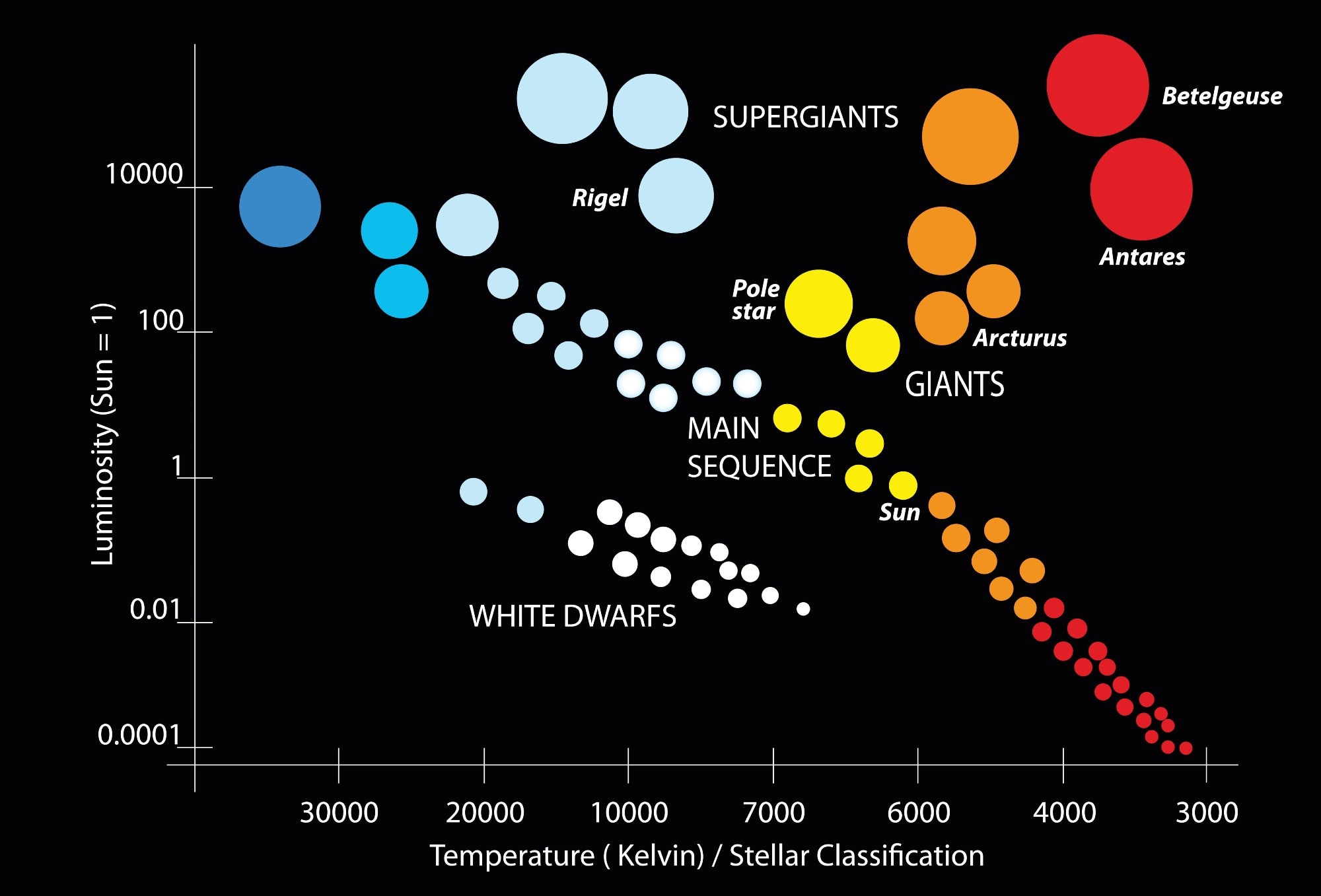 The star in the HR diagram shown that is in the process of converting hydrogen into helium.
The Sun
100
This property is better known as the magnitude of a star
brightness or illuminosity
100
The person who discovered that all objects in the Universe are moving away from each other.
Hubble
200
This is where scientists believe the moon came from
The Earth
200
When the Sun uses up all of it's hydrogen it will enter this stage of its life.
Red Giant
200
This is what would happen to the planets if gravity ceased to exist but they still stayed together.
They would float off into space.
200
The type of electromagnetic radiation that travels the fastest.
They all travel at the same speed
200
This is what happens in the core of a high mass star that will cause it to go supernova
the production of heavy elements causes it to collapse and then explode
200
The shape of the orbits that the planets travel in around the sun
ellipse
200
The piece of technology that is helping us to learn that the universe may be way older than we originally thought.
James Webb Telescope
300
The primary cause of the seasons on Earth.
The tilt of the Earth as it revolves around the Sun
300
This is how the sun rotates that is different from the planets
the equator rotates faster
300
The two forces that keep the planets revolving around the Sun
Gravity and Inertia
300
This how scientists use light know that the Andromeda Galaxy will eventually collide with the Milky Way Galaxy.
The blue shift
300
Compared to the Sun, the star in the HR diagram is the brightest and coldest.
Betelgeuse
300
The phase of the Moon when you cant see it
New Moon
300
According to the Big Bang Theory, how are galaxies moving in the universe?
Away from each other
400
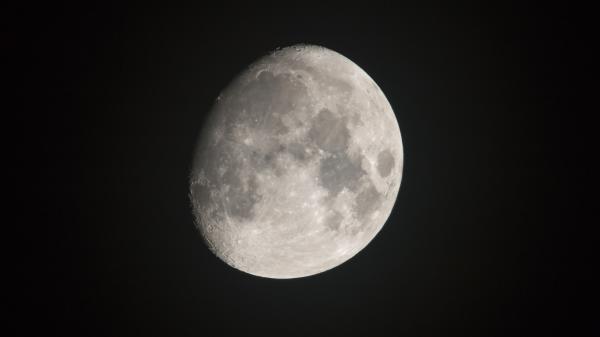 Phase of the moon shown in the diagram
Gibbous
400
Dark areas on the sun that are cooler and indicate high solar activity.
Sunspots
400
This is what would happen to the planets if inertia suddenly ceased to exist.
They would be pulled into the Sun
400
The change in wavelength or frequency of a wave as something moves towards or away from you is known as this.
The Doppler Effect
400
A planet found in the "Goldilocks Zone" is likely to be revolving around a star in this stage of it's life.
Main Sequence
400
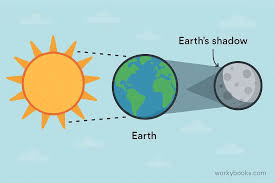
The specific event depicted here.
Lunar Eclipse
400
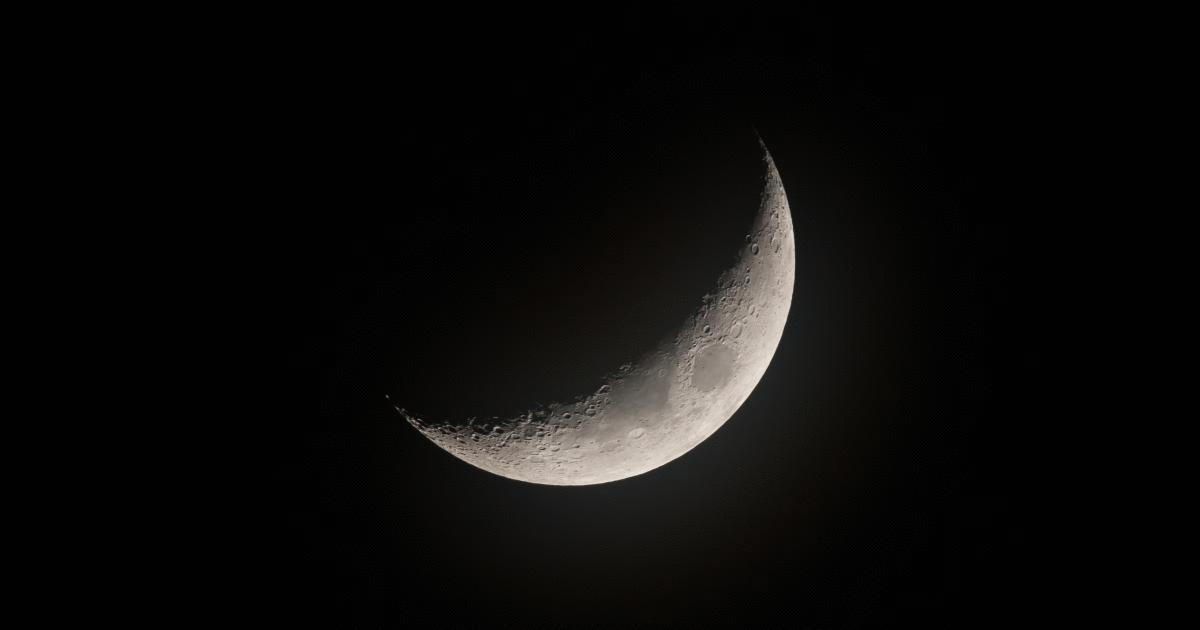 Phase of the moon shown here.
Crescent
500
The arrangement of the Sun,Moon and Earth during a lunar eclipse.
The Earth is between the Sun and the Moon
500
Sun spots, flares and prominences are all caused by changes in this.
Magnetic field or lines....magnetism
500
Newton's third law of motion states this
For every action there is an equal and opposite reaction
500
The color of visible light with the shortest wavelength.
Violet
500
A medium mass star in the Main Sequence stage of it's life.
C
500
An astronomical unit is used to measure the distance between objects found here.
In our solar system
500
The days when the entire Earth gets 12 hours of light and 12 hours of dark in a day.
the Equinoxes
600
This is the main reason for the tides on Earth.
Gravitational pull of the Moon.
600
The Solar Cycle of activity is this many years.
11 years
600
The scientist who developed laws that explain the motion of the planets.
Kepler
600
This is what happens to the frequency of a wave as the energy decreases.
it decreases
600
The three possible results of the death of a star.
White Dwarf, Black Hole, Neutron Star
600
The reason that we only ever see the same side of the Moon from Earth
The moon is tidally locked. It revolves and rotates at the same speed
600
The machine that is being used to try to recreate the conditions at the time of the Big Bang
Particle Accelerators (Large Hadron Collider)