Ecology
Biomes
Food Webs
Species Interactions
100
This word means "the study of interactions of living things and the environment."
Ecology
100
2 answers please:
1. This biome is usually very hot and receives very little precipitation.
2. This biome is usually very cold and often has a little vegetation due to the lack of precipitation
1. Desert
2. Tundra
100
These types of organisms make their own energy/food.
Autotrophs / producers
100
In this type of relationship, one species benefits and the other one is unaffected.
Commensalism
200
These are the living things in an ecosystem.
Biotic factors
200
This biome is the one in which we live. The trees drop their leaves in the autumn to survive better in the winter, when it is difficult to absorb water from frozen soil.
Temperate deciduous forest (or temperate broadleaf forest)
200
Write/draw a food chain with 4 trophic levels.
Many possible answers
200
A hawk eats a mouse. The hawk is a _____, and the mouse is a _____.
Predator, prey
300
The total number of wolves in Yellowstone National Park is at this level of ecological organization.
Population
300
What are the two variables that determine the biome in a specific area?
Hint: We see them on climate diagrams
Temperature and precipitation
300
What do the arrows of a food chain or food web represent?
The direction of energy movement
300
Provide an example of a mutualistic relationship
Many possible answers (as long as both species benefit from their relationship with each other)
400
Provide 3 examples of abiotic factors.
Air, rocks, water, temperature, pH, etc.
400
This latitude is where the earth is usually the hottest, resulting in tropical rainforests in this area.
The equator (or 0 degrees latitude)
400
Primary Consumers, Secondary Consumers, Tertiary Consumers, and Quaternary Consumers can also all be referred to as this term.
Heterotroph
400
A tick sucks the blood of a deer. The tick is a _____, and the deer is a ____.
Parasite, host
500
This level of ecological organization is many different species and all of the abiotic factors in a specific area.
Ecosystem
500
Temperatures are colder here because the air is thinner and cannot hold much thermal energy.
Areas of high elevation
500
If the population of eagles disappeared what would happen to the population of Deer? Are Eagles a keystone species? 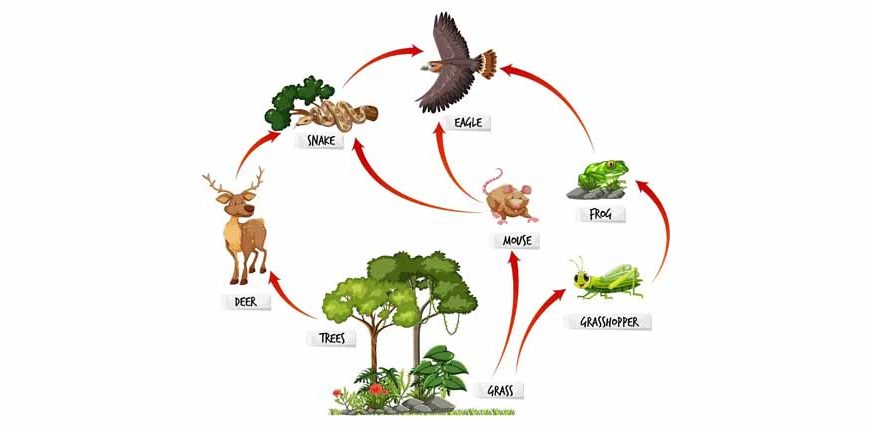
Deer population would decrease because snakes would increase without a predator.
Eagles are a keystone species
500
What species interaction is occurring in this picture?
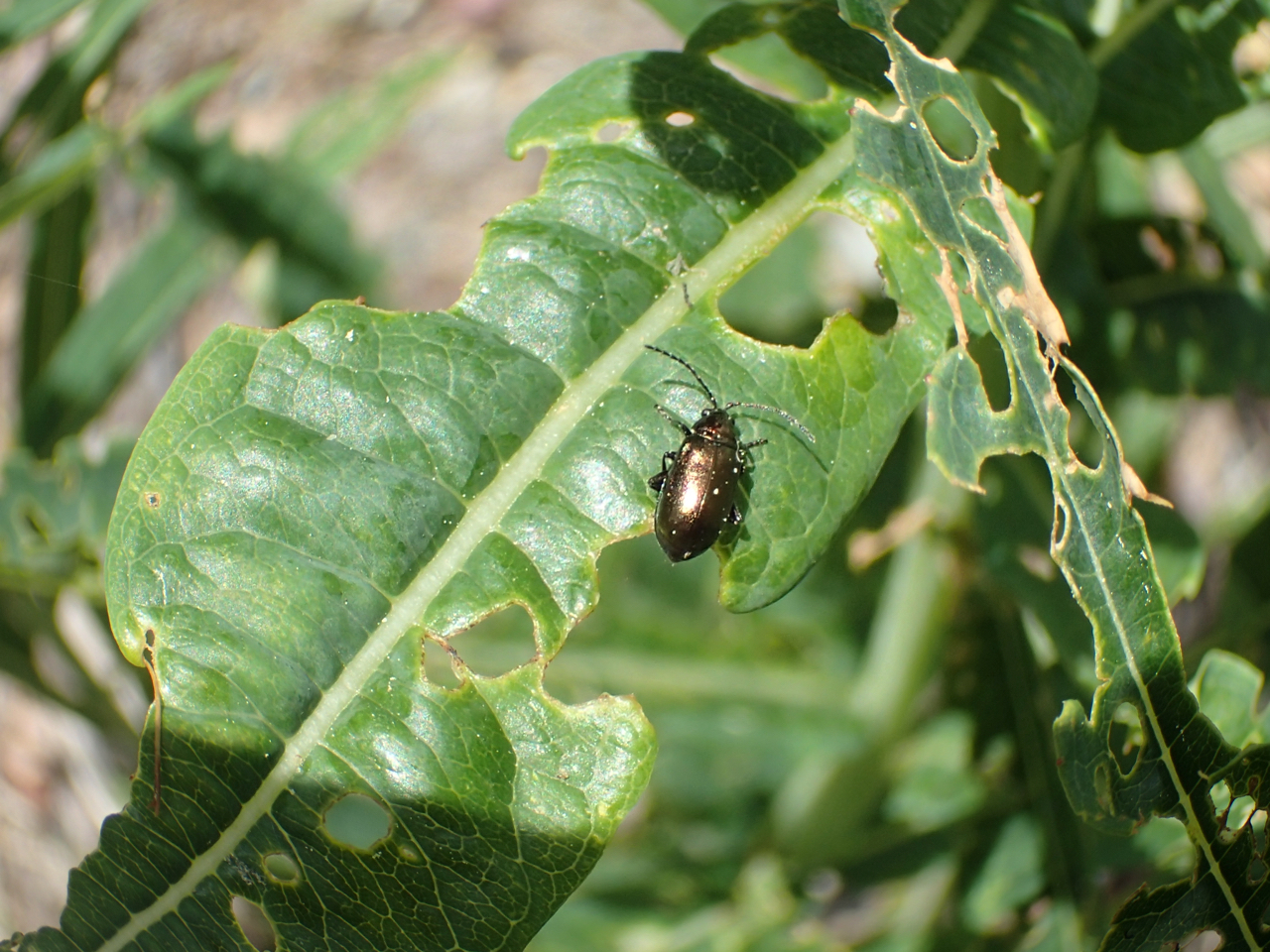
Herbivory