Chapter 35: Fetal Echocardiography: Beyond the Four Chambers
Chapter 36: Fetal Echocardiography: Congenital Heart Disease
Chapter 54: Sonography and the High Risk Pregnancy
Chapter 55: Prenatal Diagnosis of Congenital Anomalies
Chapter 56: The Placenta
Chapter 57: The Umbilical Cord
Chapter 58: Amniotic Fluid, Membranes, and Fetal Hydrops
Chapter 59: The Fetal Face and Neck
Chapter 60: The Fetal Cranium
Chapter 61: The Fetal Throax
Chapter 62: The Fetal Anterior Abdominal Wall
Chapter 63: The Fetal Abdomen
Chapter 64: The Fetal Urogenital System
Chapter 65: The Fetal Skeleton
100
Normal heart rate is between:
a. 100 - 140 bpm
b. 120 - 160 bpm
c. 120 - 180 bpm
d. 140 - 200 bpm
b. 120 - 160 bpm
100
Most common congenital lesion of the heart:
a. Ebstein's Anomaly of the Tricuspid Valve
b. Single Ventricle
c. Transposition of the Great Arteries
d. Atrioventricular Septal Defect
d. Atrioventricular Septal Defect
100
AMA refers to a patient that:
a. will be 35 at time of delivery
b. will be 30 at time of delivery
c. was 35 at time of conception
d. was 30 at time of conceptiona. will be 35 at time of delivery
100
An amniocentesis is collected:
a. Near maternal midline
b. Near placentac. From fetal liver
d. From fetal kidneys
a. Near maternal midline
100
Normal attachment of the cord to placenta:
a. At either end of the placenta
b. Near the center of the placenta
c. The cord can be located anywhere on the placenta
d. The cord does not attach to the placenta
b. Near the center of the placenta
100
A normal umbilical cord contains:
a. 1 umbilical artery and 2 umbilical veins
b. 2 umbilical arteries and 1 umbilical vein
c. 2 umbilical arteries and 2 umbilical veins
d. 1 umbilical artery and 1 umbilical vein
b. 2 umbilical arteries and 1 umbilical vein
100
Ammiotic fluid should be...
a. Echo-free, anechoic
b. Hypoechoic
c. Debris within fluid is normal finding with every patient
d. Septated
a. Echo-free, anechoic
100

What abnormality is seen here?
a. Cystic hygroma
b. Teratoma
c. Fetal goiter
d. Some other neck mass
a. Cystic hygroma
100
The CSP should produce a..
a. Circle shape
b. Pentagon shape
c. Box shape
d. Triangular shape
c. Box shape
100
Normal cardiac axis:
a. 90 degrees
b. 45 degrees
c. 60 degrees
d. 30 degrees
b. 45 degrees
100
Which week of development does the umbilication hernia of bowel occur?
a. 6th
b. 8th
c. 10th
d. 12th
b. 8th
100
Can GI malformations be corrected?
a. Yes, they are correctable before birth
b. Yes, they are correctable after birth
c. No, they are not correctable
b. Yes, they are correctable after birth
100
Sonographic finding of male genitalia:
a. Turtle sign
b. Bubble sign
c. Scrotal sign
d. Slug sign
a. Turtle sign
100
Shortening of the entire extremity:
a. Rhizomelia
b. Micromelia
c. Mesomelia
d. Sirenomelia
b. Micromelia
200

Which heart view is being shown here?
a. 3VV
b. RVOT
c. LVOT
d. 4 CH
c. LVOT
200
Which is not a fetal indication for fetal echocardiography?
a. IUGR
b. Polyhydramnios
c. Arrhythmias
d. Nonimmune hydrops
a. IUGR
200

What sonographic finding is being shown here?
a. Scalp edema
b. Pericardial effusion
c. Ascites
d. Polyhydramnios
b. Pericardial effusion
200
In early gestation, AFP is produced by:
a. Gestational sac
b. Yolk sac
c. Placenta
d. Amniotic fluid
b. Yolk sac
200
A Battledore placenta is when the insertion site is within ____ of the edge
a. 3 mm
b. 1.5 mm
c. 1 mm
d. 2 mm
c. 1 mm
200
Normal length of cord in 2nd/3rd trimester:
a. Same as CRL
b. 20 - 40 cm
c. 40 - 60 cm
d. 60 - 80 cm
c. 40 - 60 cm
200
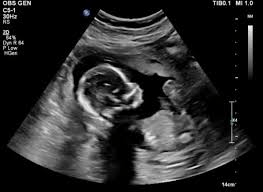
AF appears to be?
a. Normal
b. Increased
c. Decreased
c. Decreased
200
When unilateral, cleft lip typically originates from the...
a. Left side of the face
b. Right side of the face
c. Top lip
d. Bottom lip
a. Left side of the face
200

What is being measured here?
a. Choroid plexus
b. Lateral ventricle
c. Cavum Septum pellucidi
d. Cisterna magna
b. Lateral ventricle
200
Normal shape of the thoracic cavity:
a. Bell
b. Ring
c. Box
d. Donut
a. Bell
200
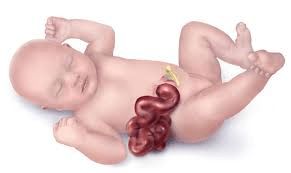
This diagram represents:
a. Umbilical hernia
b. Gastroschisisc. Omphalocele
d. Limb-body wall complex
b. Gastroschisis
200
Duodenal atresia termed:
a. Double bubble sign
b. Double bleb sign
c. Polka dot sign
d. Minion sign
a. Double bubble sign
200
Sets of kidneys that develop in an embryo:
a. 1
b. 2
c. 3
d. 4
c. 3
200
Which is not a reason for decrease in fetal movement?
a. Polyhydramnios
b. Oligohydramnios
c. Multiple gestations
d. Congenital uterine anomalies
a. Polyhydramnios
300
Apex of the heart should point to fetal ___ side:
a. Left
b. Right
c. Posterior
d. Anterior
a. Left
300
Most common cardiac tumor:
a. Teratoma
b. Fibroma
c. Rhabdomyoma
d. Hemangiomac. Rhabdomyoma
300
Which is not a sonographic finding of hydrops:
a. Scalp edema
b. Oligohydramnios
c. Pericardial effusion
d. Thickened placenta
b. Oligohydramnios
300
a. Chorionic Villus Sampling
b. Amniocentesis
c. Cordocentesis
a. Chorionic Villus Sampling
300
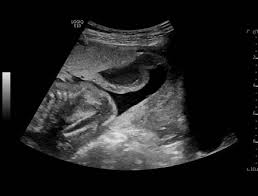
What sonographic finding is shown here?
a. Placental hemorrhage
b. Placental lake
c. Placenta leiomyoma
d. Placental cloud
b. Placental lake
300
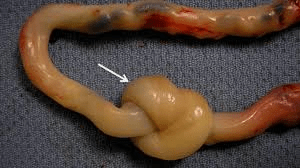
What is going on with this cord?
a. True knot
b. False knot
c. Nuchal cord
d. Teratoma
a. True knot
300
Normal Two-Diameter pocket should be between:
a. 10 - 20 cm
b. 15 - 50 cm
c. 30 - 50 cm
d. 30 - 70 cm
b. 15 - 50 cm
300
Midface hypoplasia is considered a..
a. Orbital defect
b. Flat face defect
c. Lethal anomaly
d. One sided defect
b. Flat face defect
300
When measuring the Cerebellum you should measure:
a. Inner to inner
b. Inner to outer
c. Outer to outer
d. The Cerebellum is not measured
c. Outer to outer
300
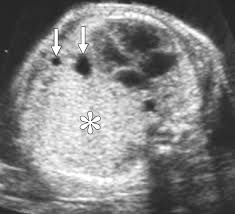
What abnormality is seen here?
a. Hemothorax
b. Bronchogenic Cyst
c. CCAM
d. Pulmonary Sequestration
d. Pulmonary Sequestration
300
Primary finding of Pentalogy of Cantrell:
a. Superumbilical omphalocele
b. Diaphragmatic hernia
c. Low lying gastroschisis
d. Umbilical herniaa. Superumbilical hernia
300
What is the top arrow pointing to?
a. Pleural effusion
b. Ascites
c. Hydrothorax
d. Normal fluid seen in fetal abdomen
b. Ascites
300
Urine in the fetal bladder starts to form:
a. Towards the beginning of 1st trimester
b. Towards the end of 1st trimester
c. Towards the middle of 2nd trimester
d. Towards the end of 2nd trimesterb. Towards the end of 1st trimester
300
Most common lethal skeletal dysplasia:
a. Thanatophoric dysplasia
b. Achondroplasia
c. Camptomelic dysplasia
d. Long bone dysplasia
a. Thanatophoric dysplasia
400
View that is parallel to the septum:
a. Apical
b. Coronal
c. Subcostal
d. Transverse
a. Apical
400
The highest rate of associated cardiac abnormalities is shown in fetuses with:
a. Trisomy 18
b. Trisomy 21
c. Trisomy 13
d. Turner Syndrome
a. Trisomy 18
400
Where is the needle placed during a cordocentesis?
a. Fetal kidneys
b. Fetal heart
c. Fetal umbilical vein
d. Placenta
c. Fetal umbilical vein
400
Trisomy 13 is also known as..
a. Turner Syndrome
b. Down syndrome
c. Edward's Syndrome
d. Patau's Syndrome
d. Patau's syndrome
400
Which is not a clinical symptom of gestational trophoblastic disease?
a. Nausea
b. Vaginal bleeding
c. Uterine size larger than dates
d. Bloating
d. Bloating
400
Umbilical arteries arise from the..
a. External iliac arteries
b. Common iliac arteries
c. Gonadal arteries
d. Internal iliac arteriesd. Internal iliac arteries
400
Maternal condition associated with oligohydramnios:
a. Anemia
b. Hypertension
c. Congestive Heart Failure
d. Preterm labor
b. Hypertension
400
Nasal triad consists of...
a. Nose, chin, tongue
b. Nose, nostrils, chin
c. Nose, upper lip, chin
d. Nose, upper lip, lower lip
c. Nose, upper lip, chin
400
Partial or complete absence of the cranium
a. Anenchephaly
b. Acrania
c. Exocephaly
d. Endocrania
b. Acrania
400
Type I of CCAM:
a. Macrocystic
b. Microcystic
c. Macrocystic with Microcystic component
a. Macrocystic
400
Bowel loops fail to return to the abdomen by the ___ week, creating an omphalocele:
a. 10th
b. 12th
c. 14th
d. 16thb. 12th
400
The remnant of the ductus venous known as:
a. Ligamentum teres
b. Ligamentum venosum
c. Umbilical vein
d. Round ligament
b. Ligamentum venosum
400
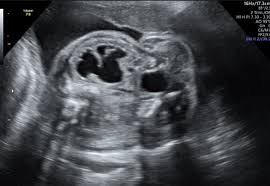
What renal abnormality is seen here?
a. Renal agenesis
b. Hydronephrosis
c. Pylectasis
d. Obstructive Cystic Dysplasia
b. Hydronephrosis
400
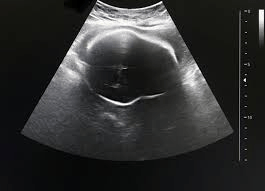
What abnormality is found here?
a. Cloverleaf skull
b. Cloverleaf abdomen
c. Curvature of the spine
d. 4 leaf sign
a. Cloverleaf skull
500
Ratio of heart to thorax:
a. 1:4
b: 2:3
c: 1:3
d: 1:5
c. 1:3
500
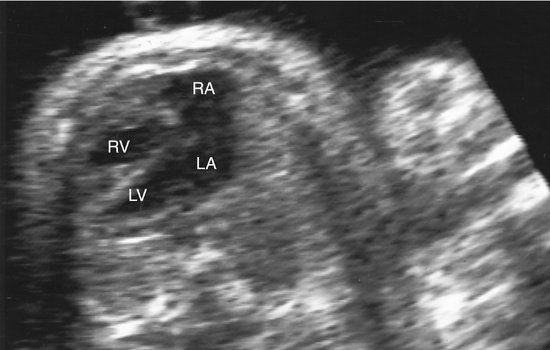
a. Levocardia
b. Levoposition
c. Mesocardia
d. Dextrocardia
b. Levoposition
500
Potential of fetal anemia can be determined by everything except:
a. Cordocentesis
b. Amniocentesis
c. Ultrasound surveillance
d. Chorionic Villus Sampling
d. Chorionic Villus Sampling
500
With Trisomy 21, the femurs will be
a. <10th percentile
b. < 5th percentile
c. < 8th percentile
d. < 12th percentile
b. < 5th percentile
500
Amnion and chorion should fuse by
a. 12 weeks
b. 14 weeks
c. 16 weeks
d. 18 weeksc. 16 weeks
500
What abnormality is seen here?
a. Gastroschisis
b. Omphalocele
c. Teratoma
d. Hematoma
b. Omphalocele
500
Polyhydramnios is considered when AF volume is:
a. > 1000 ml
b. > 1500 ml
c. > 2000 ml
d. > 3000 ml
c. > 2000 ml
500
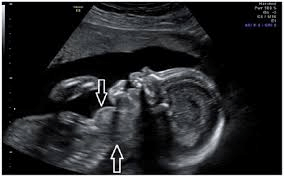
What is being seen here?
a. Normal finding
b. Teratoma
c. Fetal goiter
d. Omphalocele
c. Fetal goiter
500
Amniotic fluid levels typically will be ____ with Spina Bifida Occulta:
a. Normal
b. Increased
c. Decreased
a. Normal
500
Congenital Diaphragmatic Hernia's are typically found on the:
a. Right side of the diaphragm
b. Bottom of the diaphragm
c. Left side of the diaphragm
d. Above the diaphragm
c. Left side of the diaphragm
500
Which is not a common fetal abdominal wall defect?
a. Omphalocele
b. Umbilical hernia
c. Gastroschisis
d. Amniotic band syndromed. Amniotic band syndrome
500
Most common congenital defect of the GI tract:
a. Meconium ileus
b. Ascites
c. Meckel's diverticulum
d. Duodenal atresia
c. Meckel's diverticulum
500
Congenital defect resulting in obstruction of anterior urethral valves in ______
a. Multiple gestations
b. Females
c. Males
d. Fetus's with a Trisomy
c. Males
500
Which is not a sonographic feature of Thanatophoric dysplasia?
a. Cloverleaf deformity
b. Severe oligohydramnios
c. Hypertelorism
d. Severe micromelia
b. Severe oligohydramnios