Identifying Functions: Relations
Identifying Functions: Graphs
Identifying Functions: Tables and Maps
100
True or False?
A relation is a set of graphs.
False!
A relation is a set of ordered pairs.
100
What test do we use to see if a graph is a function?
Vertical Line Test!
100
True or False:
For a relation to be a function, we cannot have any repeating y-values.
False! We cannot have repeating x-values! Repeating y-values are fine!
200
Is this relation a function?
{(1, 3), (2, 5), (3, 7), (-2, 3)}
Yes!
200
Can a circle or oval graph be a function?
No, it will fail the Vertical Line Test and hit the graph in more than one place!
200
Is this relation a function?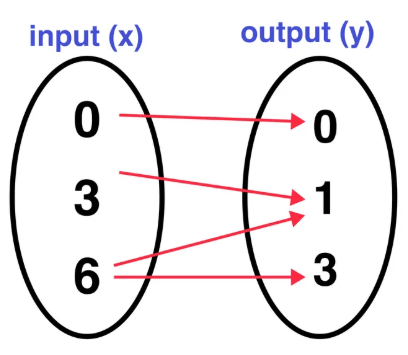
No, when x = 6, y = 1 or y =3
300
Determine if the relation {(1, 2), (1, 3), (2, 4)} is a function.
No.
When x = 1, y = 2 or y = 3
300
Is this graph a function?
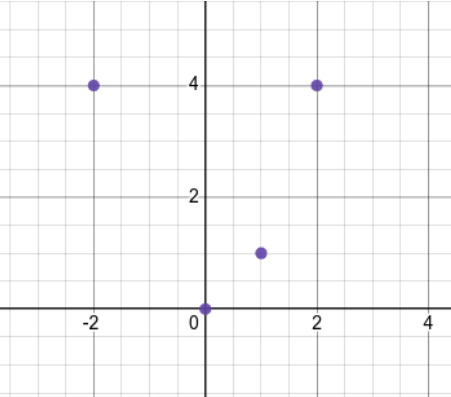
Yes it is a function!
300
Is the following a function?
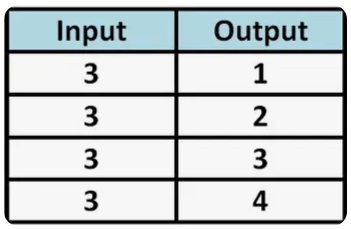
No! All x-values (input) are repeating!
400
Is the following a function?
{-2, 7, 3, -4, 1, 0, -8}
No!!!! These are not coordinates/ordered pairs so they cannot be a function!
400
Is this relation a function?
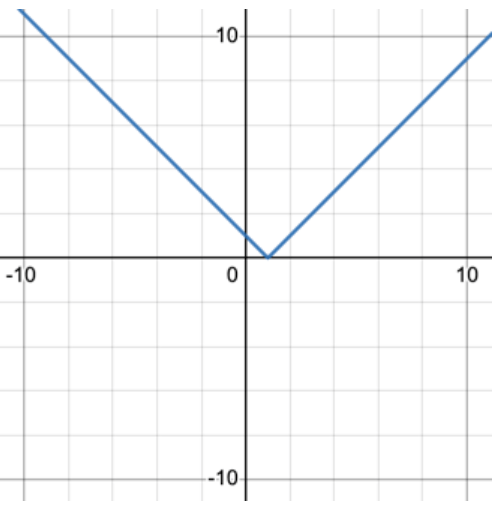
Yes, it passes the Vertical Line Test!
400
Is the following a function?
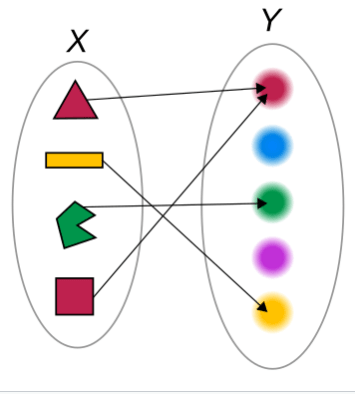
Yes! All inputs have one output!
500
Explain the difference between a relation and a function. Give a short example of each.
Your answer should include that a relation is a set of ordered pairs, whereas a function is a relation with no repeating x-values!
500
Is this graph a function?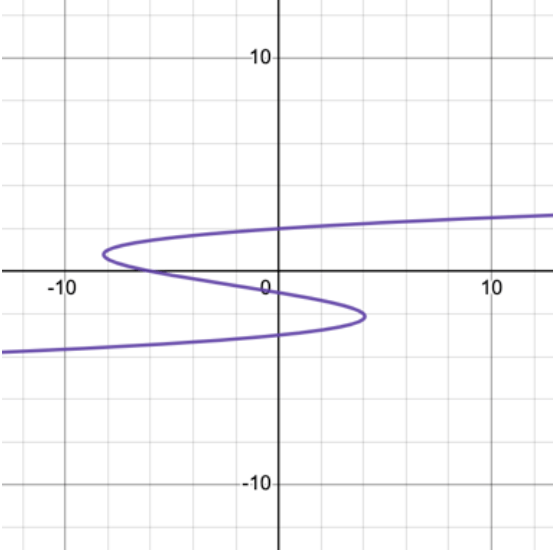
No, it fails the Vertical Line Test
500
Create a table that is a function.
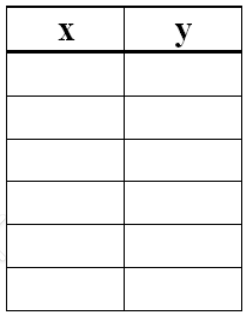
Answers must have no repeating x-values.