POV
Connotation/Denotation
Author's Purpose
Text Structure
Text Features
100
The narrator tells “his” or “her” story and reveals more than one character’s thoughts or feelings.
3rd Person Omniscient
100
The connotation of the CAPITALIZED word: This is such a STUPID game.
Negative
100
What is the author's purpose for this poster?

To persuade.
100
Rusty was born March 31, 2010. I became his mom on July 17 of the same year. We moved to Dayton, Ohio the very next month on August 10. School started a few days later, August 17, 2010.
Sequence/Chronological Order
100
What is the name of words under the photograph?
Caption
200
The narrator tells “you” or “your” story. Ex: First, you should wash your hands.
2nd Person
200
The connotation of the CAPITALIZED word: I wanted to SOOTHE my mom's anger by offering to do the dishes.
Positive
200
What is the author's purpose for writing this paragraph?
Mars is the fourth planet from the sun and is the second smallest planet in the solar system. Named after the Roman God of War, Mars is also often described as the “Red Planet” due to it’s reddish appearance. Mars is a terrestrial planet with a thin atmosphere made up of mostly carbon dioxide. Mars is also home to the tallest mountain in the solar system, a shield volcano named Olympus Mons formed over 1 billion years ago.
To inform.
200
Thunderstorms scare me. The lightning is so bright, and it makes it thunder so loud.
Description
200
What is the name of this text feature?
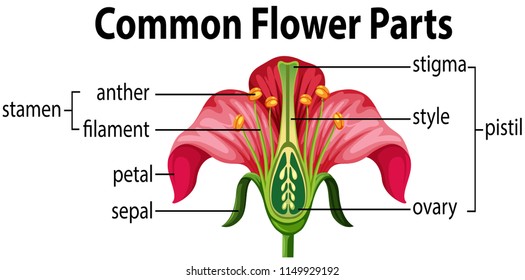
Diagram
300
The narrator tells “our" story. Ex: We went to the computer class.
1st Person
300
This word refers to the emotional feeling associated with a word.
Connotation
300
What is the author's PERSPECTIVE for this book?

The author loves tacos.
300
Our hair is very different. I have shoulder length brown hair. Hers is curly, blond, and goes down her back!
Compare and Contrast
300
This text feature is used to show the reader where something is located.
Map
400
He walked down the street. A man drove by and yelled, “Hey, watch where you’re going!”
3rd Person
400
This word refers to the dictionary definition of a word.
Denotation
400
Most FICTIONAL stories are written with for this purpose.
To entertain.
400
Joey lost his science book. He knew he would be in big trouble if he was unable to study for the final. What should he do? He thought for a few worried moments, and then decided to retrace his steps. He remembered putting the book in his backpack that morning. He had taken it out at school when his friend Kim asked to look something up. Now he remembered - Kim still had his book!
Problem / Solution
400
I use this text feature to find the page number of where a chapter begins.
Table of Contents
500
The narrator tells “his” or “her” story and reveals ONE character’s thoughts or feelings.
3rd Person Limited
500
This book helps you find SYNONYMS (not definitions) for words you want to change the connotation of.
(Hint: It sounds like it could be the name of a dinosaur.)
Thesaurus
500
This is the difference between INFORMING and EXPLAINING.
Inform = just tell you about it
Explain = teaching you about it
500
Every spring, shortly after the tulips bloom, farmers in Holland go through the tulip fields and cut the blooms off the tulips. This seems strange, because it leaves a field full of green stems. However, it makes the colorful tulip blooms grow back even bigger and stronger later that spring.
Cause and Effect
500
This is at the very beginning of a book or article and tells the reader the topic of the book or article.
Title