ID
Opthal
Women's Health
Misc
100
A 20-year-old woman is evaluated for a 2-day history of sore throat, nonproductive cough, nasal congestion, headache, and malaise. She has no other medical problems and does not smoke.
On physical examination, vital signs are normal. The nasal mucosa is boggy and inflamed, with clear discharge. The pharynx is erythematous. Tonsils are normal appearing. Tympanic membranes are clear. The remainder of the examination is unremarkable.
A SARS-CoV-2 rapid antigen test result is negative.
Which of the following is the most appropriate treatment?
A Acetaminophen
B Amoxicillin
C Guaifenesin
D Intranasal zinc
Answer A
100
A 68-year-old woman is evaluated for reduced vision and flashing lights in her left eye that began this morning. This was preceded by floaters in her left eye, first appearing several days ago and now with increasing frequency. She has no other symptoms. Medical history is significant for myopia. She takes no medications.
On physical examination, she has an inferior visual field defect in her left eye. Visual fields in the right eye are normal. Pupils are equally round and reactive to light and accommodation. Visual acuity is 20/60 in the left eye and 20/20 in the right eye. Nondilated funduscopic examination is normal.
Which of the following is the most likely diagnosis?
A Age-related macular degeneration
B Central retinal artery occlusion
C Central retinal vein occlusion
D Retinal detachment
Correct Answer: D
Key Points
- Retinal detachment is an ocular emergency that causes painless vision loss, unilateral flashing lights, floaters, and visual field defect.
- Retinal detachment is confirmed by indirect ophthalmoscopy or wide-field retinal photography by an ophthalmologist.
Floaters may be described by patients as a “cobweb” and represent accompanying posterior vitreous detachment (PVD). This patient likely developed a PVD in the days preceding her presentation, which led to a retinal tear. Flashing lights represent vitreoretinal attachments stimulating retinal depolarization as they pull away from the retina.
100
A 66-year-old woman is evaluated during a wellness visit. She reports no symptoms. She does not recall the last time she had a Pap smear, and medical records from her previous physician are not available. She has no history of sexually transmitted infection, gynecologic cancer, or surgical history.
Which of the following is the most appropriate cervical cancer screening strategy for this patient?
A
Cervical biopsy
B
Cervical cytology with human papillomavirus testing
C
Colposcopy
D
Discontinue cervical cancer screening
Answer B: Cervical cytology with human papillomavirus testing
- Routine screening for cervical cancer can be discontinued at age 65 years in non–high-risk women, provided that the patient has undergone adequate prior screening.
- The U.S. Preventive Services Task Force defines adequate prior screening as three consecutive negative cytology results or two consecutive negative cytology tests plus human papillomavirus test results within the past 10 years, with the most recent test occurring within 5 years.
100
38-year-old man with epigastric pain 8 weeks after completing H. pylori therapy (amoxicillin, clarithromycin, omeprazole) for a duodenal ulcer. Which of the following is the most appropriate diagnostic test?
A: EGD
B: H. pylori fecal antigen test
C: IgG H. pylori antibody test
D: Stool culture
Answer B
Confirm erradication
200
A 22-year-old woman reports a 5-day history of dry cough, scratchy throat, coryza, yellow rhinorrhea, ear fullness, and nasal congestion. For the first 2 days, she also experienced headache and malaise.
On physical examination, temperature is 37.4 °C (99.4 °F). Bilateral conjunctival injection, boggy nasal mucosa, and erythematous oropharynx without tonsillar exudates are noted. There is no lymphadenopathy. The lungs are clear.
Which of the following is the most appropriate management?
A Amoxicillin-clavulanate
B Dextromethorphan
C Intranasal zinc spray
D Reassurance
Answer D
- Most patients with the common cold require no treatment other than reassurance.
- Nasal symptoms due to the common cold may respond to intranasal cromolyn, intranasal ipratropium, or combination decongestant/antihistamines.
200
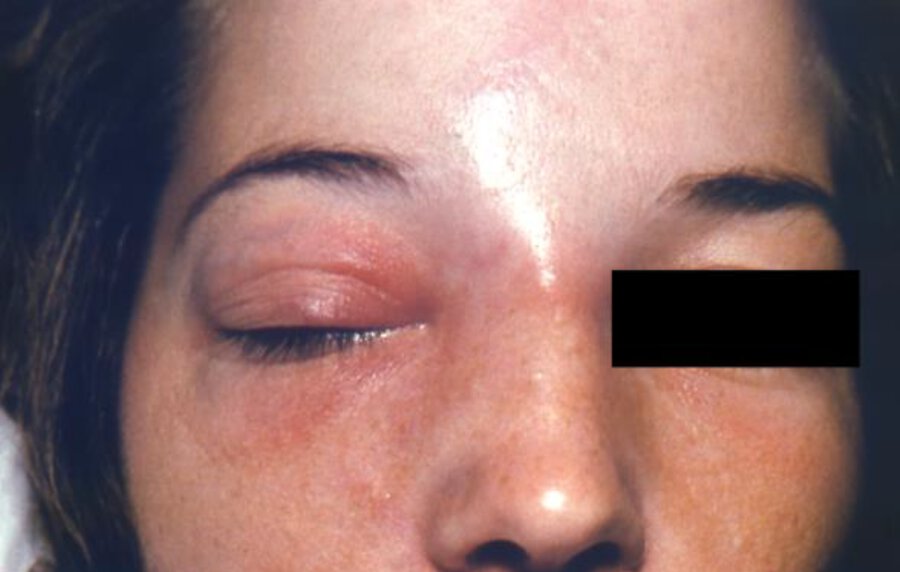
A 40-year-old woman is evaluated for acute eye pain associated with painful eye movement and diminished visual acuity.
Eye findings are shown.
Which of the following is the most likely diagnosis?
A Cavernous sinus thrombosis
B Orbital cellulitis
C Preseptal cellulitis
D Rhinocerebral mucormycosis
This patient most likely has orbital cellulitis, characterized by periorbital erythema, warmth, and pain. Orbital cellulitis can be distinguished from preseptal cellulitis (periorbital cellulitis) by the presence of pain with eye movements, ophthalmoplegia, proptosis, and vision impairment as orbital cellulitis involves the extraocular muscle and fatty tissue whereas preseptal cellulitis does not. The diagnosis of orbital cellulitis is suspected clinically and can be confirmed by CT of the orbits and sinuses.
Bulging (proptosis), redness (chemosis), Inability to move one or both eyes (ophthalmoplegia)
200
A 28-year-old woman is evaluated for a painless breast lump she noticed 1 week ago. Medical history is otherwise unremarkable. Her grandmother was diagnosed with breast cancer at age 72 years. Her only medication is a combined hormonal contraceptive pill.
Breast examination reveals a 1-cm, nontender, smooth, mobile, round mass on the medial aspect of the right breast. The overlying skin is normal. There is no lymphadenopathy. The left breast is normal.
Which of the following is the most appropriate management?
A Breast ultrasonography
B Mammography
C Repeat clinical breast examination in 6 weeks
D No further evaluation is indicated
Correct Answer: A
Educational Objective: Evaluate a breast mass in a woman younger than 30 years.
Key Points
- Ultrasonography is the preferred imaging modality for evaluation of a breast mass in women younger than 30 years.
- All women presenting with a breast mass should be evaluated by imaging even if their clinical breast examination is without concerning features.
200
How long do you need to stop a PPI before confirming eradication?
Greater than or equal to 2 weeks
300
A 45-year-old woman is evaluated for 4-month history of persistent rhinorrhea, frontal headache, loss of smell, and malaise. She has self-treated with saline irrigation and antihistamine/decongestants.
On physical examination, vital signs are normal. Nasal turbinates are swollen, and thick yellow nasal discharge is noted. Maxillae and forehead are tender to palpation. The remainder of the examination is normal.
Which of the following is the most appropriate diagnostic test to perform next?
A CT of the sinuses
B MRI of the sinuses
C Nasal swabbing for culture
D Plain radiography of the sinuses
Answer A
- Patients with chronic sinusitis, characterized by nasal congestion, purulent rhinorrhea, and headache for more than 12 weeks, should undergo either nasal endoscopy or CT of the sinuses for diagnostic purposes.
- In patients with chronic sinusitis, the findings most commonly seen on CT include mucosal thickening, sinus ostial obstruction, polyps, and sinus opacification.
300
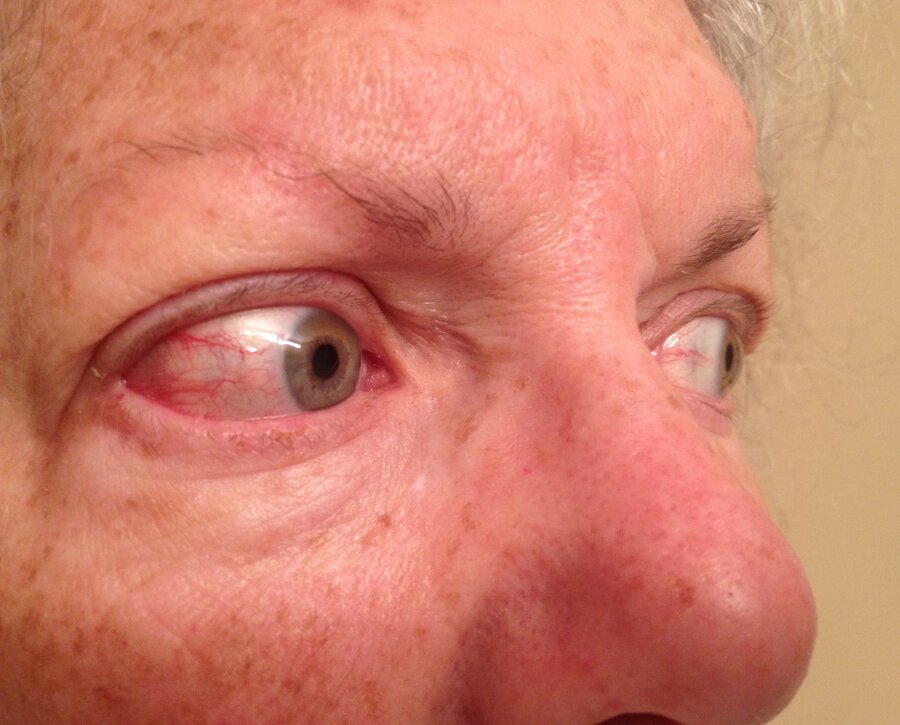
A patient is evaluated for new-onset redness and irritation in the right eye without pain. He notes significant watery discharge. Visual acuity and pupillary reflexes are normal.
Which of the following is the most likely diagnosis?
A Blepharitis
B Episcleritis
C Scleritis
D Viral conjunctivitis
Correct answer: D
Viral conjunctivitis may occur as part of a viral prodrome, followed by adenopathy, fever, pharyngitis, and other symptoms and signs of upper respiratory tract infection; however, eye involvement may also be the only manifestation of viral infection. Patients may report a burning or gritty sensation in one eye and may believe that a mucoserous discharge represents a bacterial infection. Blurred vision may be present secondary to tearing in these patients, but visual acuity and pupillary reflexes are typically normal. Viral conjunctivitis tends to be highly infectious, commonly spreading to the other eye within 2 days. It is a self-limited process that resolves similarly to the common cold, with gradual resolution over several days without specific treatment.
Episcleritis has no discharge and is often described as "dry" redness. Viral conjunctivitis typically causes a watery or mucousy discharge.
300
A 39-year-old woman is evaluated for a 6-month history of irregular, heavy menstrual periods. She reports having a menstrual period every 6 to 8 weeks and that her periods now last 9 days and are heavier than usual. She has no other symptoms. She birthed two children. Her last Pap smear was obtained 3 year ago and was normal; human papillomavirus testing was negative. Medical history is otherwise unremarkable, and she takes no medications.
On physical examination, vital signs are normal. BMI is 36. The bimanual pelvic examination shows blood in the cervical os and normal findings.
Laboratory studies reveal a normal complete blood count. A pregnancy test result is negative.
Which of the following is the most appropriate management?
A Obtain a follicle-stimulating hormone level
B Obtain a Pap smear
C Obtain an endometrial biopsy
D Start oral contraceptive pills
Correct Answer: C
Educational Objective: Evaluate a patient for endometrial cancer.
Key Points
- Risk factors for endometrial cancer include obesity (BMI ≥30); a history of unopposed estrogen (e.g., polycystic ovary syndrome, obesity); or genetic syndromes, such as Lynch or Cowden syndrome.
- When presenting with abnormal uterine bleeding, women aged 45 years and older or those younger than 45 years who are at increased risk for endometrial cancer should undergo endometrial biopsy.
Obtaining a Pap smear (Option B) is not appropriate management. Women older than 30 years with a normal Pap smear and a negative human papillomavirus (HPV) test result require screening every 5 years. This patient's last Pap smear was obtained 3 year ago and was normal; HPV testing was negative.
300
After a duodenal ulcer is diagnosed via endoscopy and treatment has been initiated, a follow up EGD is required, True or False?
False is the answer because:
For gastric Ulcers: follow up EGD is required if:
Biopsies were not performed during initial endoscopy
Symptoms persist after 8–12 weeks of therapy
For duodenal Ulcers: follow-up endoscopy is not required.
400
A 25-year-old woman is evaluated in December for a 2-day history of cough, fever, and sore throat. She has a 4-year-old son who had similar symptoms 10 days ago. She received the quadrivalent influenza vaccine 2 months ago. She takes no medications.
On physical examination, temperature is 38.2 °C (100.8 °F), blood pressure is 104/68 mm Hg, pulse rate is 82/min, and respiration rate is 20/min. Pulmonary examination reveals decreased breath sounds in the right lung base.
COVID-19 testing is negative.
A chest radiograph shows a right lower lobe infiltrate.
Which of the following is the most appropriate diagnostic test to perform next?
A Procalcitonin level
B Rapid influenza antigen test
C Rapid influenza nucleic acid amplification test
D Sputum Gram stain and culture
Answer C:
- The rapid influenza nucleic acid amplification test is recommended for diagnosis over previous rapid antigen tests because of superior sensitivity.
Influenza testing should be performed routinely on patients with community-acquired pneumonia during seasons when influenza activity is present in the community because a positive result would influence treatment.
Molecular assays are preferred for the diagnosis of influenza over the older rapid influenza antigen test because of superior sensitivity (Option B).
400
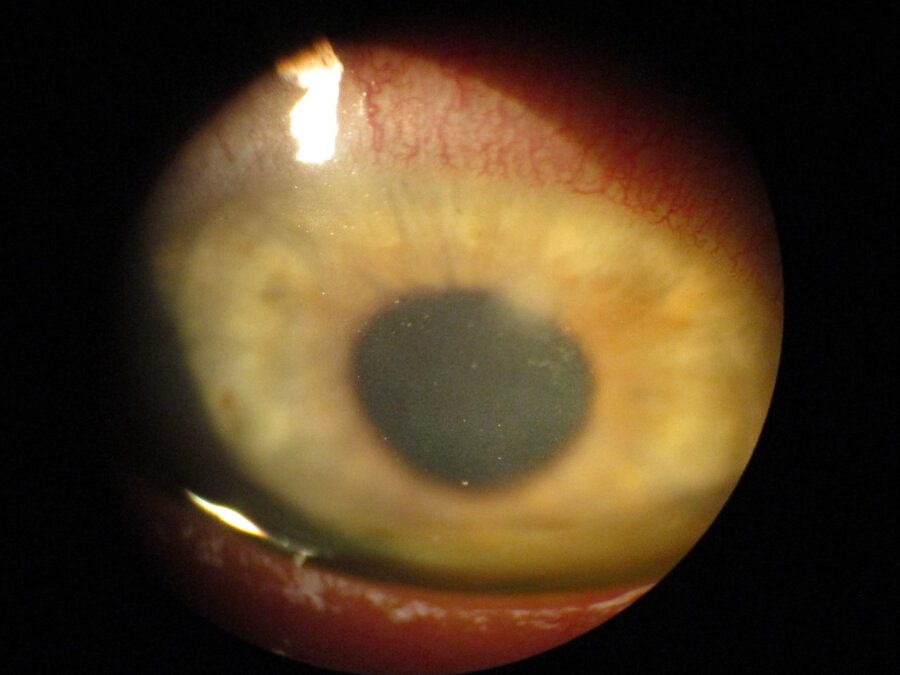
A 22-year-old woman is evaluated for acute onset of eye pain associated with tearing and photophobia.
Ocular findings are shown.
Which of the following is the most likely diagnosis?
A Anterior uveitis
B Corneal ulcer
C Episcleritis
D Subconjunctival hemorrhage
Correct answer: B
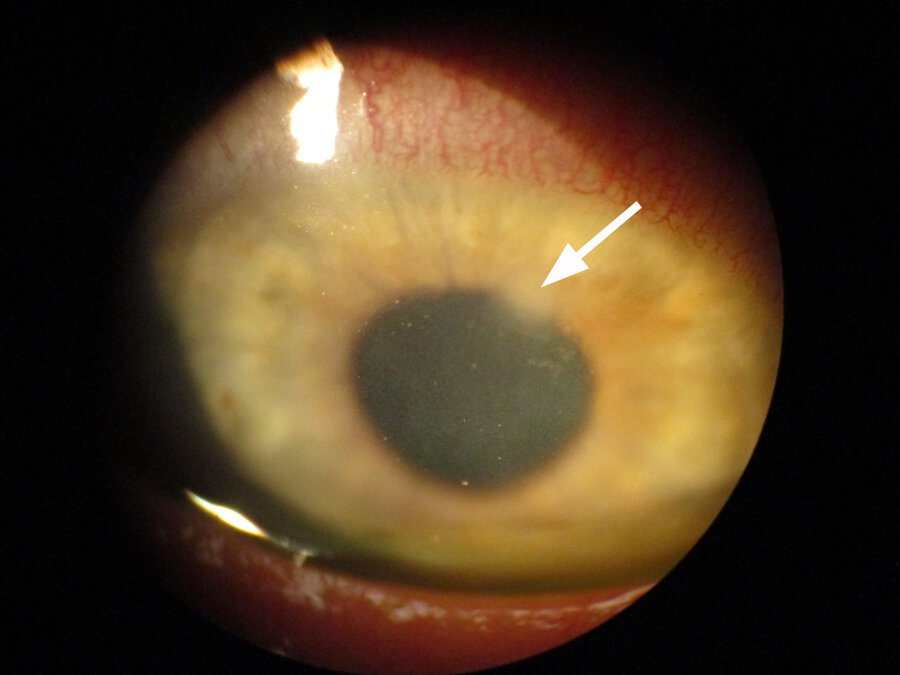
Educational Objective: Diagnose corneal ulcer.
The most likely diagnosis is corneal ulcer, as demonstrated by the whitish fluffy opacity at the 1 o'clock position (arrow). Patients with corneal ulceration usually have pain, a prominent foreign body sensation, and excessive blinking and tearing. Although not seen on this image, pus may be visible in the anterior chamber (hypopyon).
Anterior uveitis causes pain, redness, and hypopyon, but is not associated with the corneal changes seen in this image. Episcleritis and conjunctival hemorrhage cause a red eye, but are not painful.
400
A 48-year-old woman is evaluated during a routine examination. She reports that her last menstrual period was more than 12 months ago. She states she has occasional hot flushes. She has no genitourinary symptoms. Medical history is unremarkable, and she takes no medications.
Physical examination findings, including vital signs, are normal.
A pregnancy test result is negative.
Top of Form
Which of the following is the most appropriate management?
A
Obtain serum follicle-stimulating hormone level
B
Obtain serum prolactin level
C
Obtain serum thyroid-stimulating hormone level
D
No further evaluation
Correct Answer: D
- Menopause is a clinical diagnosis made retrospectively when a woman has not experienced a menstrual period for 12 months, and routine laboratory testing for the diagnosis is not recommended.
- Patients with possible early menopause (age <40 years) should have pregnancy excluded and undergo measurement of follicle-stimulating hormone, thyroid-stimulating hormone, and prolactin.
Although serum FSH levels (Option A) are elevated in menopausal woman, measurement of FSH levels is not required to diagnosis menopause in this patient. In a woman older than 40 years who has not had a menstrual period in more than 1 year and has a negative result on pregnancy test, the clinical diagnosis of menopause can be made without additional laboratory evaluation.
400
A 55 year old female patient with a PMH of hypothyroidism and hx of H. Pylori infection presents with complaint of dyspepsia and work up reveals vitamin B12 deficiency, abnormal proprioception, impaired vibratory sense and hyper segmented PMNs. This patient likely has what diagnosis?
Chronic autoimmune atrophic gastritis (CAAG)
500
The following are indications for urgent ophthalmology referral ________, ________, ________, _________, _________.
Urgent ophthalmology referral:
Eye pain, reduction of visual acuity, photophobia, corneal opacity, or pupillary defects.