Map Skills
Settlement Patterns
Population
Earth's Shape & Time
Earth's Movement
100
These are used to represent features on a map.
conventional signs and symbols
100
What is a linear settlement?
A settlement arranged along roads or rivers.
100
What is population?
The number of people living in a given area.
100
What is the penumbra
The penumbra is the lighter outer part of a shadow cast during an eclipse, where the light from the source is partially blocked.
100
What is rotation?
This movement of the Earth causes day and night.
200
This scale is written as a 1cm:1000km. This is an example of a _____________ scale
Direct Statement Scale
200
A settlement where buildings are close together.
Nucleated settlement
200
What is population density?
The number of people per square kilometre.
200
this is an example of a __________ eclipse
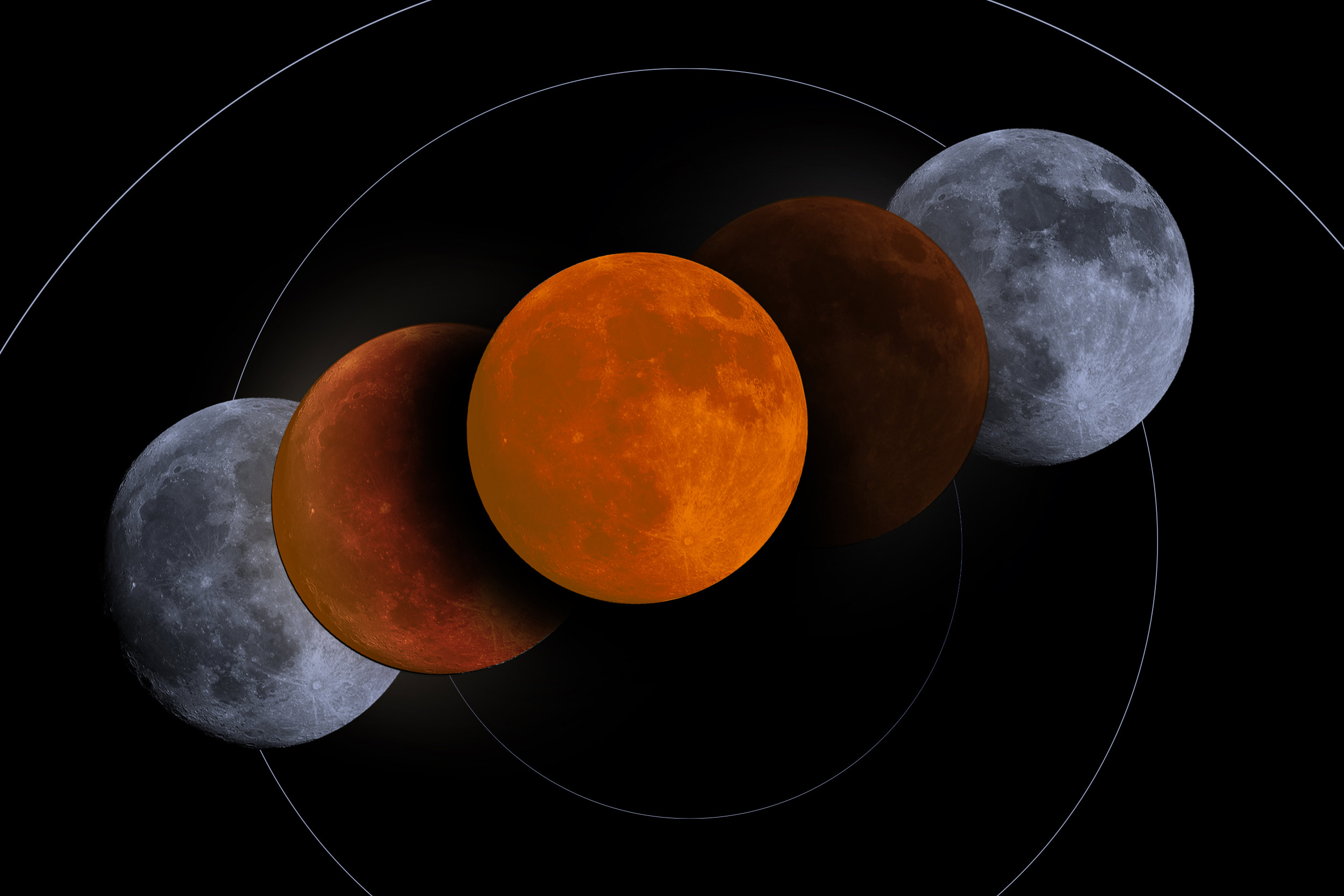
Lunar eclipse.
200
How long does it take the Earth to complete one rotation and one revolution respectively?
24 hour and 365 1/4 days
300
The instrument used to measure curved distances on a map.
A piece of string
300
What is a dispersed settlement?
A settlement where buildings are spread out.
300
State one physical factor affecting population distribution.
climate / relief / soil
300
This instrument shows that the Earth is spherical by time differences.
Time zones
300
This movement of the Earth causes seasons.
Revolution
400
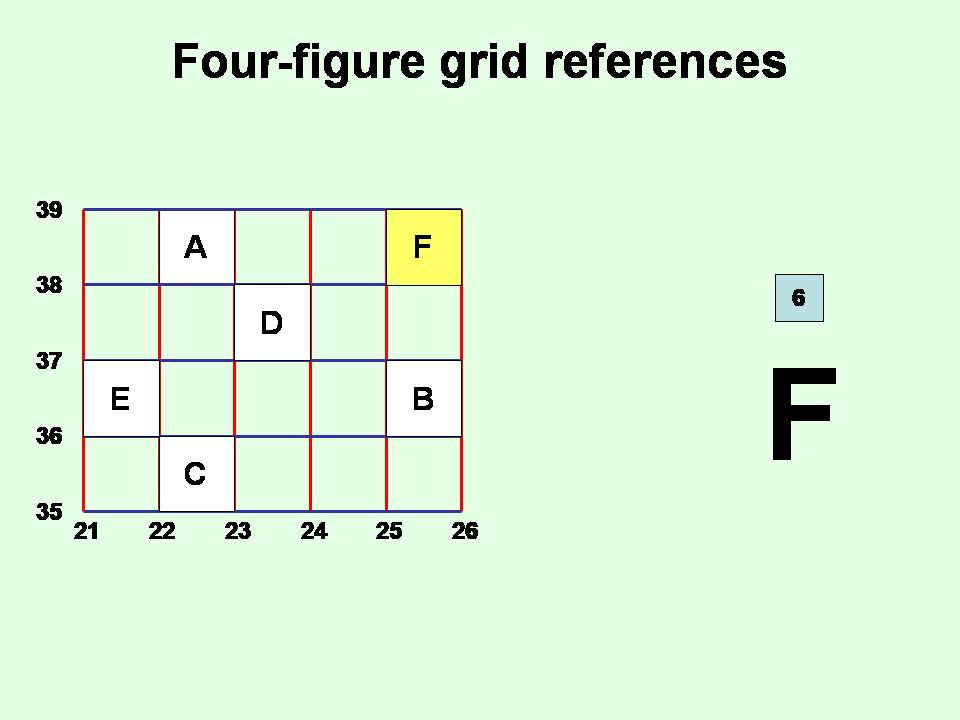
A= 2238
B= 2536
C= 2235
D= 2337
E= 2136
F= 2538
400
State two human/anthropogenic factors influencing where people settle.
Job opportunities, Educational opportunities, Healthcare, entertainment, family reunification etc
400
What is the difference between a dot man and a choropleth map?
A dot map that uses dots to show population distribution while A choropleth map that uses shading or colours to show population density.
400
The imaginary line dividing the Earth into Eastern and Western Hemispheres.
Prime Meridian or Greenwich Meridian
400
This eclipse occurs when the Moon comes between the Earth and the Sun.
Solar Eclipse
500
1. Place X is located at 30 degrees west. It is 9:00am at place X. Place Y is located 60degrees west. What is the time at place Y?
2. Place Z is located at 30 degrees East. It is 2:00pm at place W. Place W is located at 15 degrees West. What time is it at Place Z?
The time will be 7:00am at place Y.
The time at Z will be 5:00pm.
500
What do the terms 'densely populated' and 'sparsely populated' means?
Sparse population - an area with relatively few people living in it
Dense population - an area with a high number of people living in it
500
What is the formula used for calculating population density?
Population density= total population divided by total land area
500
The formula used to calculate time difference using longitude means 1 degrees is equal to ____________
while 15 degrees is _______________.
1° = 4 minutes
15 degrees = 1 hour or 60 minutes.
500
What is a lunar eclipse?
This eclipse occurs when the Earth comes between the Sun and the Moon.