The Rock Cycle
Metamorphic Rocks
Igneous Rocks
Sedimentary Rocks
Minerals
100
The process by which water, wind, ice and temperature break down rock
Weathering
100
Rocks that have mineral grains arranged in bands or planes
Foliated metamorphic rock
100
Molten rock that is below the surface of the earth
Magma
100
Rocks that form when sediments are buried, compacted, and cemented together
sedimentary rock
100
The property that describes how the surface of a mineral reflects light
Luster
200
The process by which sediment is moved from one place to another.
Erosion
200
These are metamorphic rocks that do not have grains aligned in planes or bands.
Nonfoliated metamorphic rock
200
Molten rock that has made its way to the surface of the earth
Lava
200
What KIND of sedimentary Rocks that form when seawater evaporates leaving behind dissolved minerals.
Chemical Sedimentary Rock
200
A solid, geometric form that results from the repeating pattern of atoms or molecules
Crystal
300
Which types of rocks can become metamorphic rocks?
igneous, metamorphic, and sedimentary (all of them)
300
The two processes that create metamorphic rocks
High temperature and pressure
300
These types of rocks usually have large crystals that because they were able to cool slowly inside the earth's surface.
Intrusive igneous rock
300
Rocks that form from the remains of once-living things.
Organic Sedimentary Rock
300
The scale that measures a mineral's resistance to being scratched.
The Mohs hardness scale
400
The process by which sediment comes to rest.
Deposition
400
A type of foliated metamorphic rock that has mineral grains arranged in a banded structure. Commonly used as flooring or roof tiles (hint: we studied this in class.)

Gneiss
400
These rock s have very small crystals because the cool very quickly.
Extrusive igneous rock
400
Where and how do sedimentary rocks form?
At the bottom of river beds or streams, from sediments depositing in running water and then being squished down.
400
Not all minerals break along cleavage planes. Some ______________, or break unevenly.
Fracture
500
Explain the process for how EACH type of rock is created.
igneous: forms when rock is melted down into magma and then brought to the surface as lava
metamorphic: forms deep underground when rocks are exposed to extreme heat and pressure
sedimentary: forms when sediments are deposited along water ways and then pressed together.
500
 A nonfoliated metamorphic rock composed of calcite or dolomite. Usually used in building and statues.
Marble
500
This is a specific type of Igneous rock that is sometimes called volcanic glass (hint: it is one of the rocks we studied in class) 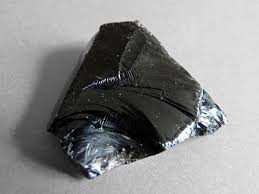
Obsidian
500
A clastic sedimentary rock that is composed of differently sized rounded rocks that are cemented together
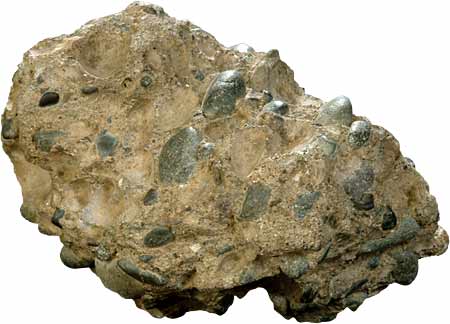
Conglomerate
500
Name a chemical and physical property that can be used to identify a mineral
chemical: reaction to acid, reaction to water, reaction to oxygen, ect...
physical: luster, hardness, crystal shape, ect...