Vocabulary 1
Vocabulary 2
Types of Rocks
Rock Cycle
Rocks
100
Tiny pieces of rock and mineral.
Sediment
100
Molten rock above the surface of the earth.
Lava
100
What are the three types of rocks?
Sedimentary, igneous, and metamorphic
100
What should point A be labeled as?
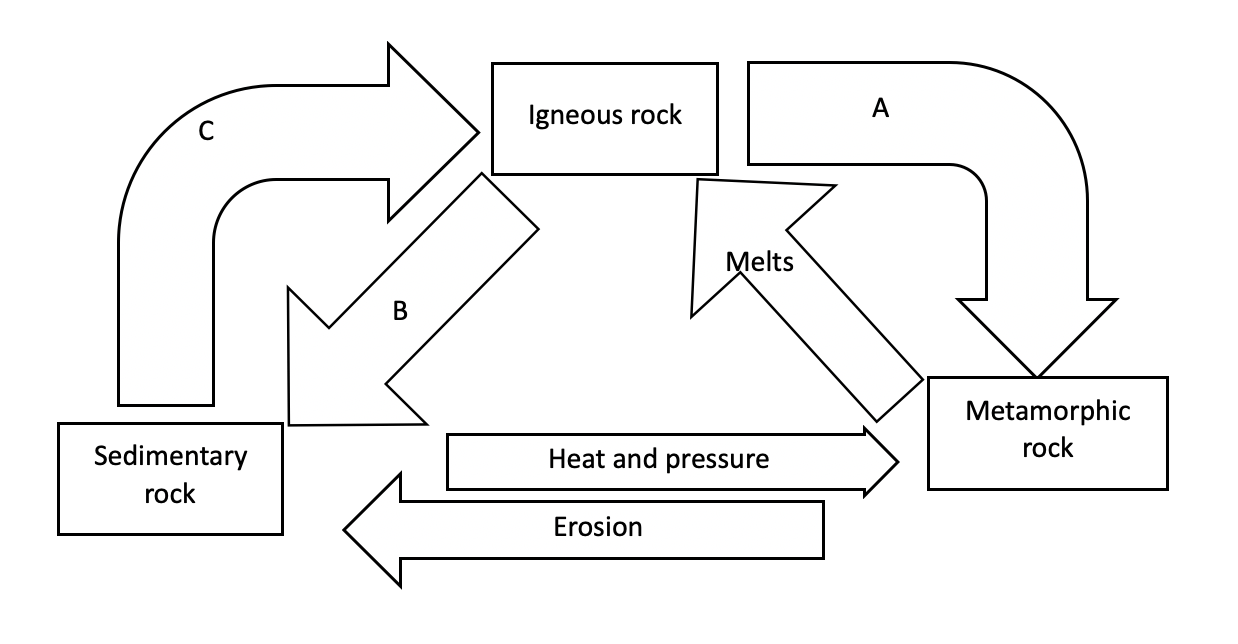
Heat and pressure
100
How does magma become igneous rock?
Cooling
200
The process by which rocks are changed over long periods of time.
The rock cycle
200
Molten rock below the surface of the earth.
Magma
200
What are the two types of igneous rock?
Intrusive and extrusive
200
What should point B be labeled as?
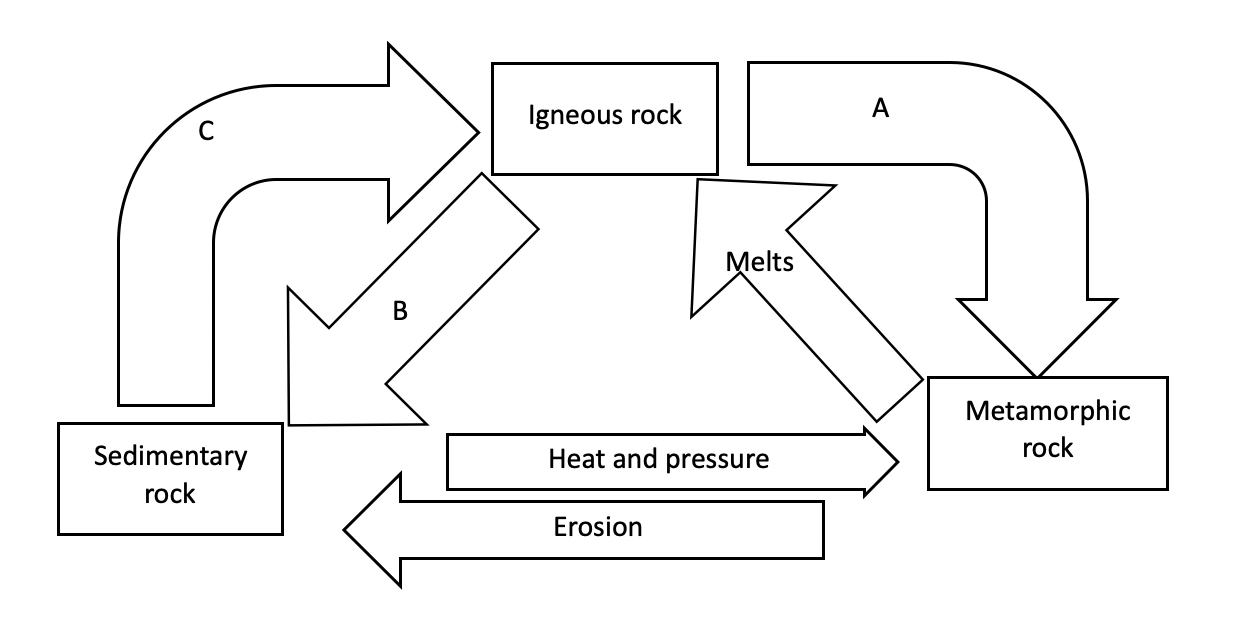
Compaction and cementation
200
How does metamorphic rock become sediment?
Weathering and erosion
300
The process in which broken pieces of rock are carried away by wind, water, and gravity.
Erosion
300
The process by which sediments dissolve and act like glue.
Cementation
300
What are the two types of metamorphic rock?
foliated and non-foliated
300
What should point C be labeled as?
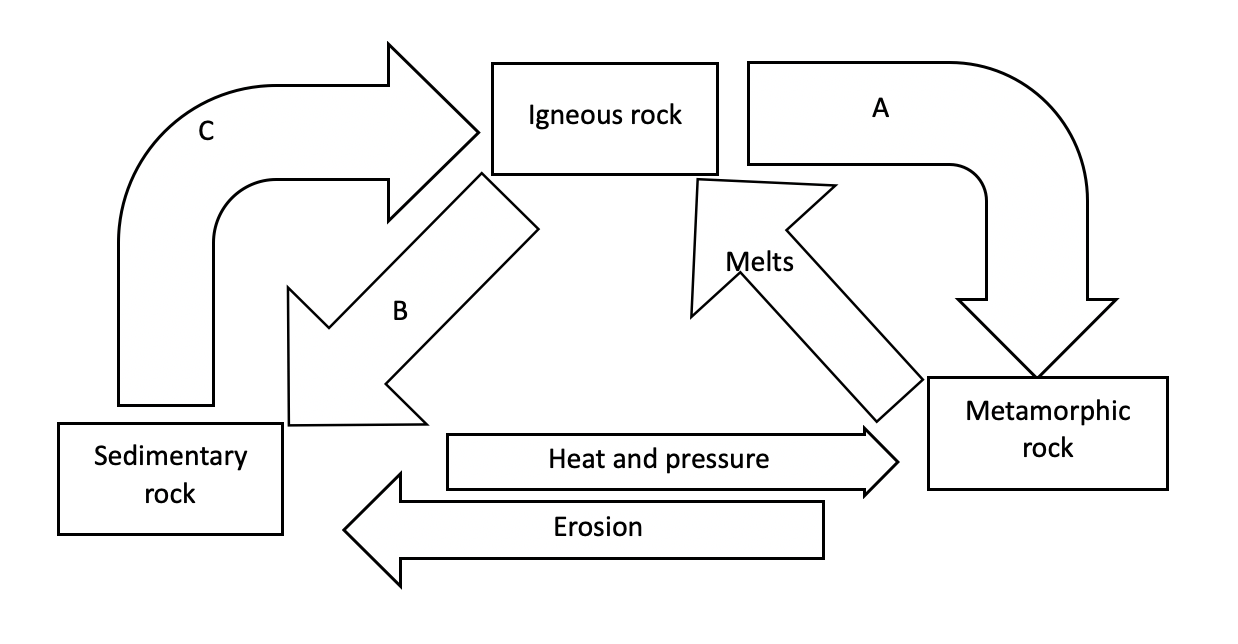
Melts, cools, and crystallizes
300
Where are metamorphic rocks formed?
Deep under the earth's surface
400
The process by which rocks are broken up from exposure to wind, rain and the sun.
Weathering
400
What kind of weathering is this?
Mainly change of temperature rapidly or at extreme levels causes weathering. It happens when rocks freeze and thaw.
Physical weathering
400
What are the three types of sedimentary rocks?
Organic, chemical, and clastic
400
How does igneous rock become sediment?
Weathering and erosion
400
Where are intrusive igneous rocks formed?
Below the earth's surface
500
The process by which sediments are squeezed together to form a rock.
Compaction
500
What kind of weathering is this?
Usually occurs with rainwater trying to react with the rock minerals and create other minerals or chemical compounds.
Chemical
500
True or False
Rocks and minerals are the same thing.
False
500
How does metamorphic rock become magma?
Melting
500
Where are extrusive rocks formed?
Above earth's surface