Glaciers
Groundwater
Hazards
Running water
Erosion
100
The two categories of glaciers
What are continental glaciers/ ice sheets and valley glaciers?
100
These are 3 hazards in water (not the water itself)
What are Undercut banks, Strainers, Submerged obstacles?
100
The formula for calculating stream flow
What is velocity = distance/ time?
100
The opposite of erosion
What is deposition?
200
The percentage of Earth's water found in glaciers
What is 2.15%?
200
Infiltration is
What is water that seeps into the earth?
200
The difference between a flood and a flash flood is this
What is how quickly the event occurs; flash flooding occurs from precipitation/melt in a short amount of time (<6hours); whereas a flood is a longer event
200
Stream flows are monitored to support the following:
What are
Water supply plans, Interstate agreements, compacts & court decrees, Engineering design - reservoirs, roads , bridges + culverts, treatment plants ,Power production, Navigation, Identifying changes due to land use, water use & climate, Flood planning and warning, Support of water quality sampling
200
These are the ways that streams transport materials
In solution (dissolved), in suspension (floating/ carrying), bouncing/ rolling / saltation
300
Glaciers form in this way
What is accumulation and compaction of snow over many years?
300
The land area that contributes water to a stream
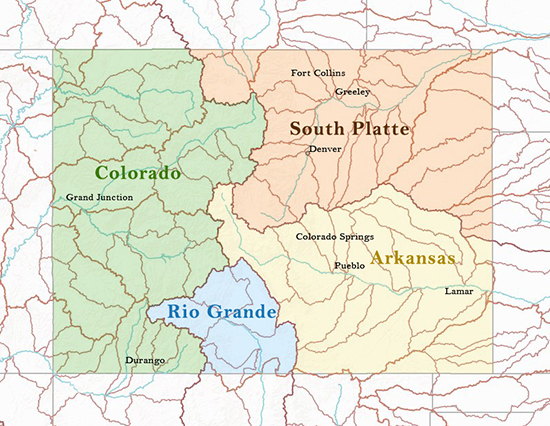
What is a drainage basin or watershed?
300
The difference between outwash deposits and till
What is outwash deposits are sorted and layered, while till is unsorted/unlayered
400
Glaciers change the shape of valleys in what way, and why?
What is from a V shape to U shape because of erosion.
400
The appropriate actions in case of flooding are:
Get to higher ground, watch the weather, be aware of your surroundings, (also follow instructions from local authorities)
500
Land features left behind by glaciers
What are till, striation, erratics, terminal/lateral moraines, kettles, drumlins, eskers, kames