Matter
Solar/Energy
Water/Resources
Earth/Space
Atmosphere
100
What is the charge of a proton?
Positive
100
Earth's main energy source comes from?
The Sun
100
Water that turns into a gas is called?
Water Vapor
100
What is a terrestrial planet?
A planet with a rocky exterior
100
What layer do we live on?
Troposphere
200
What sub atomic particle has a negative charge?
Electron
200
Give an example of potential energy?
the textbook sitting on the shelf
Roller coaster at the top
200
What Bay does all 4 local rivers drain into?
Chesapeake Bay
200
What causes Seasons?
The tilt of Earth's axis of 23.5 degrees.
200
The energy that powers the global circulation of our atmosphere and oceans comes from
radiation and convection
300
What part of the atom is where the electrons are held?
Electron Cloud
300
What are 5 renewable energy sources.
- Solar
- Water
- Wind
- Biofuels
- Geothermal
300
Select all members of the biotic community of the Chesapeake Bay Watershed.
- A
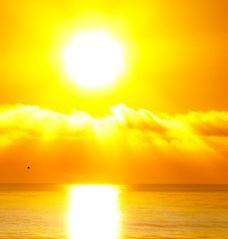
sunlight - B
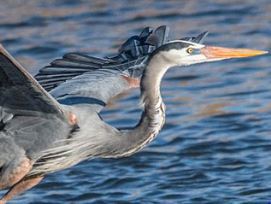
great blue heron - C
air quality - D
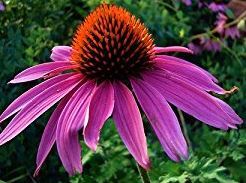
purple coneflower
b, d
300
The force of gravity between two objects is greatest when
masses are large and objects are close together
300
What layer of the atmosphere do meteors get torn apart?
Mesosphere
400
What is a subscript tell us about an atom?
It tells us how MANY atoms we have
400
When thermal energy is added to water, what happens at the molecular level?
Molecules move faster; liquids change into vapors.
400
Name 3 properties of water
- polar molecule/adhesion/cohesion
- surface tension
- universal solvent
400
When the Moon orbits the Earth, it is known as Earth's Natural ____________.
Satellite
400
What happens to air pressure as we go up in the atmosphere?
Air pressure decreases
500
A limited number of elements comprise the largest portion of the solid Earth, living matter, the oceans, and the atmosphere. Identify the four most abundant elements.
- Oxygen
- Carbon
- Nitrogen
- Hydrogen
500
A hairdryer converts _____ to _____
electrical energy → thermal energy
500
What are three benefits of wetlands.
- Break down pollutants prior to water entering a larger body of water
- Filter sediments and trapping nutrients
- Slow flooding waters
500
In what ways are the terrestrial planets different from the gaseous planets?
- The gaseous planets are larger than the terrestrial planets.
- The terrestrial planets are closer to the sun than the gaseous planets.
500
What are the 5 layers from Space to Earth.
Exosphere
Thermosphere
Mesosphere
Stratosphere
Troposphere