Fossils & Rock Layers
Weathering & Erosion
Rivers & Landforms
Desert Birds
Maps & Data
100
What do fossils tell us about Earth’s past?
a. How rocks are made
b. How deep oceans are
c. How fast rivers move
d. What plants and animals lived long ago
d. What plants and animals lived long ago
100
What is erosion?
a. Breaking down rocks
b. Moving rock and soil
c. Heating rocks
d. Melting rocks
b. Moving rock and soil
100
How do rivers form valleys?
a. By planting trees
b. By heating the ground
c. By eroding rock and soil
d. By adding sand
c. By eroding rock and soil
100
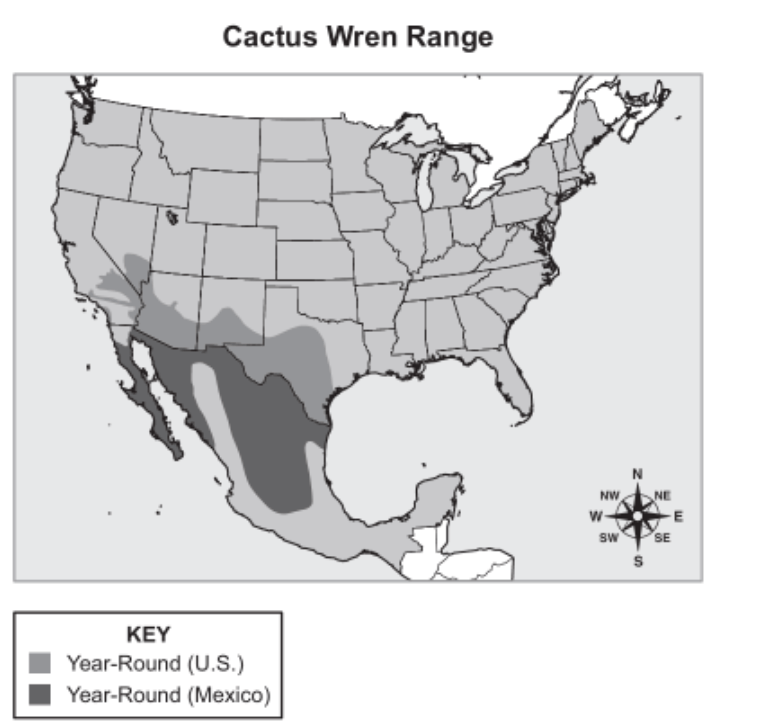
What does a map of the cactus wren show?
a. What it eats
b. Where it lives
c. What plants it likes
d. Where it drinks water
b. Where it lives
100
What do maps help us understand?
a. Taste
b. Location
c. Sound
d. Temperature
b. Location
200
What can scientists learn from rock layers?
a. What rocks taste like
b. The order events happened over time
c. How many animals live there now
d. How to make new rocks
b. The order events happened over time
200
Which is an example of erosion?
a. A rock being painted
b. A river wearing away land
c. A tree growing
d. A rock sitting still
b. A river wearing away land
200
What is a river doing when it erodes land?
a. Building land
b. Wearing it away
c. Heating it
d. Painting it
b. Wearing it away
200
Which detail shows the roadrunner is fast?
a. It eats spiders
b. It is well known
c. It runs over 15 miles per hour
d. It can fly
c. It runs over 15 miles per hour
200
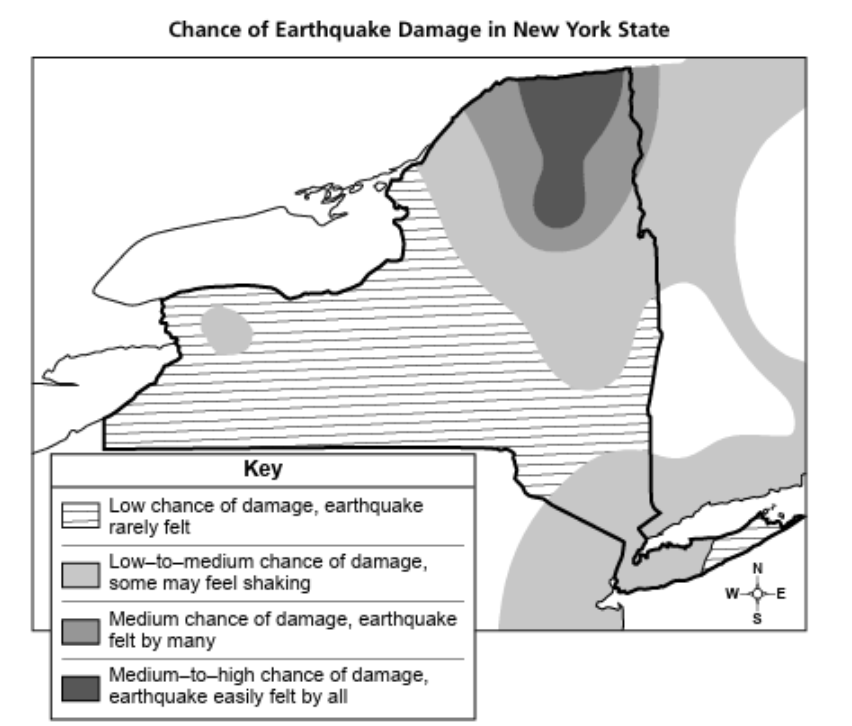
Which area of NY has the highest earthquake risk?
a. Northwest
b. Northeast
c. Southwest
d. Southeast
b. Northeast
300
Why are deeper rock layers older?
a. They are closer to water
b. They were formed first
c. They are heavier
d. They move faster
b. They were formed first
300
What happens to rocks after weathering over time?
a. They grow bigger
b. They turn into water
c. They become smoother and smaller
d. They become plants
c. They become smoother and smaller
300
Why do valleys get bigger over time?
a. More trees grow
b. Continued erosion
c. Less water
d. Rocks grow
b. Continued erosion
300
The roadrunner gets most of its water from eating other animals, but it also has ways to make the most of its water supply. Water sources in the desert can be salty, and too much salt can be harmful. Luckily, this bird has groups of special cells in its “nose” that remove salt from its body. The roadrunner rests during the hottest hours of the day. It does a lot of hunting in the cool evening. During this time, it needs less water.
Why does the roadrunner hunt in the evening?
a. It likes the dark
b. To avoid the heat
c. To find water
d. To sleep
b. To avoid the heat
300
What does darker shading on a map mean?
a. Less important
b. Lower amount
c. Greater amount
d. No change
c. Greater amount
400
What is a fossil?
a. A type of rock
b. Melted lava
c. Remains or traces of living things from long ago
d. A weather pattern
c. Remains or traces of living things from long ago
400
What is the difference between weathering and erosion?
a. They are the same
b. Weathering moves, erosion breaks
c. Weathering breaks, erosion moves
d. Neither changes rocks
c. Weathering breaks, erosion moves
400
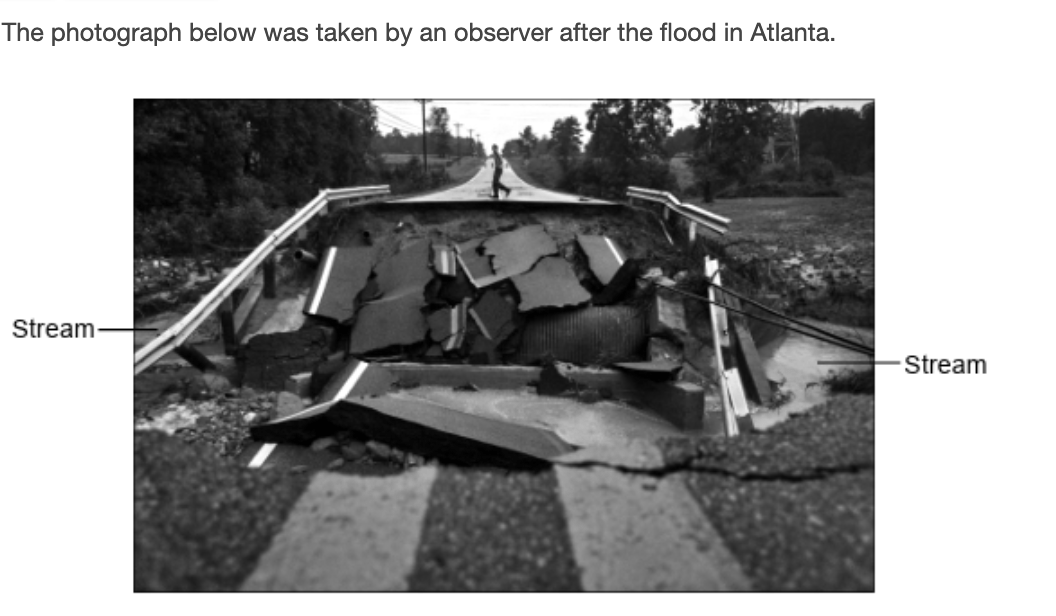
What caused the road to collapse in the flood?
a. Lightning
b. Earthquake
c. Water eroding soil underneath
d. Cars breaking it
c. Water eroding soil underneath
400
The cactus wren can be found in parts of the southwestern United States and in northern Mexico. This bird can live without drinking any water at all. It uses its pointed beak to turn over rocks on the ground, and then it eats the insects it finds underneath. Its diet also contains plant material including fruits, seeds, and even nectar. It gets all the water it needs from its diet. The bird’s name comes from where it lives—in cactuses and other thorny plants. The thorns protect the cactus wren and its young from enemies.
How does the cactus wren get water?
a. From lakes
b. From rain
c. From its food
d. From rivers
c. From its food
400
What skill are you using when reading maps?
a. Writing
b. Drawing
c. Interpreting data
d. Guessing
c. Interpreting data