Famous Atomic Scientists
The Periodic Table
Bonding
Photosynthesis
Cellular Respiration
100
The scientist who theorized that all atoms of the same element have the same mass
John Dalton
100
Name the three parts of an atom and their charges
Proton - positive
Neutron - neutral
Electron - negative
100
This kind of bonding is between and metal and non-metal, involves giving away electrons, forms electric charges, and results in products with high melting and boiling points.
Ionic Bonding
100
All energy on planet earth originates from . . .
The sun
100
Both plants and animals break down glucose to release energy in a process called . . .
cellular respiration
200
The scientist who discovered the negative charge of electrons.
J.J. Thomson
200
The outermost layer of electrons
Valence Electrons
200
This kind of bonding is between two or more non-metals, involves sharing electrons, does not form electric charges, and results in products with very low melting and boiling points.
Covalent Bonds
200
The reactants of photosynthesis are . . .
CO2 + H2O + sunlight
200
The reactants of Cellular Respiration are . . .
O2 and Glucose (C6H12O6)
300
The scientist who used the Gold Foil Experiment to discover that atoms are mostly empty space, and almost all the mass is in a small center called the nucleus.
Ernest Rutherford
300
All of the elements in a group (or column) of the periodic table all have the this in common.
The same number of valence electrons
300
These are examples of . . . 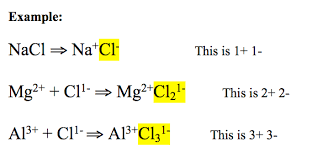
Ionic Bonding
300
The products of photosynthesis are . .
O2 and Glucose
300
The products of Cellular Respiration are . . .
CO2 and H2O
400
The scientist who theorized that electrons orbit the nucleus the way moons orbit planets.
Neils Bohr
400
All the elements in a period (or row) on the periodic table all have this in common.
The same number of electrons layers.
400
These are examples of . . .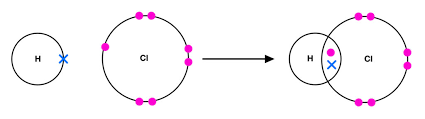
Covalent Bonding
400
Photosynthesis allows plants, algae, and other organisms make their own food. The scientific name for this is . . .
Autotrophs
400
Organisms that cannot make their own food must eat or absorb it from other organisms. These organisms are known as . . .
Heterotrophs
500
The scientist who developed the cloud model, which says electrons move more like a wave than in orbits
Erwin Schrodinger
500
A Bohr's diagram shows _______ the electrons of an element in orbit, while an electron dot diagram shows just the ________ electrons.
all, valence
500
The diagram for covalent bonds which includes overlapping circles to show electron sharing is called . . .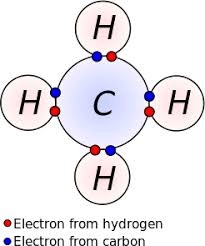
a Lewis Structure
500
Photosynthesis comes from the Greek words
"Photos" meaning ________
"Syntithenai" meaning ________
Light, putting together (building)
500
Explain the relationship between Cellular Respiration and Photosynthesis.
They are opposite chemical reactions. Each one produces the reactants for the other. They work together to keep life on this planet in balance.