Blood Cultures
GI Pathogens
Mycobacteriology
Urine cultures/Sterile Body Fluids
Respiratory
100
Positive blood cultures are determined by the presence of:
CO2
100
The EHEC test is used to detect the presence of:
Shiga toxins
Verotoxins
100
Acid-fast bacilli, photochromogen, causative agent of swimming pool granuloma
Mycobacterium marinum
100
What is meant by the term empirical therapy?
The physician treats the patient prior to identification of the causative agent.
100
Gram positive rod, causes exudative pharyngitis, small, inhibits hemolysis on a traditional CAMP test
Arcanobacterium haemolyticum
200
Gram negative coccobacilli, V factor positive, low virulence, rare cause of otitis media
Haemophilus parainfluenzae
200
Gram negative rod, fermenter, oxidase positive, low virulence, produces no exoenzymes
Plesiomonas shigelloides
200
Acid fast bacilli, non-chromogen, most common cause of non-tuberculous lung disease
Mycobacterium avium-intracellulare
200
The following culture results were observed:
30,000 cfu/mL of white colonies
30,000 cfu/mL of off-white colonies
80,000 cfu/mL of gram negative rod
What should be done?
Identify and sensitivities for the gram negative organism.
Other colonies are considered normal flora
200
Gram negative coccobacilli, oxidase positive, growth on BAP and CHOC, no growth on MAC, butyrate esterase positive, negative for DNase
Moraxella lacunata
300
Based on the gram stain seen here, what is the most likely causative agent?
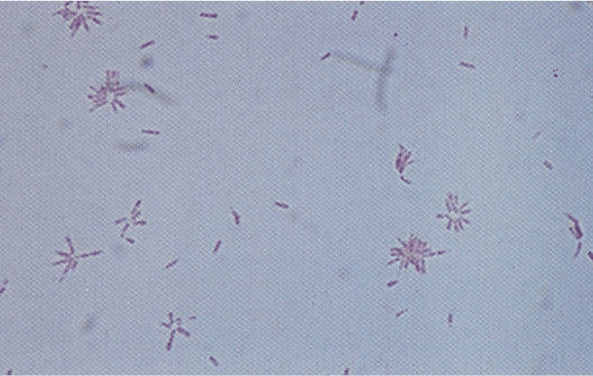
Cardiobacterium hominis
300
Gram negative rod, fermenter, oxidase positive, catalase positive, 0129 resistant, DNase positive
Aeromonas hydrophilia
300
Acid fast bacilli, Runyon group IV, rarely pathogenic, may produce a pigment following prolonged incubation, may require alternative staining techniques for viewing
Mycobacterium smegmatis
300
What are the two most common causes of meningitis in teens and young adults?
Streptococcus pneumoniae
Neisseria meningitidis
300
Gram negative rod, oxidizer, slow growth on MAC, oxidase positive, produces pigments, cause of pneumonia and wound infections
Burkholderia cepacia complex
400
Infection transmitted from ticks, flies, or rabbits. Can cause ulceroglandular or pneumonic forms
Francisella tularensis
400
Gram negative curved rod, ferments arabinose, oxidase positive, hemolytic, halophilic, causes food poisoning symptoms following the ingestion of raw seafood
Vibrio parahaemolyticus
400
Acid fast bacilli, scotochromogen or Runyon group II, 2nd most common cause of cervical lymphadenitis
Mycobacterium scrofulaceum
400
Gram negative rod, non-motile, yellow colonies, not considered a member of the human microbiota, environmental organism, oxidase positive, indole positive
Elizabethkingia meningoseptica
400
Gram negative rod, oxidizer, oxidase positive, growth on MAC, TSI Group V, motile, strict aerobe, no growth at 42 degrees
Pseudomonas fluorescens
500
Gram negative rod, asaccharolytic, flat white colonies on BAP, non-lactose fermenting colonies on MAC, displays a fruity odor, found in water sources
Alcaligenes faecalis
500
Gram negative curved rod, oxidase positive, ferments lactose, halophilic, causes food poisoning that can progress to life-threatening sepsis in compromised patients.
Vibrio vulnificus
500
Describe the appearance the causative agent of Hanson's disease on laboratory media.
Mycobacterium leprae does not grow on laboratory media.
500
Organism infects the CNS, transmitted fecal oral route, causes a crippling disease
Polio
500
Gram negative rod, oxidizer, growth on MAC appears as a non-lactose fermenter, oxidase negative, DNase positive
Stenotrophomonas maltophilia