Senses
Conscious and Unconscious States
Electrolytes
Assessments
Fluids
100
You use your eyes for this sense
Visual
100
In what state can you not arouse the client and they are not responsive to stimuli. Score 8 or less on Glascow
Coma
100
Water follows this electrolyte and it is the primary electrolyte in the extracellular fluid (ECF)
Sodium
100
Thirst, rapid weight loss, low BP, tachycardia, thready pulses, postural hypotension, low urine output, concentrated urine are all s/s of what?
Dehydration or Fluid Volume Deficit or Hypovolemia
100
Your body's primary solvent. Responsible for maintaining normal body temperature, facilitating digestion, lubricating joints and membranes, insulator and shock absorber, transporter, ect
Water
200
We use the Weber and Rinne test to assess this sense
Auditory
200
Disoriented, restless, confusion, hallucinations, agitation, with alternating other conscious states. Usually acute with quick onset.
Delirium
200
People who have vomiting and diarrhea, diuretics, or NG suctioning are at risk for this electrolyte deficiency. It's esential in electrical conduction and is the major electrolyte of the intracellular fluid (ICF). Deficiencies present with muscle weakness, leg cramps, fatigue, paresthesia, and cardiac dysrhythmias
Potassium
200
Rapid weight gain, edema, hypertension, bounding pulses, JVD, SOB, crackles in the lungs are all s/s of what?
Hypervolemia, Overhydration, Fluid Volume Excess
200
ECF and ICF fluid have the same concentration so there is no net movement of water. Used for resuscitation
Isotonic
300
This sense has changed flavors as our taste buds change
Gustatory
300
Difficulties with spatial orientation, memory language, with changes in personality. Progressive.
Dementia
300
This electrolyte 99% found in bones and teeth. It is the most abundant electrolyte. Vitamin D is necessary for it to be absorbed. Chvostek's sign and Trousseau sign used as assessment tests.
Calcium
300
When taking care of someone with sensory deficits, one can present with fatigue, GI distress, headache, weight changes, their own personal needs not met, social isolation and changes in relationship with the one they are caring for is linked to what condition
Caregiver Role Strain
300
Net movement of fluid into cells causing them to swell. Used to treat hypernatremia and as a maintenance fluid
Hypotonic
400
You should announce where you are going to put your hands before using this sense. We also use items to help comfort using this sense.
Tactile
400
Aware of self and external environment, well oriented, responsive are part of what state
Normal Consciousness
400
This electrolyte is found in many antacids or laxatives. It helps metabolize carbohydrates and proteins
Magnesium
400
Confused, restless and agitated after dark. Seen in older adult population with cognitive disorder
Sundowning
400
Net movement of fluid out of the cells causeing them to shrink. Used to treat SIADH (Syndrome of inappropriate antidiuretic hormone secretion) replacing Na+
Hypertonic
500
This refers to the awareness of positioning of body parts and body movement
Kinesthetic
500
We use this scale to assess the depth and duration of impaired consciousness and coma
Glasgow Coma Scale
500
This lab has the electrolytes minus magnesium in it
BMP or basic metabolic panel
Could also order CMP or comprehensive metabolic panel-liver tests in this too
500
This is considered a visual medical emergency due to sudden increase in IOP. presents as excruciating pain and vision is lost quickly.
Closed Angle Glaucoma
500
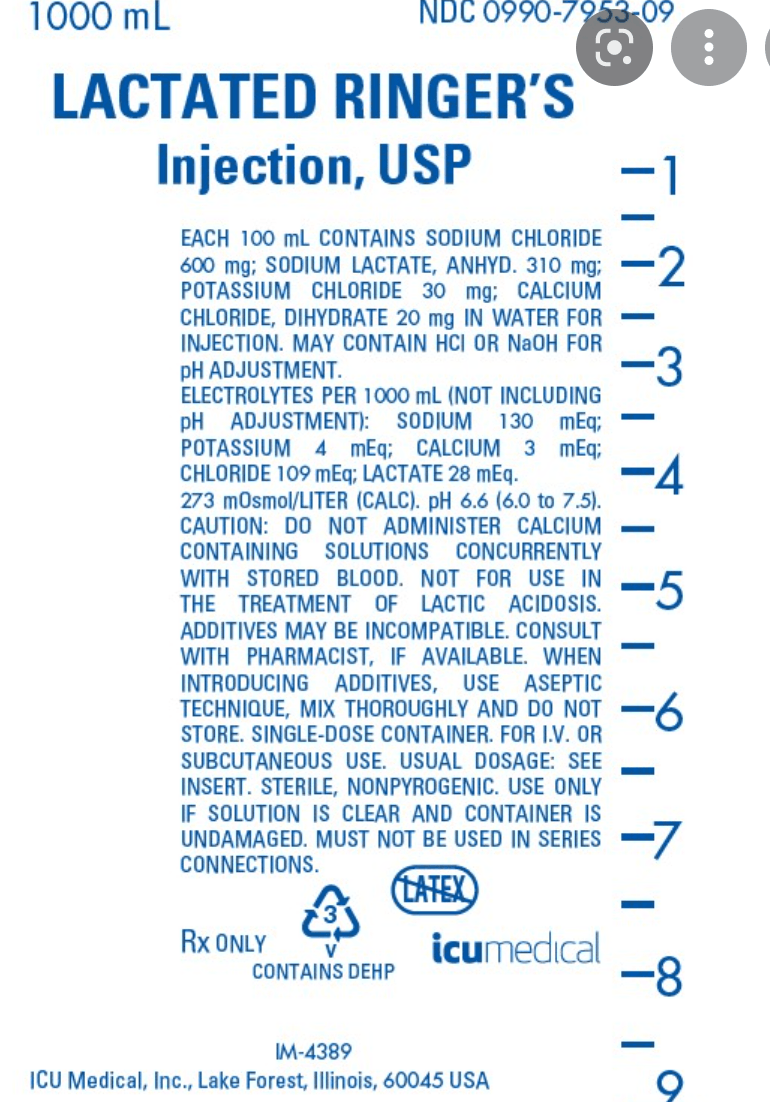
Lactated Ringers (LR) fluid is what kind of fluid
Isotonic