Quarter 1
Quarter 2
Quarter 3
Reference Tables
Simple Math
100
Early people were producing these types of changes even though they didn't know what was happening. For example - extracting metals from ores and making jewelry.
chemical
100
2-6 is the electron configuration for which element?
Oxygen
100
What does the Haber Process create?
Ammonia
100
Name the following Acid:
HNO2
Nitrous Acid
100
How much is 1 mole worth?
6.02x10²³
200
 Name a section where potential energy is decreasing
Condensing or Freezing
200
How could you change the configuration 2-3 to show Boron's electrons in an excited state
2-2-1
200
Ideal gases have a _______ Temperature & __________ pressure
HIGH Temperature & LOW pressure
200
Which of the following is INSOLUBLE in water
a. NaCl
b.CaCrO4
c. SrSO4
d. (NH4)2CO3
Strontium Sulfate
SrSO4
200
Calculate the mass of a 5 mole sample of Chloromethane: CH3Cl
C;12 H; 1x3 Cl 35.5 x 1 50g
5 mol x 50g / mol = 250g
300
This theory states that all particles are in motion
Kinetic Molecular Theory
300
Transition metals are part of which orbital group:
a.s
b.p
c.d
d.f
D Block
300
Define: Entropy
"A lot of kids' rooms exemplify entropy."
Randomness/Disorder
300
Which substance has the highest level of solubility at 80oC?
a. HCl
b. NH3
c. NH3Cl
d. KClO3
A. HCl
300
A 12g sample of water increases in temperature from 283K to 305K, calculate the amount of energy added.
q=mCAT = (12)(4.18)(22) = 1103.52J
q=?
m=12g
C=4.18 J/g*K
Delta T= 305-283 = 22
400
Put the Atomic Theorists in order
Schrodinger, Dalton, Bohr, Rutherford, Democratus, Thomson
Democratus, Dalton, Thomson, Rutherford, Bohr, Schrodinger
400
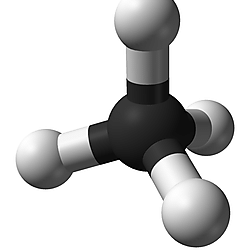 What molecular structure does Methane have?
Tetrahedral
400
According to the Colligative Properties, pure water will have a (HIGHER / LOWER) freezing point than salt water.
Higher
Salt water has a lower freezing point
400
Would the following single replacement reaction Occur to produce Hydrogen Gas? (Yes or No)
2HCl + Mg --> MgCl2 + H2
Yes! Use Table J
400
Calculate the change in pressure of a 51mL sample gas currently at STP when the Temperature is increased to 341K and Volume has changed to 25mL
P1V1/T1 = P2V2/T2
P2 = (1atm)(51mL)(341K) / (273K)(25K)
P2 = 2.5atm
500
Compare electron movement in Ionic and Covalent Bonds
Ionic bonds have taken/given electrons and covalent bonds have shared electrons.
500
Substances that evaporate slowly have ___________________ intermolecular forces.
(stronger / weaker)
Stronger
500

In the FORWARD reaction, which of the following would be considered the CONJUGATE Base
OH-
Hydroxide
500
Which has the highest Atomic Radius?
a. Rubidium
b. Argon
c. Chlorine
d. Barium
a. Rubidium! (215)
b.101
c.100
d.206
500
Calculate the initial Concentration of an Acid if I combine a 37mL sample with a 41mL 1.2M Sample of a base.
MAVA = MBVB
MA = (41mL)(1.2M) / (37ml)
MA = 1.3M