Sleep Facts
Sleep Better
Sleep Tips
Sleep True/False
100
True or False: During sleep, your brain rests.
False
Sleep Fact: Your brain stays active during sleep doing important tasks such as brain reorganization, toxic waste removal, memory consolidation, and neuroprotective benefits.
100
List 2 relaxation techniques that can help with sleep.
Deep Breathing, Meditation, Stretching/Yoga, Progressive Muscle Relaxation, Visualization, etc.
100
What is something physical you can do to improve sleep?
Stretching, Yoga, Meditation, and Exercise!
100
You can "bank" sleep or catch up on sleep.
False. While naps can help, you cannot fully repay a "sleep debt" by oversleeping on weekends; inconsistent schedules actually cause "jet lag" and fatigue.
200
True or False: Naps should be taken in the early afternoon and be no longer than 45 minutes.
True
Sleep Fact: Long naps can be bad for you because they can increase your risk of health problems like heart disease, diabetes, and high blood pressure. They can also cause temporary grogginess and interfere with cognition.
200
List two things to avoid before bed.
Sugar, caffeine, electronics, alcohol/substances, unhealthy foods, etc.
200
Name what kind of foods you should NOT eat before bedtime.
Unhealthy foods, sugar and fat-filled foods, spicy foods, and two hours before bedtime it's suggested to not eat any food!
200
Your body gets used to less sleep.
False. You may feel less tired, but your brain and body suffer, leading to reduced cognitive function, poorer immune health, and increased risk of chronic disease.
300
True or False: Not getting enough sleep can impact your immune system
True
Sleep Fact: Not getting enough sleep can negatively impact your immune system. This can make you more susceptible to illness, and can increase your risk of developing inflammatory disorders and cardiovascular disease.
300
List 2 things that make a good sleep environment.
Quiet, dark, cool, consistent schedule, electronics turned off/placed away from bed, etc.
300
Setting alarms, writing in a schedule, and being consistent are all part of what sleeping technique?
Following a sleep routine!
Sleep Tip: Go to bed and wake up at the same time every day, including weekends.
300
Falling asleep immediately is a sign of good health.
False. It takes a healthy person 15–20 minutes to fall asleep; passing out instantly often indicates severe chronic sleep deprivation.
400
True or False: The older you get, the fewer hours of sleep you need.
False
Sleep Fact: The need for sleep remains constant throughout adolescence. Although adults may wake up more often at night and have a lower sleep time, their sleep needs are at least as much as during adulthood.
400
What kind of light do Tv's, phones, and computers emit that decreases sleep when absorbed at night.
Blue light
Sleep Fact: Blue light decreases melatonin production, which can make it harder to fall asleep. This is because blue light tricks the brain into thinking it's daytime, which stops the body from releasing melatonin.
400
How long before bed should you limit your use of electronics such as TV, computers, and phones?
At least 30 minutes before bedtime.
400
Snoring is harmless.
False. Regular snoring can be a sign of sleep apnea, a serious condition that restricts breathing.
500
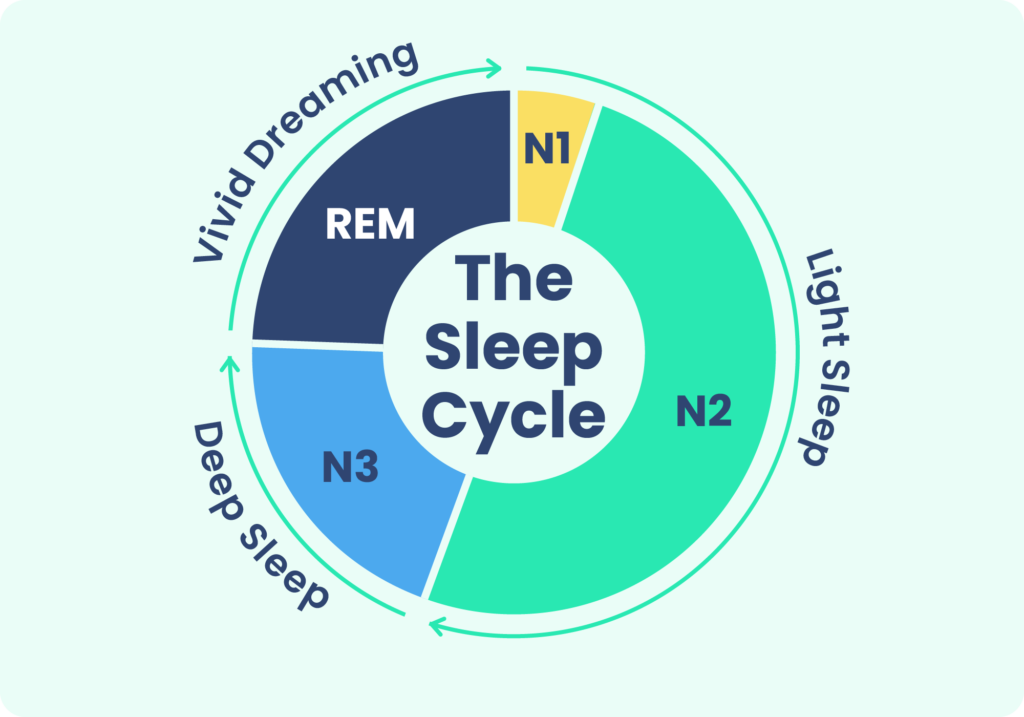
How many sleep cycles do you experience in one night?
People typically have four to six sleep cycles per night.
500
What are some kinds of teas that are known to help with sleep.
Chamomile, lavender, valerian, lemon balm, passion flower, and peppermint.
Sleep Fact: Chamomile contains apigenin, an antioxidant that may have a sedative effect.
500
This is an important thing you should soak up 5 to 30 minutes after waking up.
Sunlight!
Sleep Tip: Sunlight is packed with Vitamin D which assists in improving mood and helping to keep your circadian rhythm on track!
500
If you can’t sleep, stay in bed and try to sleep.
False. If you don't fall asleep after 20 minutes, get up and do a quiet activity to avoid associating your bed with anxiety.