History
Carburetion
Ignition System
Lubrication and Cooling
Parts
100
In 1876 this German engineer built the first successful four-stroke internal combustion engine, using a cycle that still bears his name.
Nikolaus Otto
100
In a carburetor, this narrowing in the airflow increases air velocity and lowers pressure, drawing fuel into the airstream.
Venturi
100
his ignition component converts the low voltage from the magneto into the thousands of volts needed to create a spark.
Ignition coil
100
Most small engines rely on this cooling method, where air is forced over metal fins on the engine to remove heat.
Air Cooling
100
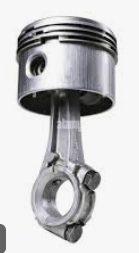
This moving engine part travels up and down inside the cylinder to compress the air-fuel mixture before ignition.
Piston
200
This thermodynamic process—intake, compression, power, and exhaust—defines the classic gasoline engine cycle.
Otto cycle
200
When starting a cold small engine, this device restricts air entering the carburetor to create a richer fuel mixture.
Choke Valve
200
In small engines, this device uses rotating magnets in the flywheel to generate the electrical current for ignition without a battery.
Magneto
200
These ridged metal structures on the outside of an engine cylinder increase surface area so heat can dissipate more effectively.
Cooling Fins
200
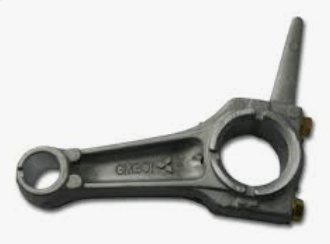
This engine component connects the piston to the crankshaft and converts the piston’s motion into rotation.
Connecting Rod.
300
In 1892 this German engineer patented a highly efficient engine that ignites fuel using compression rather than a spark.
Rudolf Diesel
300
This carburetor component maintains a constant fuel level in the bowl by opening and closing a small inlet valve.
Float
300
This component delivers the spark to ignite the compressed air-fuel mixture inside the combustion chamber.
Spark Plug
300
In many small engines, this rotating component doubles as a fan to push air across the engine for cooling.
Flywheel
300
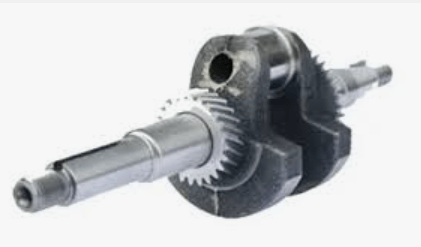
As it rotates, this major engine component converts the up-and-down motion of the piston into usable rotational power.
Crankshaft.
400
In 1885 this German inventor built one of the first practical gasoline-powered automobiles, the Motorwagen.
Karl Benz
400
In small engines, this tiny calibrated opening meters fuel from the bowl into the air stream.
Carburetor jet
400
In many small engines, this rotating engine component contains magnets that pass by the ignition coil to generate current.
Flywheel
400
This lubrication method used in many small four-stroke engines uses a rotating dipper to splash oil onto moving parts.
Splash Lubrication
400
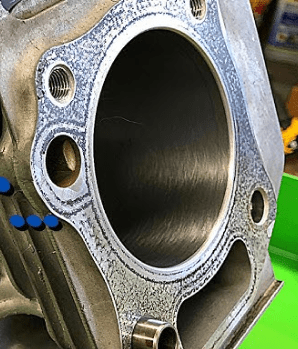
This hollow chamber houses the piston and is where combustion takes place inside the engine.
Cylinder.
500
Introduced in 1908, this automobile helped popularize internal combustion engines worldwide through mass production.
Ford Model T
500
In many small carburetors, this chamber holds a small reserve of fuel and works with the float to maintain a steady supply to the jets.
Float Bowl
500
This safety device stops a small engine by grounding the ignition coil so the spark can no longer occur.
Kill Switch
500
In two-stroke small engines, lubrication occurs when oil is mixed directly with this fuel before entering the engine.
Gasoline
500
Located at the top of the cylinder, this engine part opens and closes to allow air-fuel mixture in and exhaust gases out.