Quebec and Canada
Indigenous Peoples and Canada
Mysteries
Key figures
Key Terms
100
How many referendums did Quebec have, and which one has the closest results?
Quebec had two referendums, one in 1980 and one in 1995. The 1995 referendum had the closest result, with "No" at 50.5 and "Yes" at 49.5.
100
What is the difference between First Nations, Inuit and Métis People?
The difference is that..
First Nations Peoples include many groups, such as Cree, Blackfoot, etc.
While Inuit and Métis are separate Indigenous groups. Inuit people live in Arctic Canada, and Métis people live in western Canada.
100
What colour is Quebec on the map?
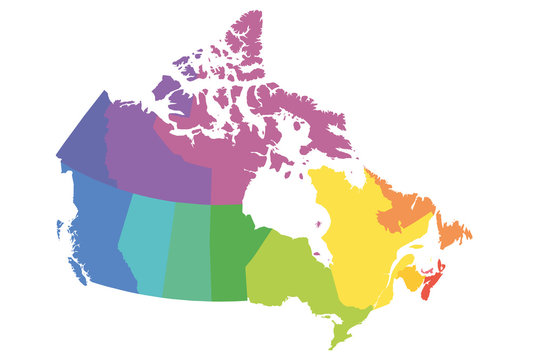
100
Who are Duplessis and Jean Lesage, and why are they important?
Duplessis was one of the first to fight for Quebec to be recognized as a distinct society.
Jean Lesage is known for advocating social change in Quebec and for proposing the idea of the Quiet Revolution.
100
What is the difference between the melting pot and the salad bowl theories?
The Melting Pot theory assumes that immigrants must assimilate to become part of a common culture, for example, "becoming American".
The Salad Bowl theory calls for individuals to celebrate their diversity and oneness.
200
What were the main changes the Quiet Revolution wanted to make? (name at least 2)
1. Secularization: Separation of Church and state.
2. Economic Reforms: Economically independent, increase more jobs, introduce new industry and new labour code.
3. Nationalism: Nationalism increase and Quebecois felt "second-class."
200
What is the difference between the white paper and the red paper?
The white paper was the PM Trudeau and Chretien proposal to get rid of the Indian Act, so that the sovereignty issues could be solved. The red paper was the Indigenous activists' rebuttal since the Indian Act involved treaties and land rights.
200
What were the Bi and Bi Commission Reports?
The Bi and Bi Commission Reports were when Canada was officially recognized as a bilingual nation. It included new changes, such as government support for minority language groups in all provinces, etc.
200
Who is Pierre Trudeau, and what was his stance on Multiculturalism/Federalism in Canada?
Pierre Trudeau was the Prime Minister of Canada and supported multiculturalism. Even making a "Multiculturalism Policy". But he was a strong supporter of federalism, making every province equal.
200
What is Pluralism?
Pluralism is a form of society in which members of different groups are encouraged to maintain their independent cultural traditions and where differences are valued and protected.
ex: Canada is known as a pluralistic society.
300
What was the Meech Lake Accord, and how did it affect Quebec separatism?
The Meech Lake Accord was an effort to complete the constitutional process to meet some of Quebec's nationalists' demands.
These demands included:
1. Quebec is being seen as a distinct society.
2. The right to allow provinces to nominate Supreme Court judges.
However, because it was not passed, it actually increased Quebec separatism.
300
What was the cause of the Oka crisis?
For 260 years, the Mohawk community had been pursuing a land claim on a burial ground near Kanesatake. But there had been developments on plans to expand a golf course on this disputed land. This is what sparked the crisis.
300
Who wanted to unite Upper and Lower Canada?
(hint look at the first page of your notes)
Lord Durham made these recommendations.
300
Who is Louis Riel, the Pound Maker and Big Bear?
Louis Riel: was the Métis leader of the Red River Resistance.
PoundMaker: was a Cree Chief and negotiated the interests of his people with Treaty 6.
Big Bear was also a Cree Chief who worked with Poundmaker on Treaty 6 negotiations.
300
What are the contending loyalties (include an example in your answer for an extra 100 points!)
Contending loyalties are loyalties to one group that may compete with loyalties to a different group.
ex: an ideological loyalty vs a religious loyalty.
400
What is the FLQ, and what did PM Trudeau do to respond to their threats?
The FLQ was a terrorist group that supported Quebec separatism and kidnapped James Cross and Pierre Laporte (Quebec Minister of Labour).
PM Trudeau responded by using the War Measures Act.
400
What does it mean when someone is recognized as a "status indian" vs. a "non status indian" under the Indian Act?
A status Indian is an individual who is officially recognized as an Indigenous under the Indian Act. This allows them to gain benefits such as treaty rights. A non-status Indian is an individual who is not considered Indigenous under the act.
400
What is a distinct society, and how does it relate to Quebec?
A distinct society means recognizing that Quebec is culturally and historically different from the rest of Canada. This is because of its French language and culture.
400
Who is PM Pearson, and how is he related to the Bi and Bi commission?
PM Pearson is related to the Bi and Bi commission because he wanted to believe that implementing it would smooth relationships with Quebec individuals.
400
What is Federalism? (Bonus 100 points for a key figure that supports this)
Federalism is where power is shared between the federal government and provincial governments.
ex: Pierre Trudeau supported this idea since he wanted all of Canada to have equal power.
500
What is Bill 101, and what did it allow (name 2 examples for an extra 100 points!)
Bill 101 recognized French as the official language in Quebec.
It allowed: 1. All business in the Quebec government and courts will be carried out in French
2. French is to be the only official language in Quebec
3. The people of Quebec have the right to:
- Speak French at Work
- Be served in French in stores
- Be taught in French
500
What happens when an Indigenous man marries outside of indian status?
When an Indigenous man marries out of status instead of losing his Indian status, his wife and children now gain Indian status.
extra: When a woman marries outside of her Indian status, she loses her status, and so do her children if she has any.
500
What did PM Trudeau say here when responding to the FLQ crisis? (hint: three words)
He said, "Just watch me."
500
What did the Parti Québécois stand for?
They supported Quebec nationalism and independence from Canada.
500
What is Regionalism?
Regionalism: Political ideology that focuses on the interests of a particular region or group of regions.
ex: In Canada, we see this in "West" vs "East" Canada.