Coastal Region
Central Valley Region
Mountain Region
Desert Region
Vocabulary
100
What is the population density of the coast region?
There is a high population density. A lot of people want to live on the coast.
100

What region is this in? How do you know?
Central Valley Region. I know because it looks like the land is used for farming and the Central Valley is surrounded by mountains.
100
What is the tallest mountain range in California?
The Sierra Nevada
100
Name two examples of a desert plant.
Joshua tree, desert paintbrush, cactus, yucca.
100
What is irrigation?
A way to bring water to deserts.
200
What are some important industries in this region?
Technology, entertainment, agriculture (farming), tourism
200
Where do people in the Central Valley receive its water?
From melted snow from the mountains, wells dug in the ground, and rivers.
200
What is the mountain region climate like? How does it affect the plants and animals that live there?
It is cool. Therefore, it is a good place for plants to grow and animals to live.
200
Name two types of animals that live in the desert.
Roadrunners, lizards, insects, bighorn sheep, desert tortoise.
200
What is climate?
A place's average weather over time.
300
List 3 animals that live along the coast.
Sea lions, green seat turtles, pelicans, elephant seals, humpback whales, shorebirds.
300
What is the biggest industry in the Central Valley?
Agriculture (Farming)
300
What is the population density of the mountain region?
The mountain region has a low population density - it does not have a lot of people living there.
300
Does the desert region get a lot of precipitation or little precipitation?
Little precipitation.
300
What is population density?
How crowded an area is. How many people live in one square mile.
400
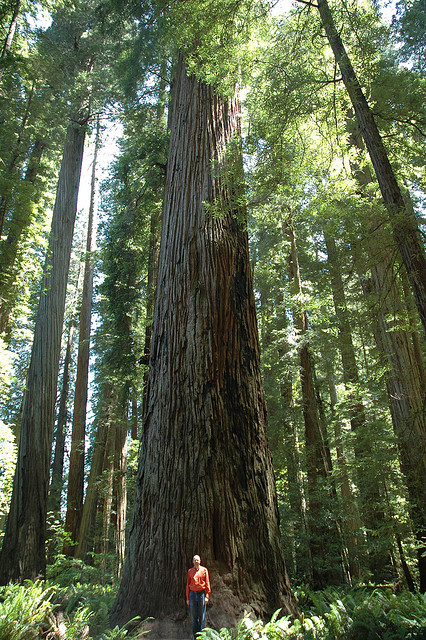
What kind of tree is this?
A California redwood tree
400
What are California's Top 5 Crops?
Almonds, grapes, strawberries, lettuce, and walnuts
400
What do people mine in the mountains?
Gold, quartz, and other minerals.
400
How do people in the desert get their drinking water?
From water pumped from deep wells and from nearby mountain streams
400
What is precipitation?
rain and snow
500
Name two cities along the coast region.
San Francisco, San Diego
500
Where is the Central Valley primarily located?
In the middle of California.
500
Name two of the mountain ranges in California.
Cascade Range, Sierra Nevada Ranges, Coast Ranges
500
Why is it challenging to live in the desert region?
The summer heat and limited water supply.
500
What is elevation?
A place's height above sea level which affects the climate of a place.