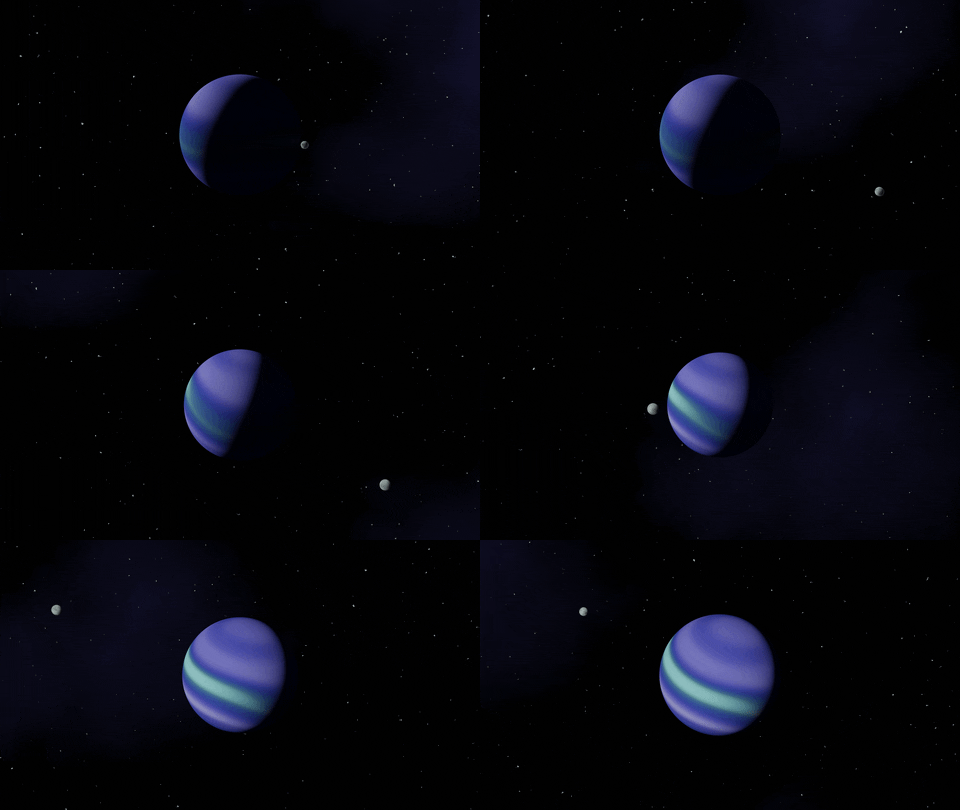
Stars vs Planets
Space Technology
Star Brightness
Solar System Models Limitations
What am I?
100
What is the closest star in our solar system? Is that star considered to be a small, medium, giant, or supergiant star?
The Sun is the closest star in our solar system. Even though the Sun is very large it is considered to be a medium sized star.
100
What space technology gathers light from distant objects and magnifies them?
A Telescope! 
100
Would you predict that Star A or B would appear brighter from Earth? Why?
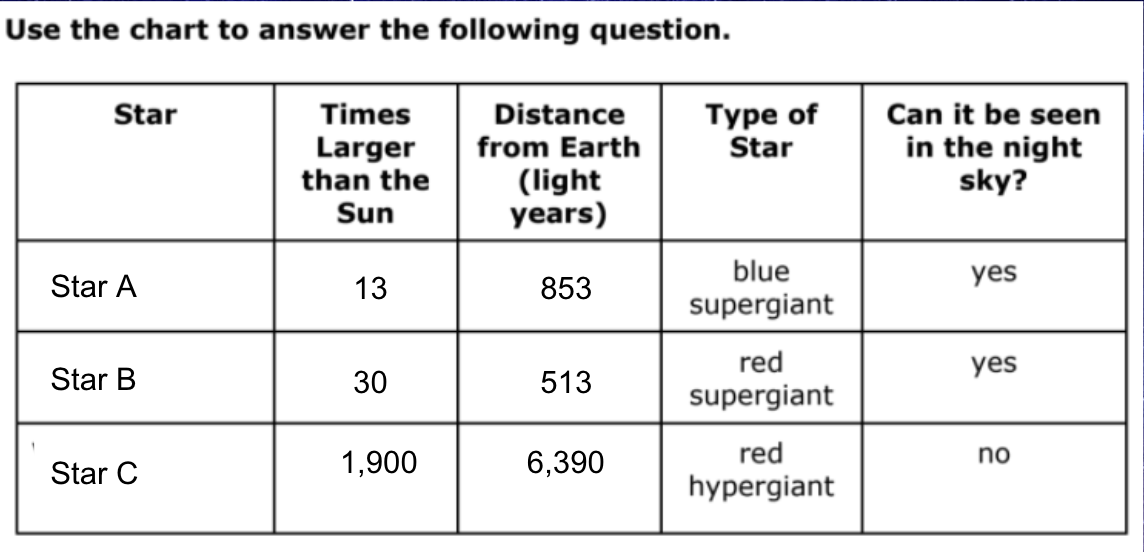
Star B would appear brighter from Earth because it is larger and closer to Earth.
100
What are the eight planets in our solar system? In order from closest to the Sun to furthest from the Sun.

100
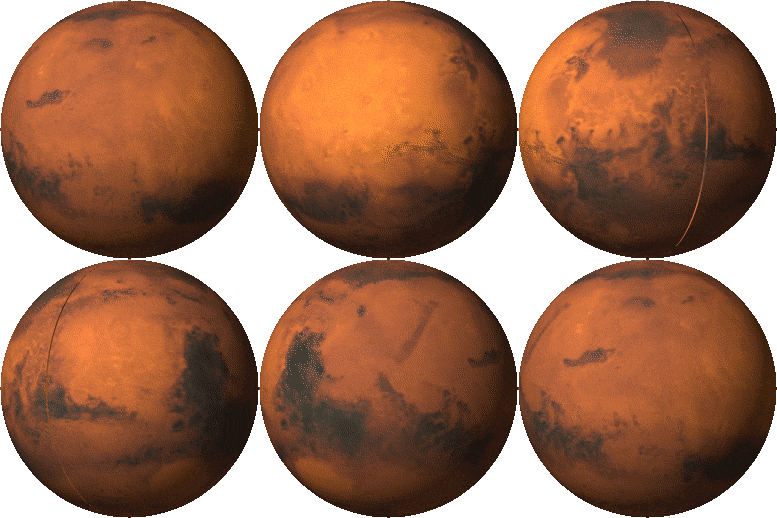
I'm the planet that everyone calls "Red," but really my soil is rust-colored instead. Look up and you may spot me in the sky, I'm the orange-colored dot, way up high. Which planet am I?
Mars!
200
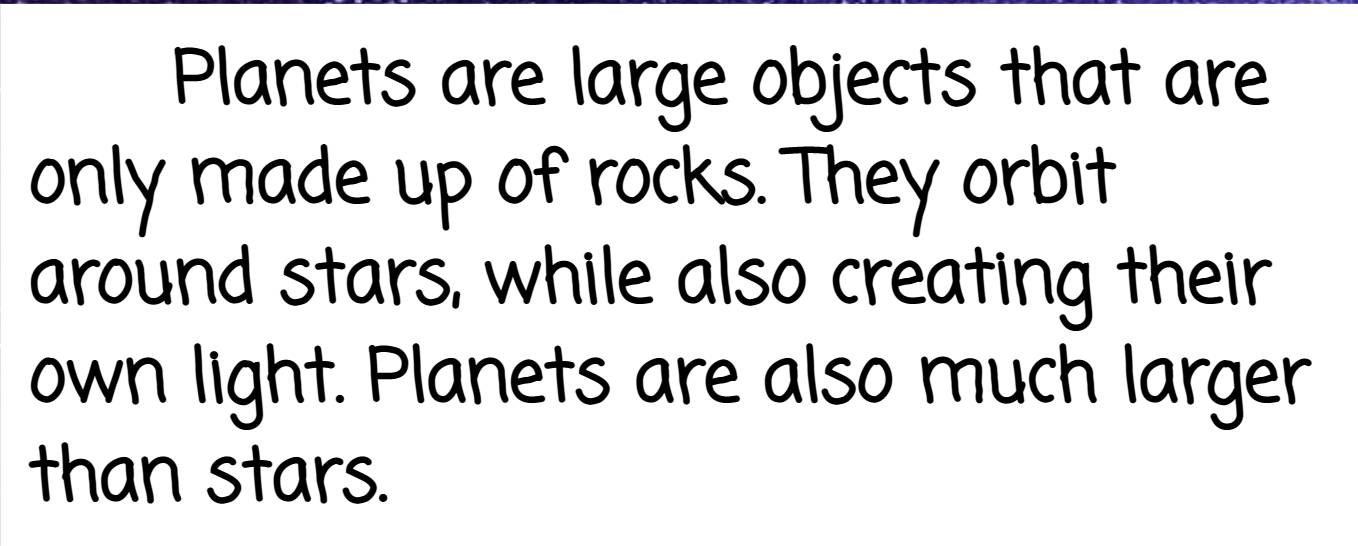
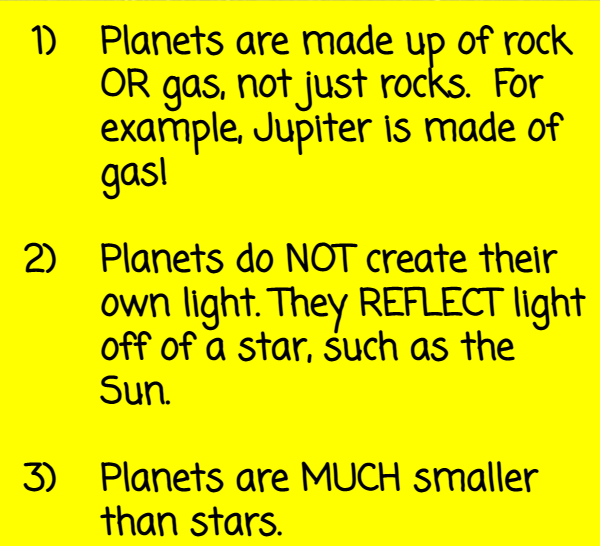
A student created a small explanation to show the difference between planets and stars. What errors do you notice in the student’s explanation?
200
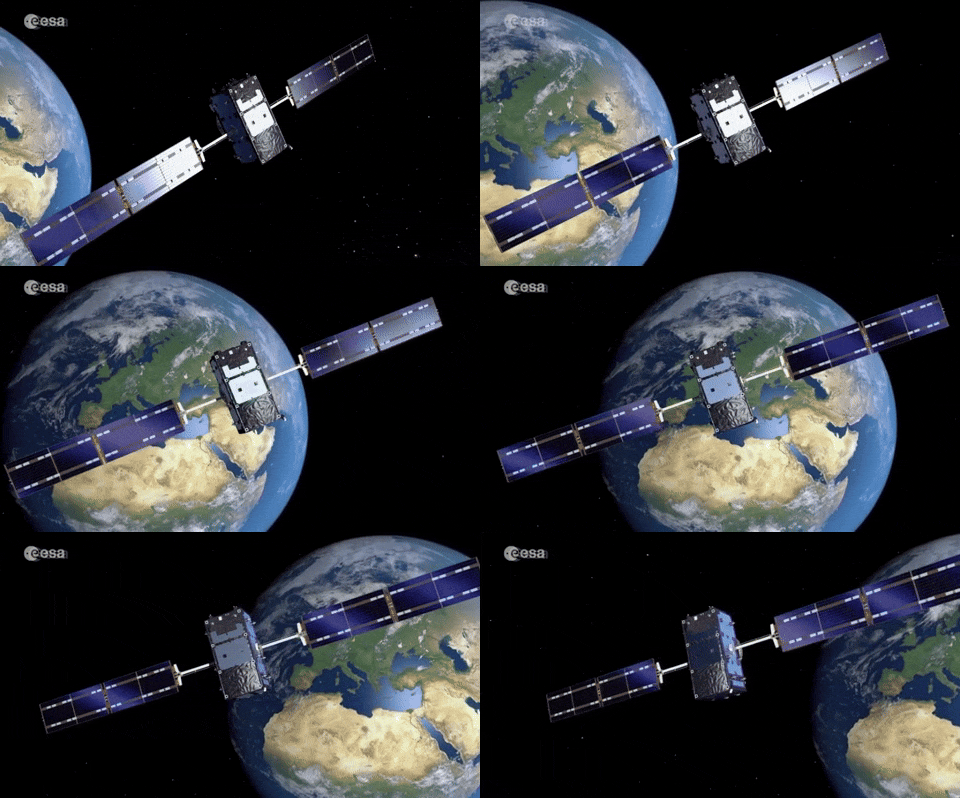
What space technology is a small object that orbits, or revolves around, a larger object in space?
A satellite!
200
If both Star A and Star C could be seen in the night sky, which would you predict would appear brighter from Earth? Why?
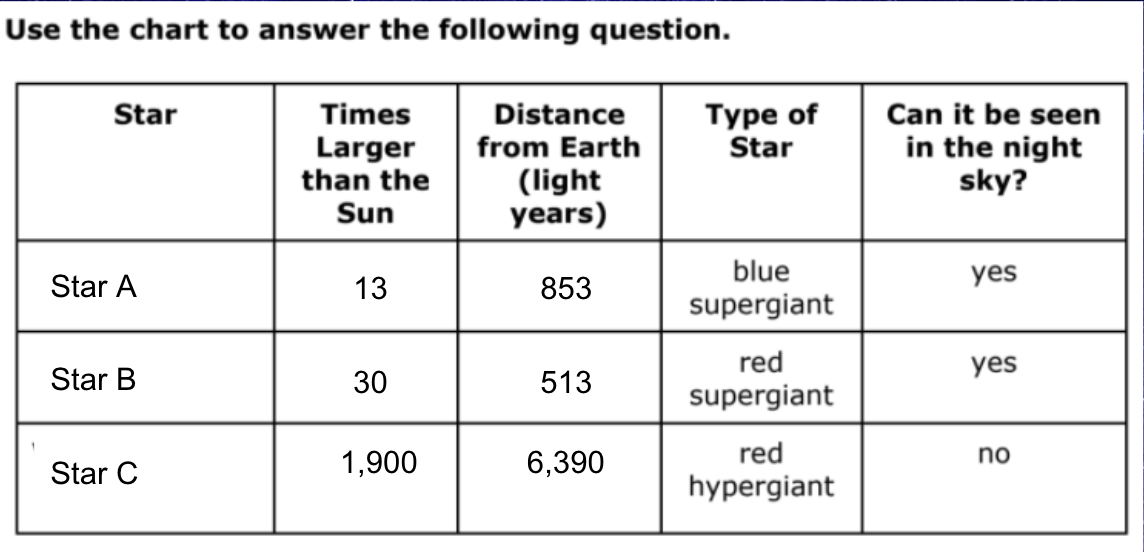
There is not enough information to decide because Star A is much closer to Earth, but Star C is much larger.
200
What is the composition of the inner planets and outer planets?
Inner planets - Rocky - Terrestrial planets
Outer planets - layers of gas - Gas Giants
200
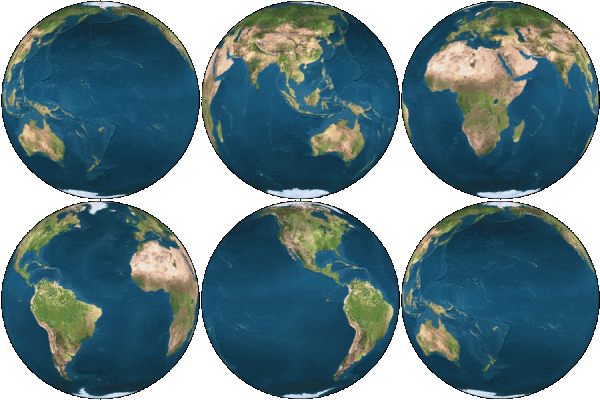
Which planet am I?
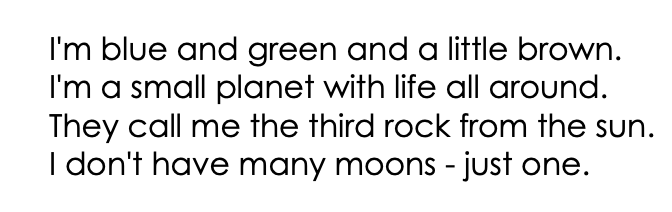
Earth!
300
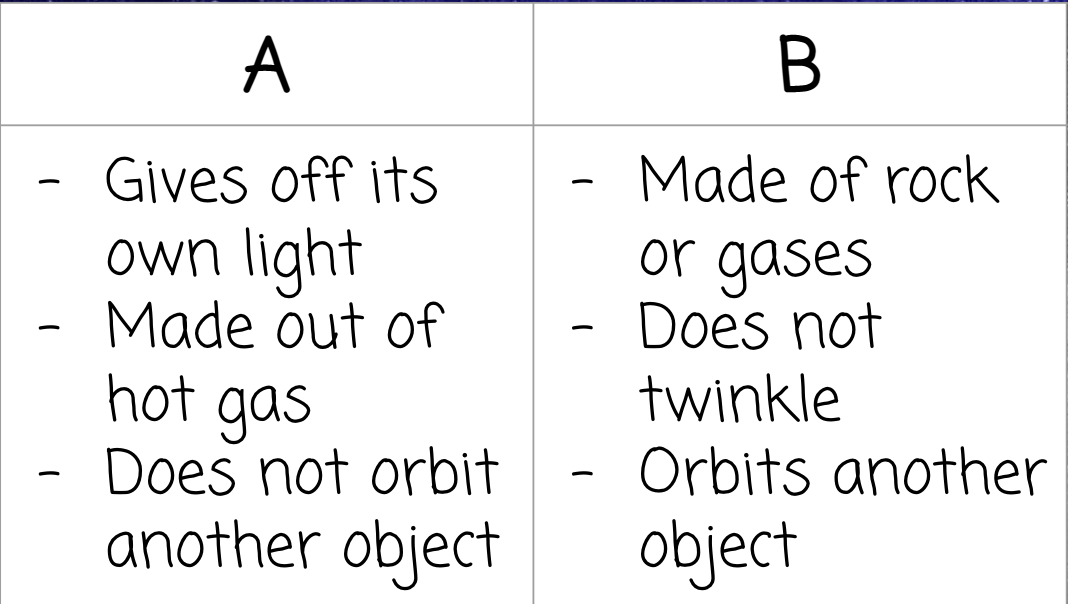
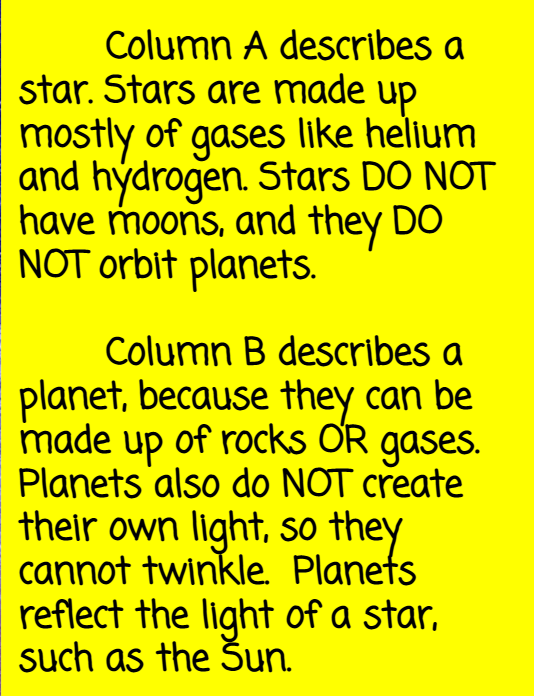
Look at the characteristics listed on this t-chart. Which column describes a star? Which column describes a planet?
300
What space technology is a spacecraft that travels through space to collect science information?
A probe! 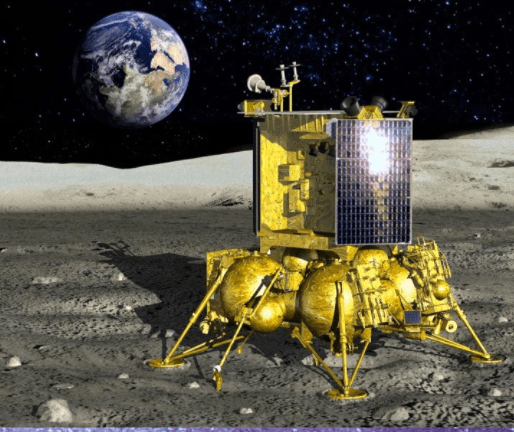
300
Dr. Sharp is teaching an astronomy class outside on a perfectly clear night. Many of Dr. Sharp’s astronomy students are looking up at the stars. They are discussing what they wonder about stars. Debbie says she wonders why some stars are brighter than others. She asks Dr. Sharp if he could explain. What might Dr. Sharp say to explain why some stars appear to be larger and brighter than others?
If one star is closer to the earth than another, then it will appear larger and brighter. If two stars are the same distance from the earth, the larger star will appear brighter.
300
What would be a strength of the model shown on the left?
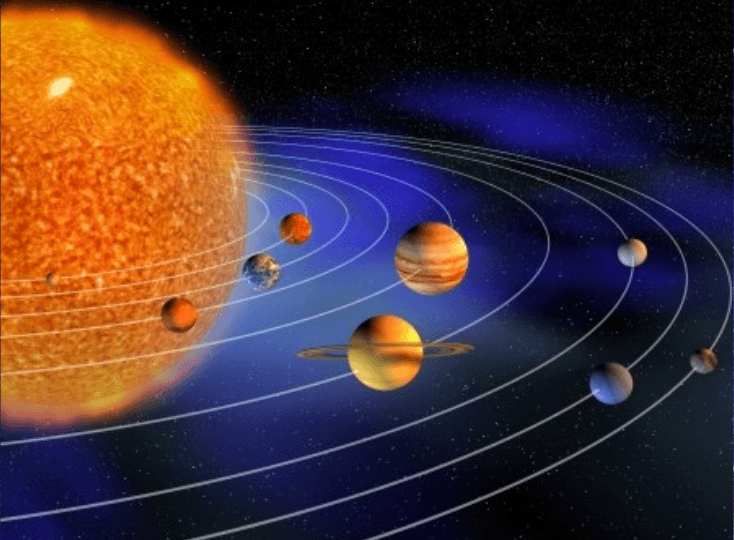
This model attempts to show the differences in how the planets look.
300
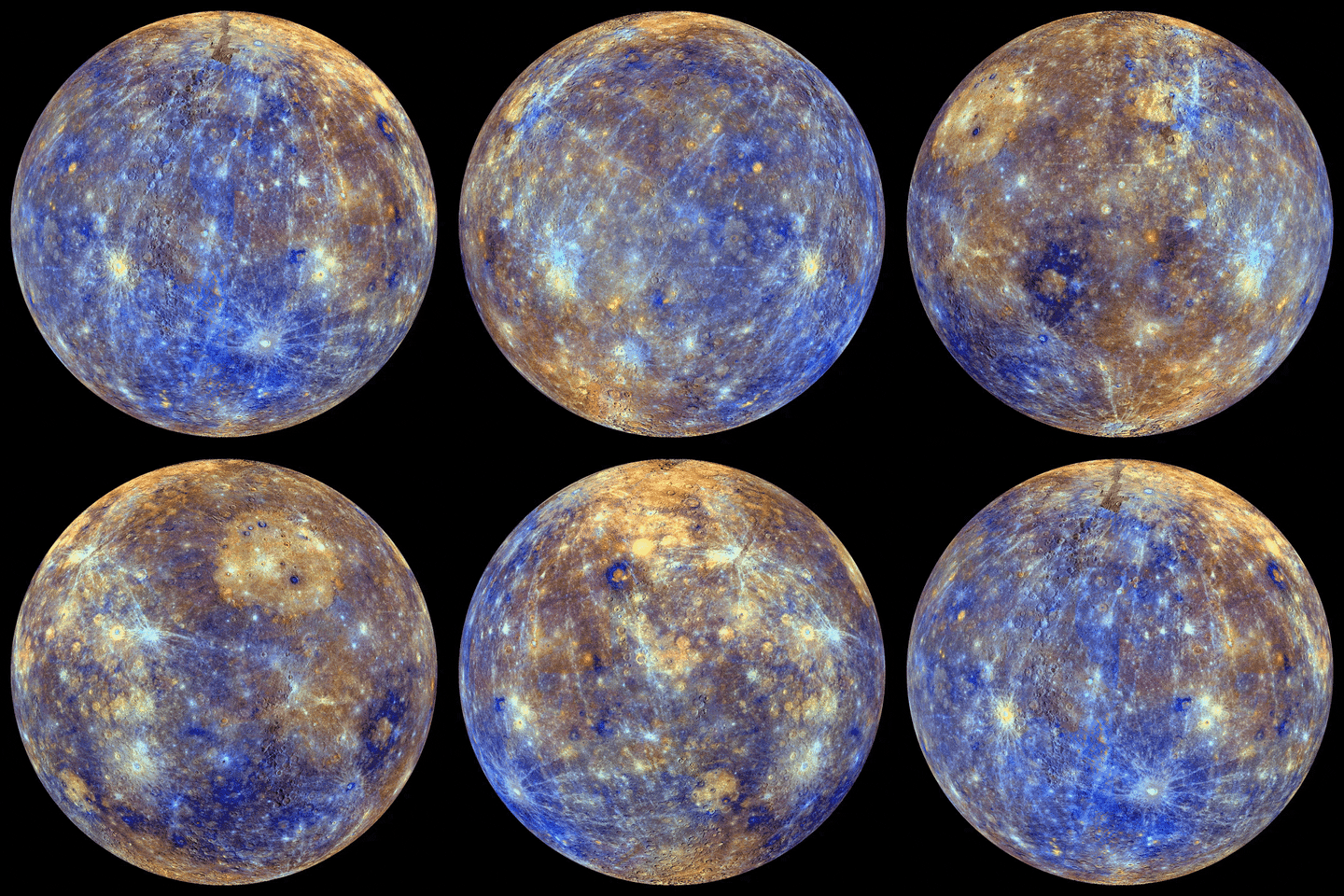
What planet am I?
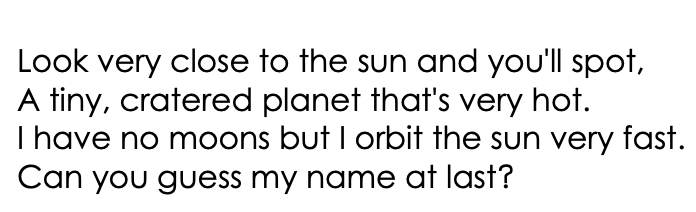
Mercury!
400
Mrs. Solar is doing research about the planets and how they are different from stars. What are some differences she will find between planets and stars?
Some planets are made up of rock, and some planets are made up of gases. All stars are only made up of gases.
Planets are MUCH smaller than stars.
Planets orbit stars.
Planets do NOT make their own light. They reflect the light of stars. Stars DO make their own light.
400
Many people know that scientists have discovered a famous red spot on Jupiter and that this spot is a giant storm that moves around the planet. This storm can be seen by telescopes from Earth and also by probes that have flown past Jupiter.
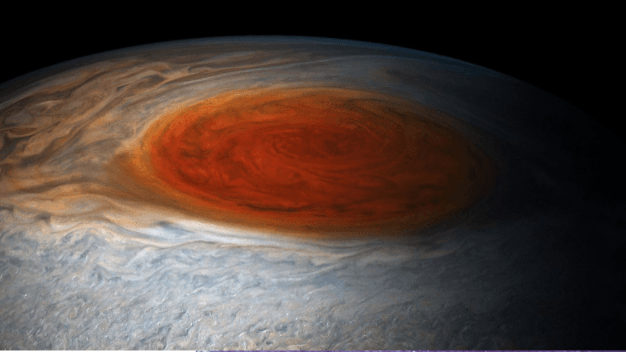
What is a question you could ask to determine the two tools that are used to discover Jupiter's red storm for the first time?
Was the storm first seen from Earth or an image sent from space?
400
Mrs. Billings was singing “Twinkle, Twinkle, Little Star” to her daughter, Maggie. Afterwards, Maggie asked, “What is a star?” Mrs. Billings replied, “Our sun is a star.” Maggie could not believe it. So she asked, “If the sun is a star, why is it so big and bright? What could Mrs. Billings tell Maggie to help her understand?
Since the sun is the closest star to the earth, it appears bigger and brighter than the other stars.
400
What limitations does this model have?
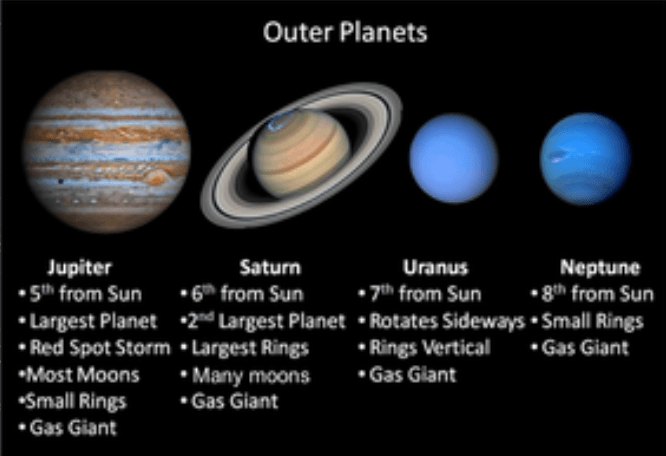
It does NOT show that the planets orbit the Sun.
It does NOT show the relative size of the planets compared to each other.
It does NOT show the distance between the planets correctly.
400
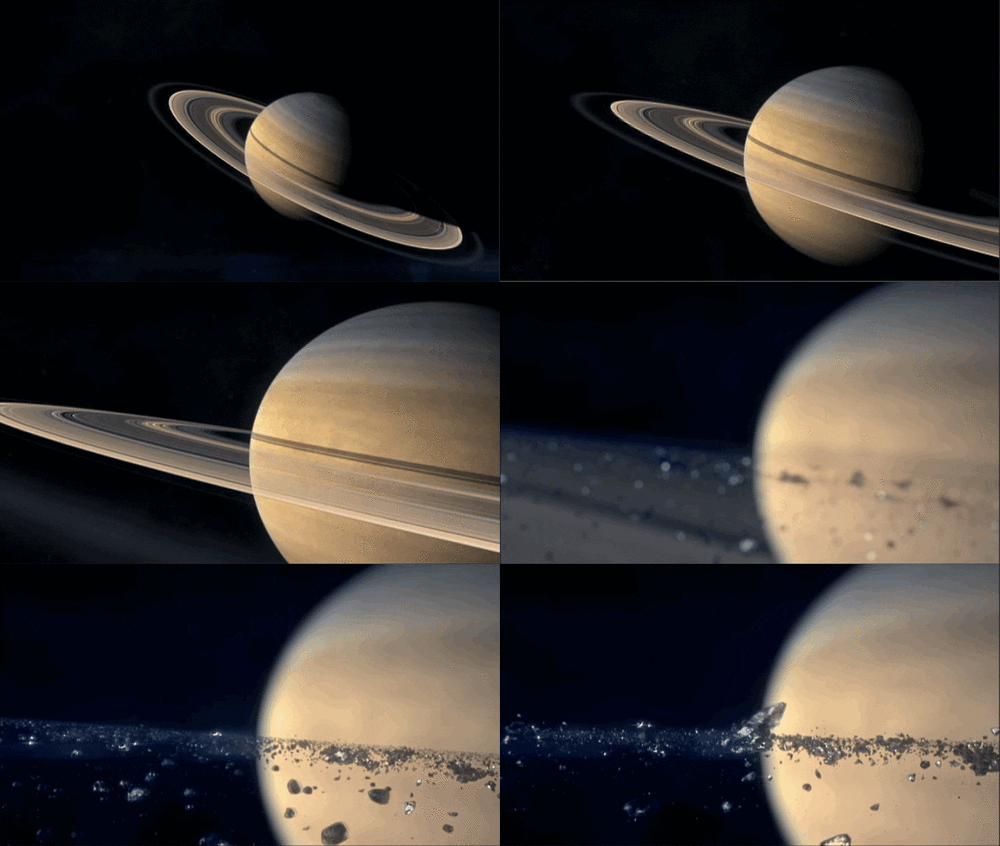
What planet am I?
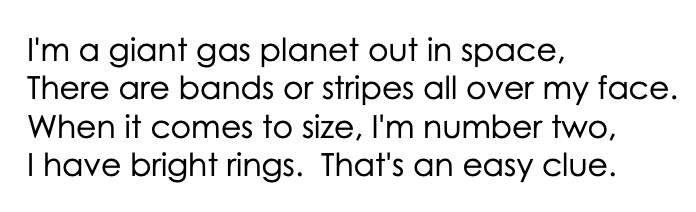
Saturn!
500
Mrs. Sunny noticed something bright in the night sky. A week later, the bright object had moved to the left a little bit. She knows it is not an airplane, but she thinks the object is a planet. Is she correct? Why or why not?
Mrs. Sunny is correct, because the object is a planet. She knows that planets do move, because they orbit around the Sun. Since they are much closer to Earth than stars, we can notice their movement in the night sky over time.
500
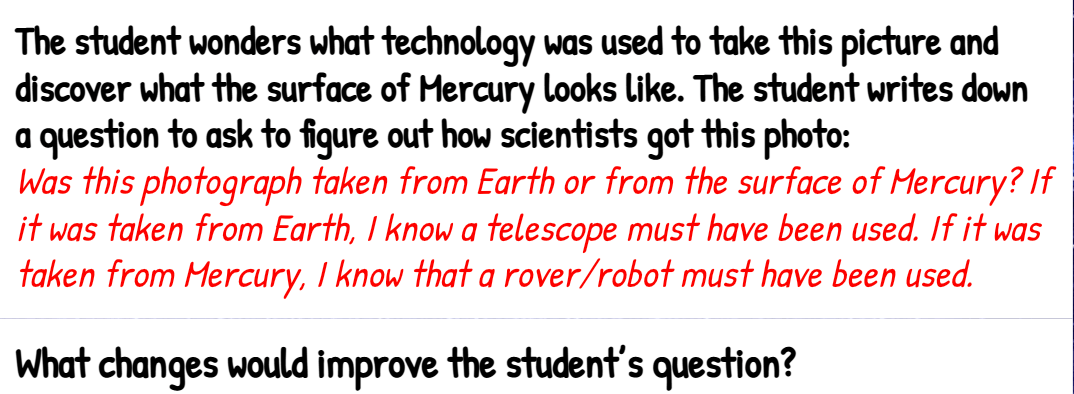
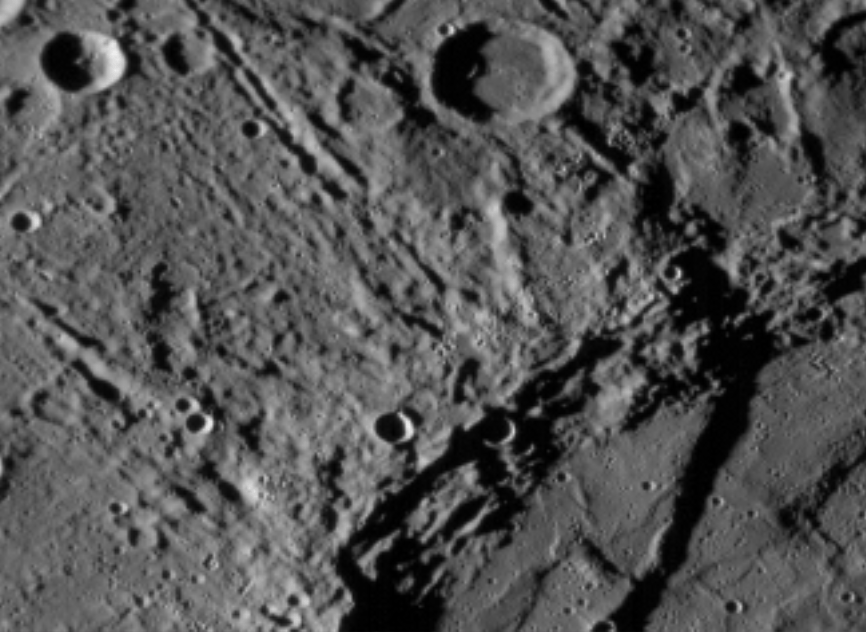
She should also ask if the photo is color or black-and-white, because it could have been taken by a probe passing Mercury.
500
Mr. Kramer was gazing up at the stars one night. Describe the difference in the brightness of these stars.
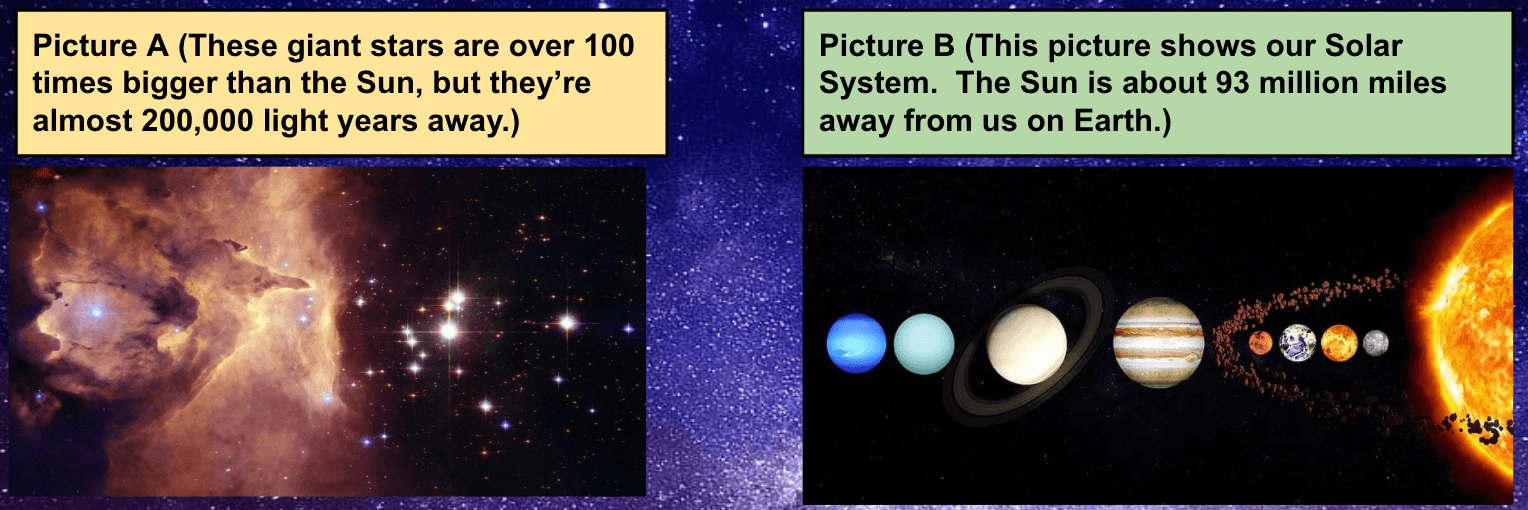
The Sun in picture B would appear brighter to Mr. Kramer because it is much closer to the Earth than the stars in picture A.
500
Holly wrote down 4 sentences about the model she created. Which sentence would you revise and why?
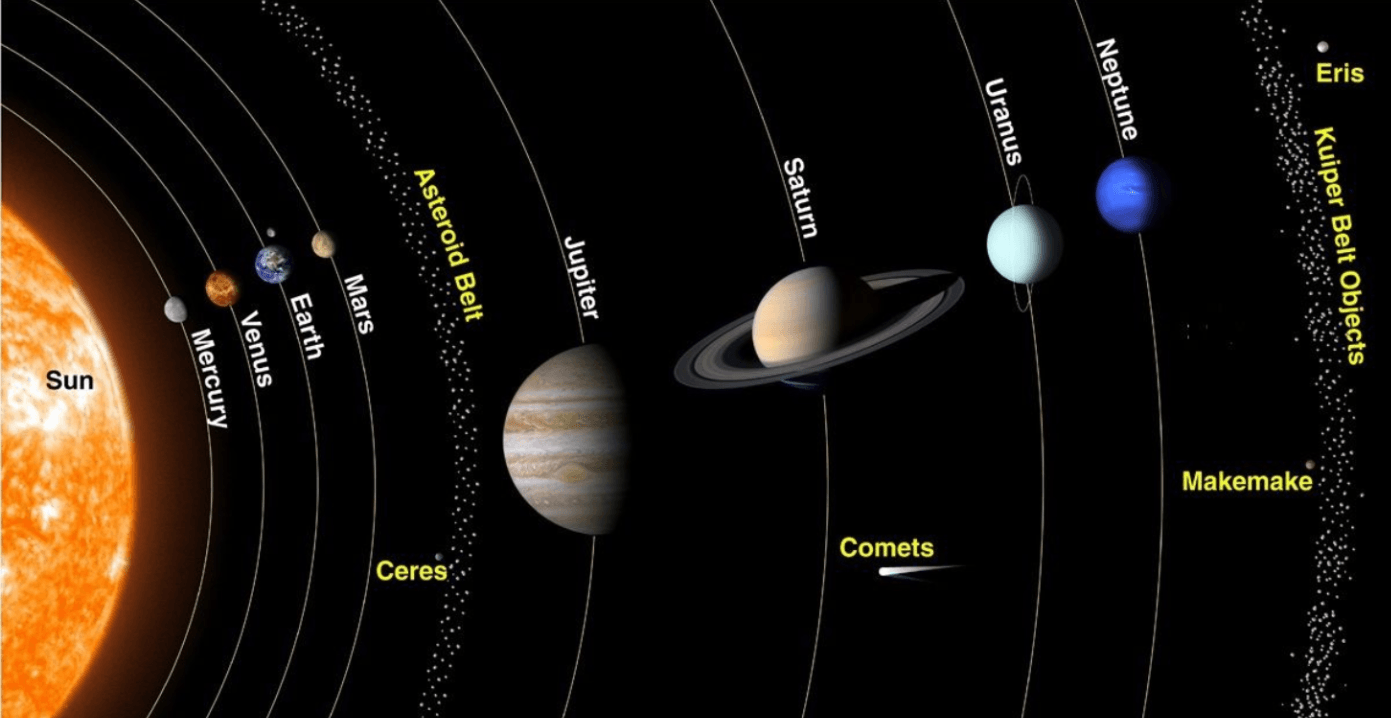
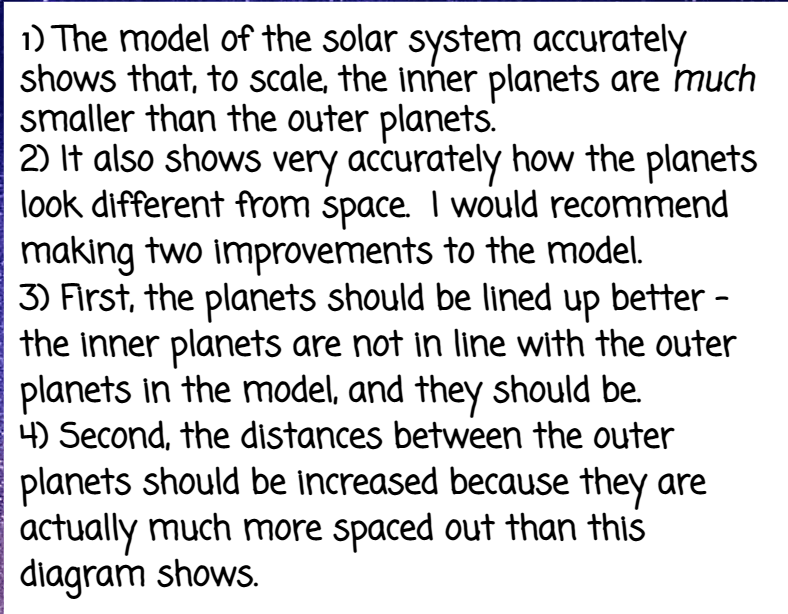
I would revise the 3rd sentence. The planets orbit the Sun, so they should NOT be lined up in a straight line. As they orbit, they are in different locations on their orbital path.
500
What planet am I?
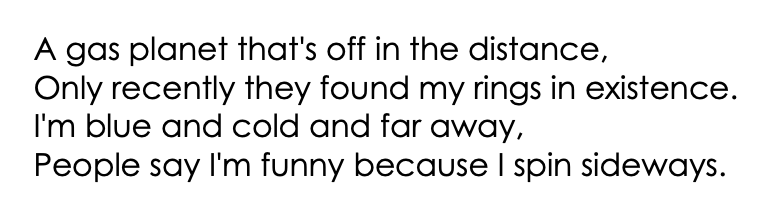
Uranus!