The Moon
The Earth and it's Seasons
The Stars and Other Stuff
Vocabulary Terms
Sun
100
Rank the following objects from smallest to largest:
Moon Sun Earth
moon, earth, sun
100
How many days does it take for the earth to revolve around the sun?
365 Days
100
What is the central and only star in our solar system?
The Sun
100
The path the earth takes when it revolves around the sun.
orbit
100
The sun rises in the _______ and sets in the _______.
east, west
200
What is the name of the moon phase where it appears that there is no moon at all?
New Moon
200
Which season has the longest shadows but the shortest days?
Winter
200
True or false.
The brightest stars are blue.
True
200
To spin around on a fixed point.
rotate
200
The sun is made up of mostly ______________.
gas
300
How many days does it take for the moon to complete one revolution around the Earth?
28
300
Which season has the shortest shadows and the longest days?
Summer
300
Name this constellation: You will recieve an extra 100 points if you can tell me it's scientific name. 
The big dipper or Ursa Major
300
An imaginary line going through an object around which it turns.
axis
300
The sun appears bright to people on Earth because it is the ___________star to Earth.
closest
400
Name the moon phase:

Waning Crescent
400
How long does one complete rotation of the Earth take?
24 hours
400
Why are different constellations visible at different times of year?
The constellations change because the earth is rotating around the sun giving us different views of the sky.
400
When one object moves around another larger object.
revolve
400
The Sun is about this far away from the Earth.
93 million miles away
500
Name the moon phase: 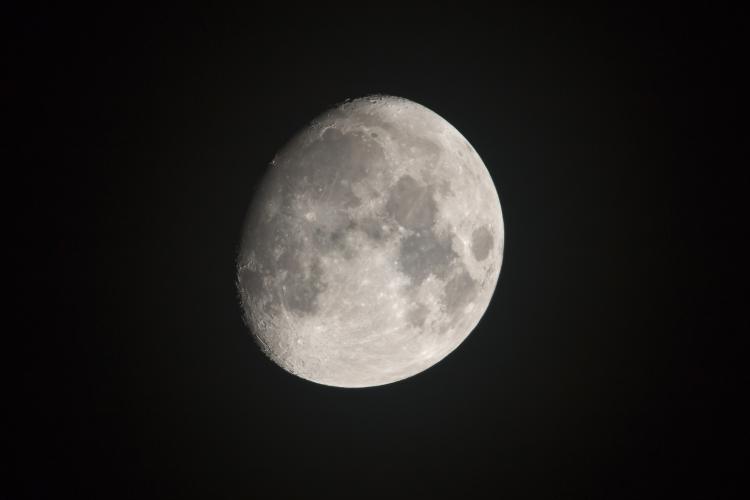
waxing gibbous
500
If it is summer time in the northern hemisphere then what season is it in the southern hemisphere?
Winter
500
Explain why the Earth has different seasons?
The Earth has different seasons because it is tilted on it's axis and at different points in the year either the nothern or southern hemisphere is closer to or farther away from the sun.
500
The angle at which the Earth leans on its axis that is responsible for the change in seasons.
tilt
500
If the sun is directly overhead in the summertime, it is most likely this time.
12:00pm, noon