Constellations
Celestial Objects
Night and Day
Lunar and International Calendar
True or False
100
What is a group of stars that form a pattern in the sky called?
Constellations
100
What is the definition of a "Celestial Object"?
Any object in space.
100
Why is it easier to see most objects in space at night?
The sun's bright light makes it hard to see the dim light of stars and planets during the day.
100
What does "lunar" in lunar calendar mean?
Moon
100
The sun is a planet.
FALSE
The sun is a star.
200
What is another name for the "North Star"?
Polaris
200
A comet is mainly made out of what three things?
Ice, dust, rocks.
200
Why is it important to use safety precautions when observing the Sun?
The sun is very bright and can cause damage to your eyes.
200
How many months are in the Lunar Calendar?
13 Months.
200
The distance between two stars can be millions of kilometres.
TRUE
300
Why is Polaris important or helpful for navigation?
It always points North (in the Northern Hemisphere).
300
What is the name of the galaxy that our solar system is located in.
Milky Way Galaxy
300
Name one technology that humans can use to view space objects from Earth.
-binoculars
-telescopes
300
The 13 moons in Indigenous culture are named after what?
Things happening in nature and seasonal changes.
300
We use microscopes to view objects in space.
FALSE
Microscopes are used to observe tiny things like bacteria.
400
How many named constellations are there currently?
88
400
The moon orbits around what?
The Earth
400
What is one method to view the sun safely?
-Pinhole camera
-Solar eclipse glasses
-Through a solar filter
400
Name a holiday celebrated based on the Lunar Calendar.
-Ramadan & Eid
-Chinese New Year
-Holi & Diwali
-Easter
400
Lunar calendars are still used today.
TRUE
500
The "Big Dipper" is part of what major constellation?
Ursa Major
500
What is the order of all 8 planets in our solar system?
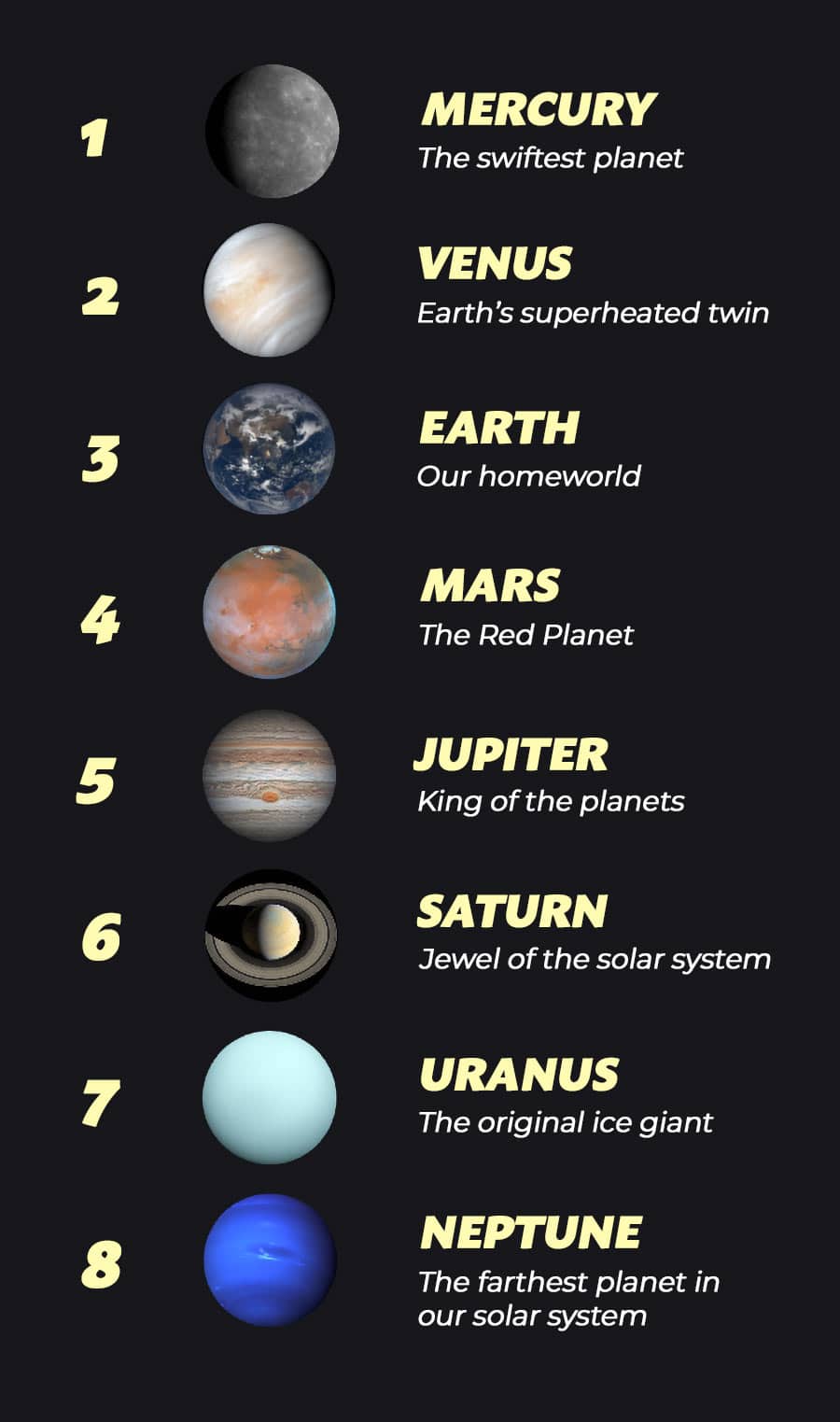
500
Name one similarity and one difference between observing the daytime and nighttime sky.
Answers may vary:
Similarities:
Moon, clouds, planes, ISS
Differences:
Sun, stars, other planets, constellations,
500
Tell two things you know about the International Standard calendar. (The calendar we use daily).
-one full year is 365/366 days a year.
-there is 12 months in a year
-each month has between 28-31 days.
-it's based on how long it takes for Earth to make one full revolution around the sun.
500
The biggest celestial object in our solar system is Jupiter
FALSE.
It's the sun.