Rotation and Revolution
Solar System
Moon Phases
Star Formation and Death
The Milky Way
Wild Card
100
The motion that causes day and night.
Rotation
100
The largest planet in the solar system
Jupiter
100
What phase of the moon is shown here? 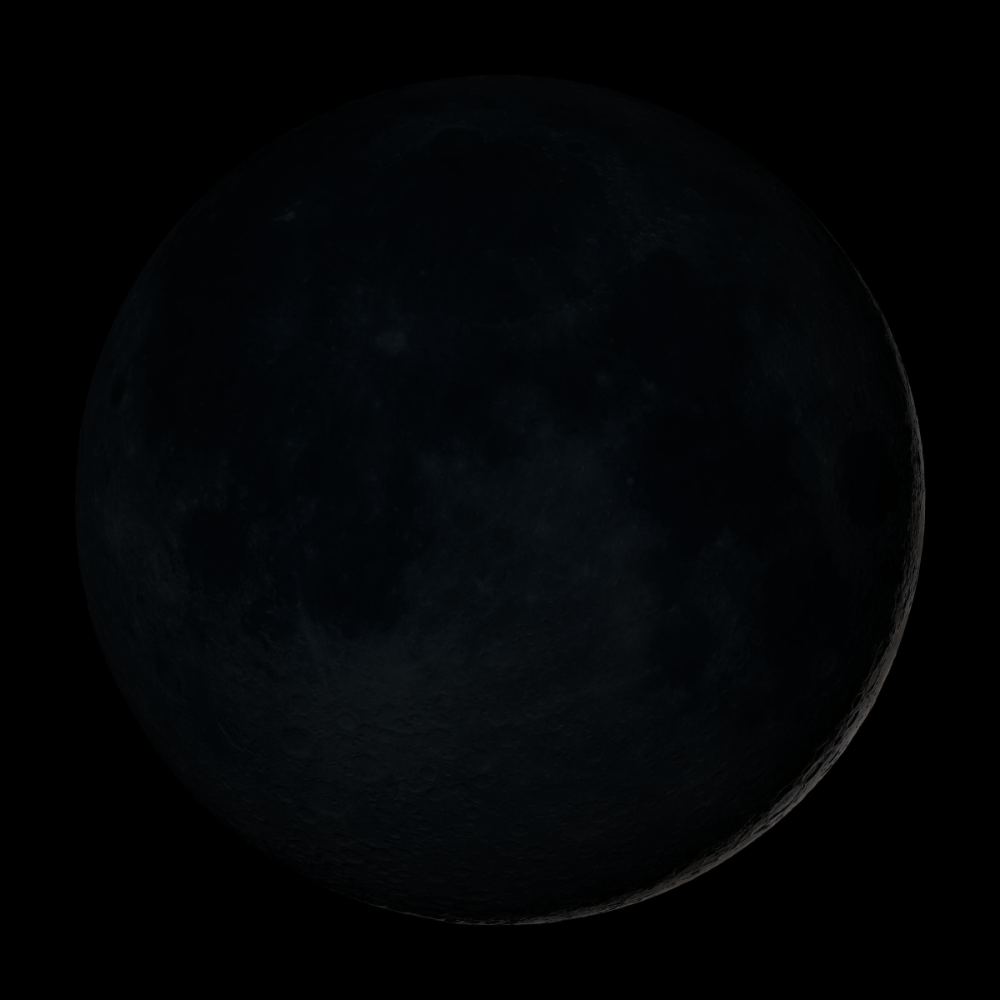
New Moon
100
The cloud of gas and dust where stars form.
A nebula
100
What is a Galaxy?
Galaxies are systems that contain millions or even billions of stars
100
What star is closest to Earth?
The Sun!
200
What do we call spinning of the Earth around the Sun?
Revolution
200
Icy objects that form glowing tails when they get close to the Sun.
Comets
200
Example of a Natural Satellite
The moon
200
Gravity pulling gas together to make a star.
Protostar formation
200
The crowded central region of the Milky Way.
The galactic center
200
The unit used to measure distances between stars.
Light-year
300
When the Northern Hemisphere is tilted toward the Sun.
Summer
300
Small rocky objects found between Mars and Jupiter.
Asteroids
300
The term for the Moon decreasing in light.
Waning
300
A massive stellar explosion at the end of a large star’s life.
Supernova
300
The massive object at the center of the Milky Way.
A supermassive black hole
300
The process where a large atom splits into two smaller atoms.
Nuclear fission
400
What causes to have four seasons?
Seasons are the result of the tilt of the Earth's axis.
400
The planet with the most famous ring system.
Saturn
400
The number of days in the lunar cycle.
About 28 days
400
The object formed when a massive star collapses completely.
Black hole and Neutron star
400
The part of a galaxy where our solar system is located.
A spiral arm (specifically the Orion Arm)
400
The process that powers the Sun and stars.
Nuclear fusion
500
When the Northern Hemisphere is tilted away from the Sun.
The season in the southern hemisphere is..
Summer
500
A distant region filled with icy comets marking the edge of the Sun’s influence.
The Oort Cloud
500
A thin sliver after the last quarter.
Waning crescent
500
The stage the Sun will become after shedding its outer layers.
White dwarf
500
The flattened, disk-like structure formed from gas and dust.
The galactic disk
500
The reaction that produces helium from hydrogen inside the Sun.
Fusion