Day and Night
Miscellaneous
Planets!
Our Place in Space
Stars
Wild Card
100
A __________ occurs when the Moon passes between the Sun and the Earth.
solar eclipse
100
What is the name of our galaxy?
The Milky Way
100
Which planet is closest to the Sun?
Mercury
100
Who was Yuri Gargarin?
The first human in space. He was from the Soviet Union.
100
What star is closest to Earth?
The Sun!
100
The Hubble
It is a NASA telescope
200
What do we call one spin of the Earth around the Sun?
A year / Revolution
200
The gravitational pull of the Moon on Earth's oceans results in...
The tides
200
What planet is this one?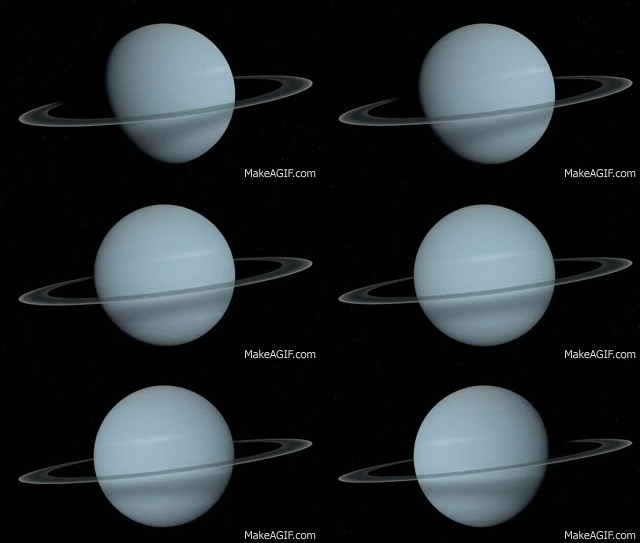
Uranus.
200
How long does a rotation of the Earth around its axis take?
About 24 hours
200
What is the name of this galaxy?
The Milky Way.
200
Name the rock planets.
Mercury, Venus, Earth and Mars.
300
Example of a Natural Satellite
The Moon
300
Compared to the Earth's solar system, the universe is...
A.) Older and Larger
B.) Older and Smaller
C.) Younger and Larger
D.) Younger and Smaller
A
300
What is the largest planet in our solar system?
Jupiter
300
What is the only other planet in our solar system that is believed to be able to sustain life?
Mars
300
Name of north star
Polaris
300
What planet is this?
Size: Medium
Appearance: Blue/Green, with some white clouds
Axial Tilt: 23.5
Direction of rotation: Prograde (same direction as sun)
Earth
400
What phase of the moon is shown here? 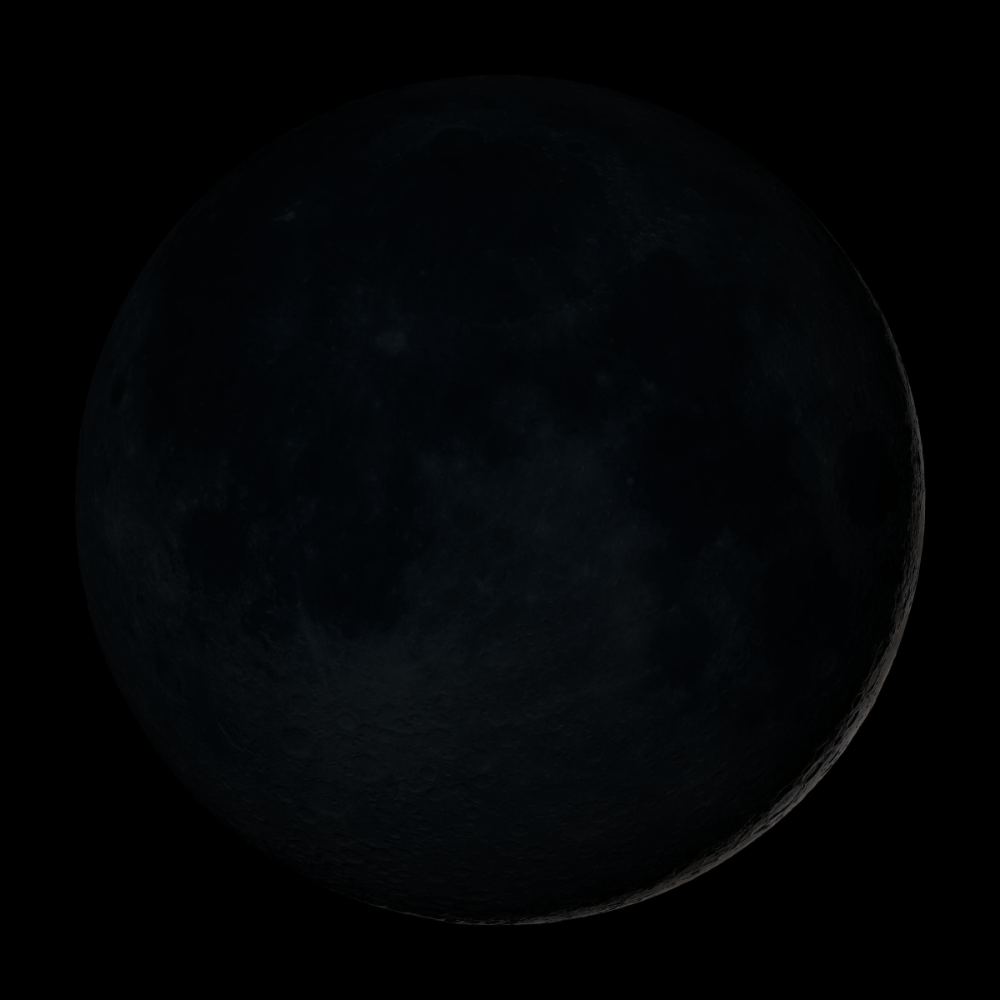
New Moon
400
One revolution of Earth is how long?
365.25 days
400
Between Jupiter, Saturn and Uranus, which one has the most moons?
Saturn
400
Why does the tail of a comet always point away from the sun?
The solar winds
400
What is a Galaxy?
Galaxies are systems that contain millions or even billions of stars
400
The year Yuri Gagarin went to space was:
1961
500
What causes our planet to have four seasons?
Seasons are the result of the tilt of the Earth's axis.
500
Which planet is covered by clouds of sulphuric acid?
Venus
500
Which planet rotates on its axis from east to west
Jupiter, Earth, Venus and Mercury
Venus
500
What is the name for the path that a planet takes around the Sun?
Orbit
500
What is the relationship between the solar system and the solar nebula?
The solar system was formed by the solar nebula
500
What planet is this?
Size: Large
Appearance: Has rings of ice and rock
Axial tilt: 26.73°
Length of Day: 10.7 hours
Saturn