¿Qué es? (Food and Drink Vocab)
Meals and Adjectives
Regular Verb Conjugation
Stem-Changers
On your own.
100
You use these to make an omelet.
los huevos
100
You eat this every morning before school starts.
el desayuno
100
Yo ________ una ensalada. (preparar)
preparo
100
¿Tú _____ el té helado? (preferir e->ie)
prefieres
100
Write a complete sentence in Spanish about what you eat for breakfast (el desayuno).
Sample: Yo como huevos y una tostada para el desayuno.
200
This green leafy vegetable is often the base of a salad.
la lechuga
200
If you are eating el helado or el pastel, you are eating this course...
el postre
200
Mis padres ______ sopa caliente. (comer)
comen
200
Yo siempre ______ un sándwich. (almorzar o->ue)
almuerzo
200
Use the verb preferir (e-ie) and a drink from your list (leche, jugo, refresco, agua) to write a sentence about what you like to drink.
Sample: Yo prefiero beber el jugo de naranja.
300
A long, orange vegetable that makes for a healthy snack.
la zanahoria/las zanahorias
300
This adjective describes the chile poblano (el pimiento).
picante
300
Nosotros _________ manzanas y uvas. (comprar)
compramos
300
Mis amigos _____ una hamburguesa. (pedir e->i)
piden
300
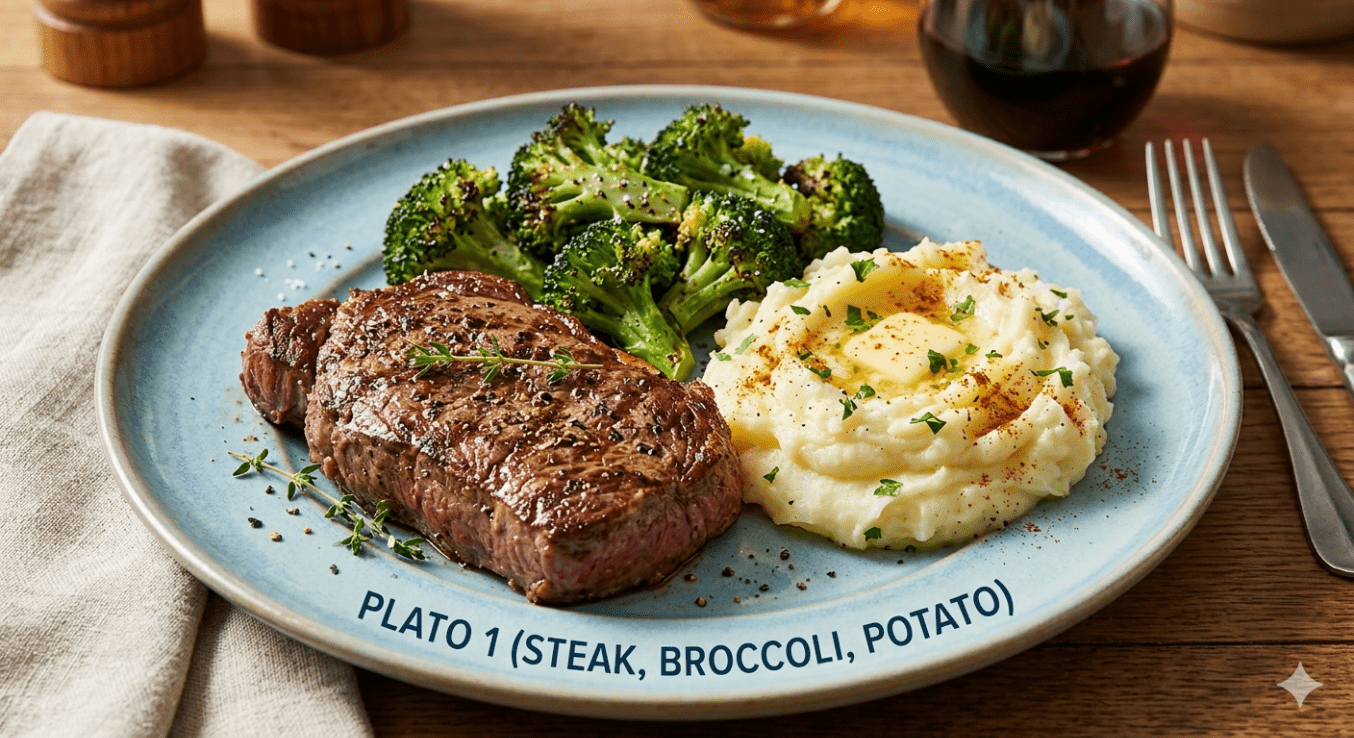
Look at the image "Plato 1". Write a sentence stating if you like it or not and why.
Sample: No me gusta el Plato 1 porque no me gusta el brócoli.
400
This fruit is used to make a common breakfast juice that is not grapes nor pineapple.
la naranja (el jugo de naranja)
400
The Spanish words for lunch vs. to have lunch.
el almuerzo vs almorzar
400
La panadería _____ pan dulce. (vender)
vende
400
La clase ______ a las ocho. (empezar/comenzar e->ie)
empieza / comienza
400
Use the verb pedir (e-i) to write a sentence about what you and your friends order at a restaurant.
Mis amigos y yo pedimos tacos de pescado y papas fritas.
500
Onion and tomato soup is...?
la sopa de cebolla y tomate / la sopa de tomate y cebolla
500
Describe las papas fritas and la piña using adjectives from your vocab list.
las papas fritas - saladas
la piña - dulce
500
The correct way to say "to pay" and "to carry/take" in Spanish. Conjugate both to the yo form.
pagar and llevar
pago and llevo
500
Nosotros ____ comer un pastel pero tú _______ un helado. (querer e->ie)
queremos, quieres
500
Combine a food item, the verb costar (o-ue), and a description (like caro - expensive, or barato - cheap) to write a sentence about a meal.
El pastel de chocolate cuesta mucho dinero / es caro porque es delicioso.